Airbus leads Boeing on 2026 deliveries as both work through a decade-long backlog, while the 737 MAX 7 is certified and the MAX 10 nears approval. This tracker covers the key manufacturing, certification and regulatory developments.
Cover image: Airbus single-aisle jets on a final assembly line — photo by Steve Lynes from Sandshurst, United Kingdom, CC BY 2.0, via Wikimedia Commons.
Aircraft supply, not passenger demand, is the defining story in commercial aviation in 2026. Airbus leads Boeing on deliveries, with 475 jets handed over through August against Boeing's 418, but both manufacturers are working through a combined backlog that stretches well over a decade of production. Engines, structures and skilled labour set the pace, which keeps older aircraft flying longer than airlines planned.
Boeing's recovery has moved from production rates to certification. The FAA certified the long-delayed 737 MAX 7 on 3 August 2026, and the larger MAX 10 is close behind. Regulators are also tightening oversight of the ageing fleet: a US directive requires compressor blade replacements on 1,462 V2500 engines that mostly power older Airbus A320-family jets.
At the edges of the industry, new technology is being tested and reorganised. Heart Aerospace flew the largest battery-electric aircraft to date in August, and Boeing agreed to hand its autonomous-flight businesses to air-taxi maker Archer Aviation in exchange for a minority stake.
Last updated: 23 September 2026
Airbus vs Boeing deliveries in 2026: who is ahead?
Through the end of May 2026, Airbus had delivered roughly 262 aircraft against Boeing's 250, helped by a strong May in which it handed over around 81 jets. Monthly figures are lumpy and swing on the timing of a few widebody handovers, and some analysts argued at the time that Boeing had closed much of the gap on a rolling basis.
The gap has since widened. In August 2026 Airbus delivered 57 aircraft and Boeing 51, bringing year-to-date totals to 475 and 418 respectively, according to Forecast International. Airbus is working towards a full-year target of 870 deliveries.
| Period | Airbus | Boeing |
|---|---|---|
| January–May 2026 | About 262 | About 250 |
| August 2026 | 57 | 51 |
| January–August 2026 | 475 | 418 |
The A321neo and its longer-range sibling, the A321XLR, are the most sought-after jets of this cycle, used to open thin long-haul routes that could never support a widebody. The limiting factor is production: with the combined backlog running well over a decade, fleet renewal plans slip, lease rates climb and older, thirstier aircraft stay in service.
Boeing 737 MAX 7 certification: why it took eight years
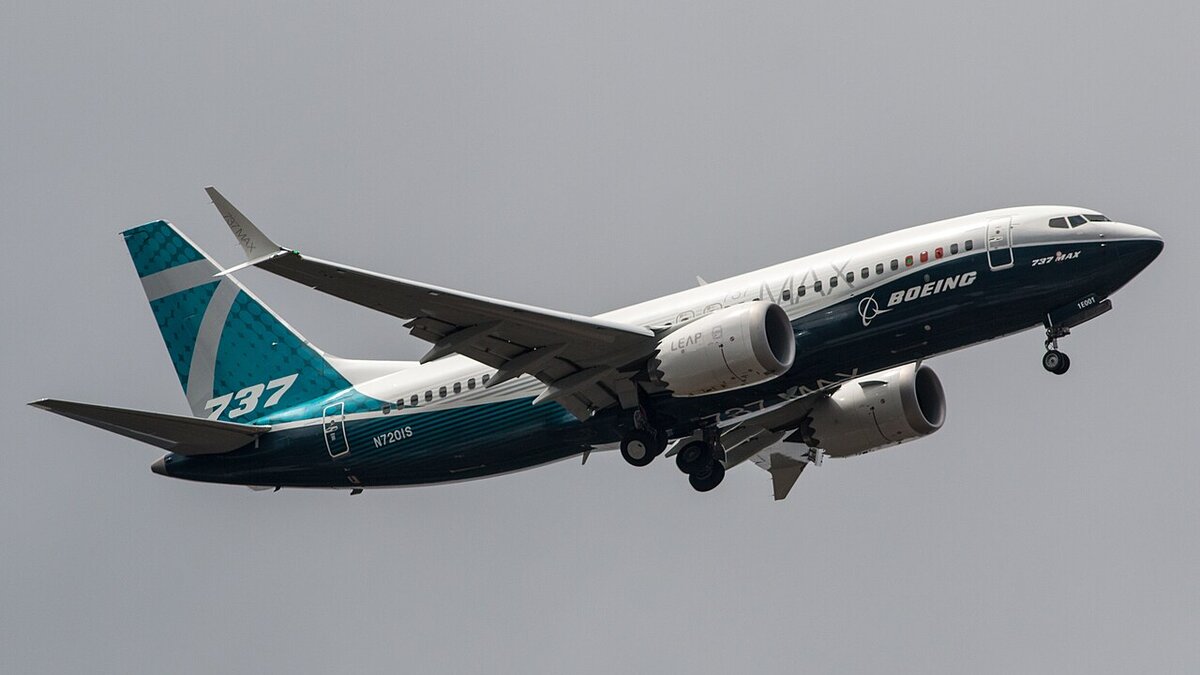
The FAA granted type certification to the Boeing 737 MAX 7 on 3 August 2026, more than eight years after its March 2018 first flight. It had been due in service in 2019 but was held up by the 2019–2020 MAX grounding, a stricter certification regime and an engine anti-ice flaw that could overheat the inlet in dry air.
Boeing asked for a time-limited exemption for the anti-ice issue, then withdrew the request on 30 January 2024 after the Alaska Airlines MAX 9 door-plug accident and redesigned the system.
Launch customer Southwest Airlines, which holds 672 firm orders split between the MAX 7 and MAX 8, expects first MAX 7 passenger flights in the first quarter of 2027. About 30 already-built MAX 7s are in storage awaiting retrofit and delivery.
In May 2026 Boeing passed the FAA's capstone review allowing 737 output to rise from 42 to 47 a month, with 52 a month targeted by early 2027. The larger MAX 10 completed its final certification flight in July. On 16 September 2026 chief executive Kelly Ortberg said certification would come "very soon", with three deliverables left for the FAA and deliveries still expected to begin in 2027.
FAA V2500 engine directive: blade replacements on 1,462 engines
On 20 August 2026 the FAA published airworthiness directive AD 2026-17-03, requiring replacement of 3rd-stage high-pressure compressor rotor blades (part numbers 6A8353 and 6A8688) on 1,462 US-registered IAE V2500 engines. Its effective date is 24 September 2026. The FAA said failures of these blades, which wear at the shroud and can fracture, have caused engine fires, aborted takeoffs, unplanned engine removals and in-flight shutdowns.
The affected engines mainly power Airbus A319, A320 and A321ceo aircraft, plus the Boeing MD-90 and the Embraer C-390. There is no calendar deadline: the full blade set must be replaced at the first shop visit after the effective date in which the 3rd-stage rotor is exposed. Operators that completed IAE service bulletin V2500-ENG-72-0716 (October 2024) receive credit.
| Item | Detail |
|---|---|
| Cost per engine (reworked blades) | About $30,085 |
| Cost per engine (new blades) | About $225,000 |
| Estimated total US fleet cost | $43.98 million |
Because the work fits into scheduled overhauls, passengers are unlikely to notice directly. The indirect risk is longer turnaround times at already congested maintenance shops. If a maintenance problem does disrupt a trip, compensation rules usually treat it as within the airline's control.
Heart Aerospace X1: the largest electric aircraft flown
On 12 August 2026 Heart Aerospace flew its X1 demonstrator for 27 minutes at Plattsburgh International Airport in New York. At more than 25,000 pounds take-off weight and with a 106-foot wingspan, it is the largest battery-electric aircraft yet flown. Its powertrain delivered more than one megawatt, and the company said the flight used about $5 of electricity.
The X1 is a full-scale stand-in for the ES-30, a 30-seat hybrid that pairs two electric motors with two turboprops. Heart gives its range as about 124 miles on batteries alone and about 497 miles in hybrid mode, with flight tests in 2028 and service around 2031. Customers include United Airlines, Air Canada and JSX, and Heart values its commitments at $9.4 billion, although these are largely non-binding.
The limits are real. Batteries hold far less energy per kilogram than jet fuel, and the ES-30 must clear FAA Part 25 certification with a novel propulsion system. The 2031 target should be read as ambitious.
Archer–Boeing deal: Wisk, Insitu and SkyGrid for a 19.75% stake
On 10 August 2026 Archer Aviation announced it would acquire Boeing's autonomous-flight businesses, Wisk Aero, Insitu and SkyGrid, in exchange for Boeing taking a 19.75% equity stake in Archer. Insitu, a surveillance-drone maker serving customers in 35 nations, generates more than $200 million a year in revenue, compared with about $5 million reported by Archer for the second quarter of 2026.
The deal has been agreed but not completed. It is expected to close by the end of 2026, subject to conditions including US antitrust clearance, and Boeing also agreed to invest up to $55 million in Archer's next funding round before 31 March 2027, Manufacturing Dive reported.
Archer gets a self-flying aircraft programme, airspace software and a dataset it says covers more than two million flight hours. No new passenger-service dates for its Midnight air taxi, which has a range of about 100 kilometres, were attached to the deal.
Frequently asked questions
Is Airbus or Boeing ahead on deliveries in 2026?
Airbus. Through August 2026 it had delivered 475 commercial aircraft against Boeing's 418, according to Forecast International, a lead of 57 jets. Airbus is targeting 870 deliveries for the full year.
When was the Boeing 737 MAX 7 certified, and is the MAX 10 certified yet?
The FAA certified the 737 MAX 7 on 3 August 2026, with Southwest Airlines expecting first passenger flights in the first quarter of 2027. The MAX 10 was not yet certified as of 16 September 2026; Boeing chief executive Kelly Ortberg said approval would come very soon, with deliveries still planned for 2027.
What does the FAA V2500 engine directive mean for A320 flights?
AD 2026-17-03 requires 3rd-stage high-pressure compressor blades on 1,462 US-registered V2500 engines to be replaced at the next qualifying shop visit after 24 September 2026. It does not ground aircraft, so passengers are unlikely to notice directly.
What is the largest electric aircraft to have flown?
Heart Aerospace's X1 demonstrator, which flew for 27 minutes on 12 August 2026 at Plattsburgh, New York, at more than 25,000 pounds take-off weight. It is a stand-in for the 30-seat hybrid-electric ES-30, targeted for service around 2031.
Sources
- Forecast International — Airbus and Boeing report August 2026 commercial aircraft orders and deliveries
- MiGFlug — Airbus overtakes Boeing in the 2026 jet race
- Simple Flying — Airbus orders vs Boeing deliveries
- Aerospace Global News — 12-year aircraft backlog
- Boeing — FAA certifies 737-7
- Air Data News — Boeing 737 MAX 7 receives FAA certification after years of delays
- FLYING Magazine — Boeing drops 737 MAX 7 exemption request
- Simple Flying — Southwest's 737 MAX 7 orders and fleet plans
- Lynnwood Times — FAA clears Boeing 737 production increase to 47 per month
- ch-aviation — Luxair orders four MAX 7s
- Boeing — 737-10 completes final certification flight
- Leeham News — 737 Max 10 certification coming 'very soon': Boeing CEO Ortberg
- Federal Register — Airworthiness Directives; International Aero Engines AG Engines (final rule)
- GovInfo — FAA AD 2026-17-03 full text, 20 August 2026
- FlightGlobal — FAA proposes mandatory V2500 compressor blade replacements after failures
- Heart Aerospace — Heart Aerospace completes first flight of world's largest electric aircraft
- Aerospace Global News — Heart Aerospace flies the largest battery-electric aircraft
- New Atlas — Heart Aerospace X1 electric demonstrator makes aviation history
- Simple Flying — Why Boeing handed its entire autonomous flight future to Archer Aviation
- Manufacturing Dive — Boeing selling 3 subsidiaries to Archer Aviation, taking minority stake
- 24/7 Wall St. — Archer Aviation has a new $200 million reason to get excited