Air Canada has put its first Airbus A321XLR into service, using the long-range narrowbody to launch thin transatlantic routes — including the first-ever nonstops from Canada to Catania and Palma.
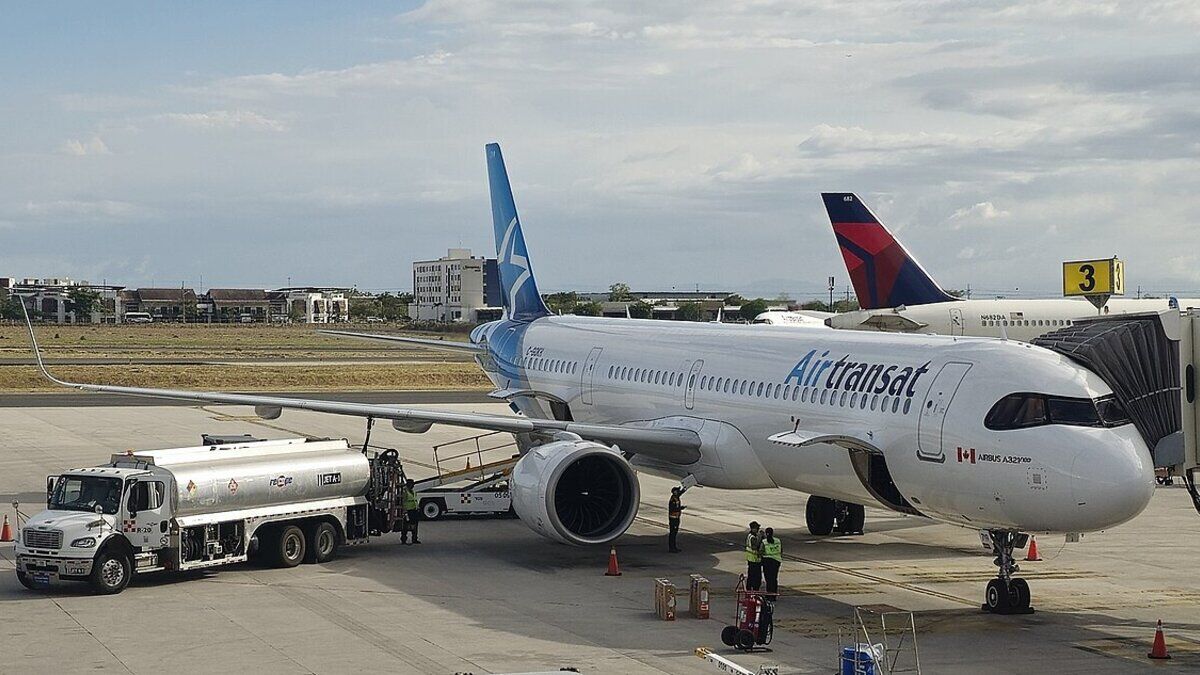
Cover image: an Airbus A321neo (LR) — the long-range narrowbody family Air Canada is deploying transatlantic — photo by kitmasterbloke, CC BY 2.0, via Wikimedia Commons.
Air Canada has joined the small but growing club of airlines using a single-aisle jet to cross the Atlantic. The carrier took delivery of its first Airbus A321XLR and put it into commercial service in June 2026, deploying the long-range narrowbody to open routes that would never pencil out on a widebody.
The headline launches are two firsts — not just for the airline, but for the country. Air Canada began flying Montreal to Catania, in Sicily, on 4 June, and Montreal to Palma de Mallorca on 17 June. Neither destination had ever had a nonstop link to Canada before.
Why the A321XLR changes the math
The appeal of the A321XLR is straightforward: it offers widebody-class range from a narrowbody with far fewer seats to fill. That makes it the ideal tool for "long and thin" routes — destinations with real demand, but not enough to justify a 250-seat twin-aisle several times a week. Instead of asking a leisure market like Sicily or Mallorca to support a widebody, Air Canada can right-size the aircraft to the route.
For travellers, that translates into nonstop access to secondary leisure cities that previously required a connection through a major European hub. For the airline, it is a way to test and build markets at lower risk before committing larger aircraft.
Part of a broader 2026 expansion
The Catania and Palma launches are two pieces of a wider push: Air Canada has lined up a slate of new long-haul routes for 2026, using both its widebody fleet and the new XLRs to extend its summer map across Europe and beyond. The strategy mirrors a continent-wide trend — carriers on both sides of the Atlantic are using long-range single-aisles to splinter traffic away from a handful of mega-hubs and toward direct, point-to-point flying.
- Montreal–Catania — launched 4 June 2026, a first nonstop between Canada and Sicily.
- Montreal–Palma de Mallorca — launched 17 June 2026, opening the Balearics to direct Canadian traffic.
- More to come — the XLR slots into a programme of seven new long-haul routes the airline is rolling out across 2026.
The trade-offs of a narrowbody on long routes
Flying a single-aisle for seven or eight hours is not without compromise. Cabins are narrower, with fewer premium seats and less galley and lavatory capacity than a widebody. Airlines are addressing this with upgraded long-haul interiors, but the experience is inherently different from a twin-aisle. For many leisure travellers, a nonstop on a narrowbody still beats a one-stop on a bigger jet.
The bottom line
Air Canada's A321XLR launch is a small revolution in how a flag carrier grows its network — opening fresh European leisure markets with a right-sized aircraft instead of betting on a widebody. Expect more airlines to follow the same playbook as the long-range narrowbody reshapes the transatlantic map.