The world's airlines are flying their oldest fleet on record while waiting on more than 18,000 undelivered aircraft. IATA used its June supply-chain summit to set out how the industry digs out.
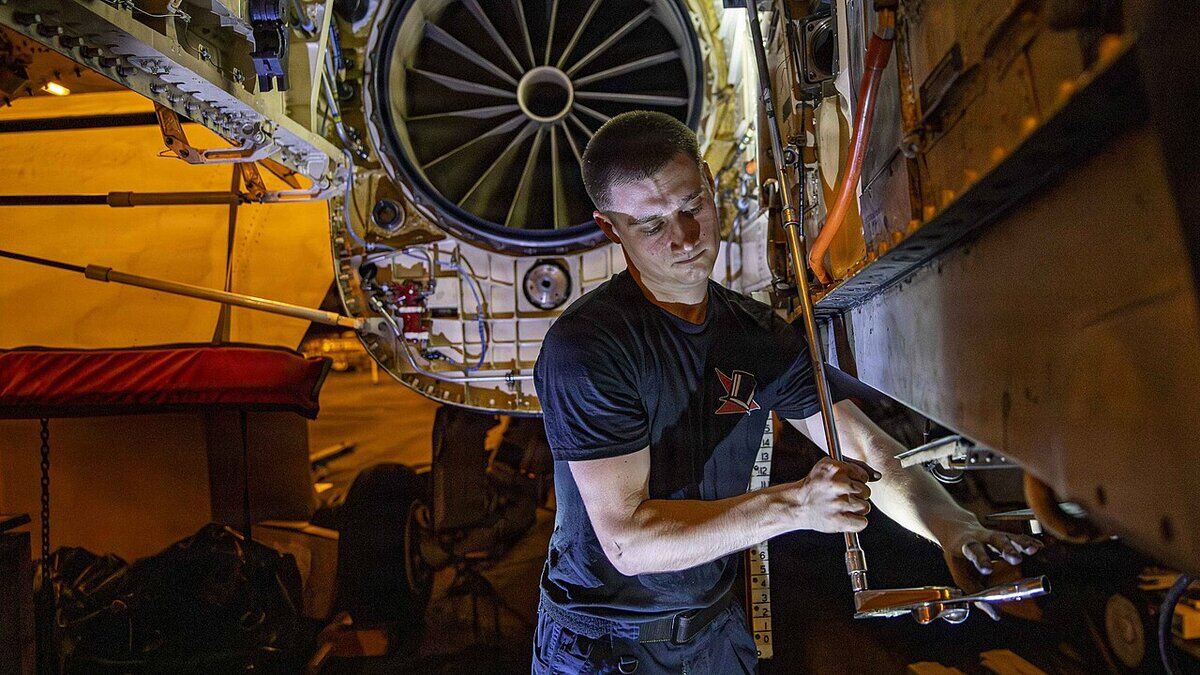
Cover image: engineers servicing a jet engine inside a maintenance hangar — photo by U.S. Navy USNF-5F by NAVCENT Public Affairs, Public domain, via Wikimedia Commons.
Air travel demand has roared back and order books are bulging — yet the aircraft industry is, in a very practical sense, stuck. The world's commercial fleet is now the oldest on record, with an average age of 15.2 years, even as airlines wait on a backlog of more than 18,000 undelivered jets. It is the defining operational story of 2026, and it touches everything from ticket prices to emissions.
The International Air Transport Association (IATA) put the problem at the centre of a dedicated supply-chain event in Madrid on 24–25 June 2026, gathering manufacturers, lessors, maintenance providers and airlines to confront a bottleneck that no single player can fix alone.
How the squeeze happened
The root cause is simple to state and hard to solve: the supply chain cannot build new aircraft as fast as airlines want them. By IATA's reckoning, carriers are short of more than 5,000 fuel-efficient replacement aircraft they had counted on having by now. Those missing jets cascade into a series of expensive second-order effects.
- Older aircraft stay in service. Jets that should have been retired keep flying, pushing the average fleet age to record highs.
- Maintenance costs climb. An ageing fleet plus scarce spare parts means more time and money keeping aircraft airworthy.
- Lease rates hit records. With new metal scarce, the cost of leasing existing aircraft has surged, raising ownership costs across the board.
- Efficiency gains are deferred. Every year a new-generation jet is delayed is a year of fuel savings and emissions cuts the industry doesn't bank.
The cost picture is shifting
The knock-on is visible in airline economics. Labour has now overtaken fuel as the single largest cost component for the industry, but maintenance and ownership costs are the fastest-rising pressures — and both are driven directly by the supply-chain crunch. An older fleet is simply more expensive to run, and there is no quick way to refresh it when the order queue stretches past a decade.
IATA's prescription
At the Madrid summit, IATA outlined a set of priorities aimed at strengthening the aviation maintenance and engineering ecosystem — improving the availability of parts, building resilience into engine and component supply, and bringing more transparency to how the whole chain is performing. The thrust is that the bottleneck is a system problem requiring coordination between airframers, engine makers, lessors and regulators, not a series of isolated shortages.
What it means for travellers
For passengers, the supply-chain squeeze is one of the quiet forces keeping fares elevated. Constrained capacity, higher ownership and maintenance costs, and deferred efficiency gains all feed into the price of a ticket. It also means the aircraft you board in 2026 may be a few years older than you'd expect — the same jets, kept flying longer, because their replacements are still on a waiting list.
The bottom line
Demand is healthy and the order book is full, but aviation's growth is being throttled by its own supply chain. Until the industry can build and maintain aircraft at the pace airlines need, a record-old fleet and a record-long backlog will remain two sides of the same problem.