AI now sets fares, plans trips, answers support tickets and predicts flight delays, and regulators, courts and travellers are catching up. A running record of the key 2026 developments.
Cover image: Hand holding a smartphone showing a map app, suggesting AI travel planning — photo by Journalist 3rd Class David P. Coleman, U.S. Navy, Public domain, via Wikimedia Commons.
Artificial intelligence moved from pilot projects into the everyday machinery of travel during 2026, and the scrutiny followed. Airlines are using AI tools to set fares faster, which prompted a congressional inquiry into so-called surveillance pricing. Google won an auction with a $10 million bid for a defunct airline's internal data to train its models, though a court has yet to approve the sale. Travellers have adopted AI trip planning faster than the destinations trying to reach them, and Airbnb now resolves nearly 45% of support inquiries without a human agent.
The same tools also make deception cheaper: a hotel listing illustrated with AI-generated photos reached Booking.com and Expedia for a property that did not exist. Behind the scenes, the US Federal Aviation Administration has started using AI to predict congestion before flights leave the gate.
The pattern across these stories is consistent. Adoption is running ahead of rules, disclosure and verification, and the open questions are about who owns the data, who checks the output and who carries the cost when it is wrong.
Last updated: 23 September 2026
Are airlines using AI for "surveillance pricing"? The congressional inquiry
On 11 August 2026 Rep. Frank Pallone Jr., ranking member of the House Energy and Commerce Committee, wrote to eight US airlines (American, Delta, United, Alaska, JetBlue, Southwest, Frontier, Hawaiian) asking by 25 August whether income, spending history, location or browsing data feeds into fare-setting. He cited a study finding one airline lifted revenue by as much as 6 per cent using AI pricing informed by consumer data.
Surveillance pricing, in the Federal Trade Commission's usage, means tailoring an individual's price with their own data, unlike ordinary dynamic pricing based on route, season and demand. Delta, which uses AI pricing from Fetcherr on part of its domestic network, denies using personal data. In a letter dated 9 September 2026, Delta president Peter Carter told Pallone that "there is no fare product Delta has ever used, is testing, or plans to use that targets customers with individualized prices based on personal data." Airlines for America submitted a joint industry response dated 25 August, according to Travelers Today.
A proposed class action alleging surveillance pricing against JetBlue is undecided; JetBlue denies it. Maryland enacted the first state ban on surveillance pricing in April 2026, with Connecticut following in May.
What did Google buy from Spirit Airlines, and why?
Google won the bankruptcy auction for Spirit Airlines' internal business data and software with a $10 million bid, revealed in a court filing on 14 August 2026. It beat a $7.5 million offer from Mercor. The package includes revenue-management data, pricing models and booking curves, around 100 million emails, roughly 500 million Microsoft Teams messages and 516 code repositories holding an estimated 30 million lines of code. Google has said it will use the material for product development and AI training.
Customer and loyalty records are excluded: profiles covering about 97.5 million passengers, 50.2 million Free Spirit members and roughly 740,000 co-brand cardholders stay out, and a third-party agent must strip personal information from what Google receives. Spirit ceased flying on 2 May 2026 and is being liquidated under Chapter 7.
The sale was not a done deal at auction. A sale-approval hearing was postponed after the Association of Flight Attendants objected over former employees' data, ch-aviation reported on 24 August, and AI startup Micro1 later lodged a $12.5 million bid after the deadline. As of 14 September 2026 no sale had received court approval and a hearing was scheduled for 16 September, Fortune reported.
How many travellers use AI to plan trips? The 2026 research
On 19 August 2026 Mindtrip, with Sabre, Sojern and MMGY Travel Intelligence, published research suggesting travellers are about two years ahead of the industry on AI. The survey, fielded in April 2026 among 1,006 US adults and 103 destination marketing organisation (DMO) leaders, found:
| Metric | Travellers | DMOs |
|---|---|---|
| Have used / offer AI trip planning | 54% | 22% |
| Intend to use AI / have a documented AI strategy | 75% | 26% |
| Itinerary building | 43% use AI for it | 20% rank it high value |
Some 40% of travellers had discovered a destination through AI and 29% had changed plans because of an AI recommendation. The most common uses were researching attractions, restaurants and transport (60%) and comparing prices (56%). Some 63% said they would use an AI planner on a destination's own website, and 72% of DMO leaders said organisations that do not adopt AI within two years risk becoming irrelevant in destination discovery. The consumer tools competing for that attention are compared in our guide to AI trip-planning tools in 2026.
How much of Airbnb's customer service does AI handle?
At its second-quarter earnings in August 2026, Airbnb said its AI assistant resolves nearly 45% of guest inquiries without a human agent, up from 40% in the first quarter and about a third of US and Canada tickets when figures were first disclosed in February. Launched in the US in April 2025, the assistant now works in more than 50 languages, up from 11 at the May 2026 Summer Release. A voice version is planned for later in 2026.
The assistant is trained on nearly 100 Airbnb policies and loads the guest's reservation into context, so it can change bookings and process straightforward refunds in the chat. Disputes and other cases that need judgement are escalated to live agents. Airbnb says support cost per booking fell about 16% year on year in the quarter, in which it reported revenue of $3.6 billion, up 17%. Airbnb has not published resolution rates by language. For travellers, the practical advice is to ask for a human early in any dispute involving money or safety.
Fake hotel listings with AI photos: the Palette Las Vegas case
In August 2026 a listing for the "Palette Las Vegas", illustrated with AI-generated photos, appeared on Booking.com, Expedia and other sites for a hotel that did not exist. Guests who booked it, and a second phantom listing called "Collection O Las Vegas", arrived at the OYO Hotel & Casino Las Vegas at 117 E. Tropicana Avenue, whose address both listings used. A viral TikTok by content creator Ariana Patiño exposed it.
Both brand names belong to Prism, OYO's parent company, the Las Vegas Review-Journal reported. OYO said the listing "went live while the related renovations and signage at the property were still being completed." Expedia suspended both listings pending an investigation and, per View From The Wing, disabled Collection O on 14 August; Booking.com said it takes verification seriously.
The episode shows the limits of how online travel agencies onboard properties: checks confirm an address and payment details exist, not that the brand and photos describe a real, distinct hotel. Before booking, search the hotel name with its address, look for an independent web and review footprint, and compare room counts and opening dates across sites.
Can AI predict flight delays? The FAA's FMDS and SMART
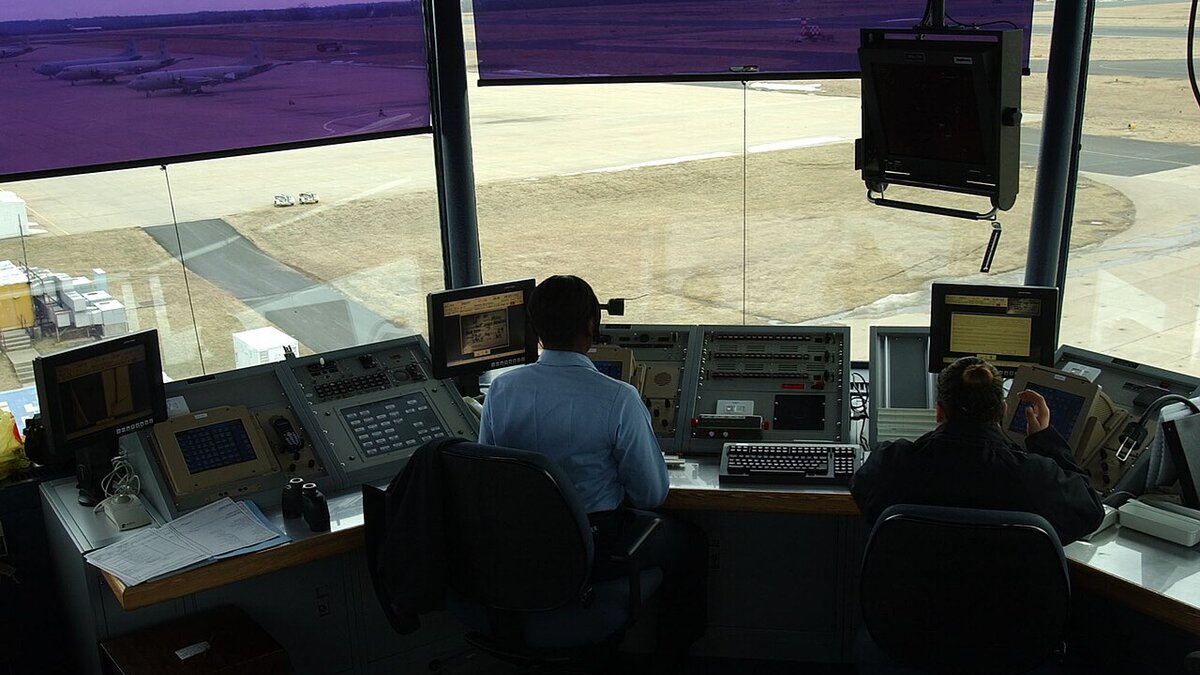
On 22 June 2026 the FAA awarded Air Space Intelligence (ASI) a 12-year, $875 million contract to build Flow Management Data and Services (FMDS), replacing the legacy Traffic Flow Management System at its Command Center. FMDS brings flight plans, airline schedules, aircraft positions and capacity constraints into one cloud platform. Its predictive layer, SMART (Strategic Management of Airspace, Routing, and Trajectories), forecasts where demand will exceed capacity so traffic managers can act before aircraft leave the gate, with smaller, earlier interventions instead of ground stops.
ASI's Flyways platform already runs at Alaska Airlines, Delta and United. The award is one part of the FAA's air traffic control rebuild, which received a $12.5 billion down payment in the July 2025 budget law. Software does not solve controller shortages: the Department of Transportation says it has hired 2,400 air traffic control staff since March 2025, but certification takes years.
On 21 September 2026 the FAA began using SMART in a limited mode in the Washington, DC-area airspace, AeroTime reported, with plans to expand nationwide. Controllers remain responsible for separating aircraft.
Frequently asked questions
Do airlines use AI and personal data to set individual fares?
No airline has admitted it. AI-assisted demand-based pricing is real (Delta has used Fetcherr's tool on part of its domestic network), but every carrier that has commented denies using personal data to show individual travellers different prices. On 9 September 2026 Delta's president told Rep. Frank Pallone in writing that no Delta fare product targets customers with individualised prices based on personal data. A proposed class action against JetBlue alleging surveillance pricing is undecided.
How many travellers use AI to plan trips in 2026?
Research fielded in April 2026 by Mindtrip with Sabre, Sojern and MMGY Travel Intelligence found 54% of US travellers have used AI to plan a trip and 75% intend to. Only 22% of destination marketing organisations offer an AI trip planner on their websites.
How can I tell if a hotel listing is fake or uses AI photos?
Search the hotel name together with its street address, check that the property has its own website and reviews on more than one platform, compare room counts and opening dates across booking sites, and reverse-image-search the lead photo. In the Palette Las Vegas case the address belonged to a different hotel, the OYO Hotel & Casino.
When does the FAA's SMART delay-prediction system start?
SMART began operating in a limited mode on 21 September 2026 in the Washington, DC-area airspace, according to AeroTime. Full rollout is planned over 12 to 24 months under Air Space Intelligence's 12-year, $875 million FMDS contract, and controllers remain responsible for separating aircraft.
Sources
- Pallone.house.gov — Pallone Presses U.S. Airlines for Answers on Surveillance Pricing
- Federal Trade Commission — Surveillance Pricing Study Indicates Wide Range of Personal Data Used to Set Individualized Consumer Prices
- Delta News Hub — Delta responds to misinformation around AI pricing
- Delta News Hub — Delta Responds to Rep. Pallone on Misinformation on Consumer Surveillance Pricing
- Travelers Today — Delta Denies Airline Surveillance Pricing in Formal Response to Congressional Inquiry
- ClassAction.org — Class Action Lawsuit Alleges JetBlue Secretly Tracks Traveler Data for Dynamic Ticket Pricing
- Skift — Google Scoops Up Spirit Airlines' Data in Bankruptcy Sale to Train AI
- Axios — Google buys Spirit Airlines emails, chats, documents out of bankruptcy
- ch-aviation — Court delays Google's acquisition of Spirit's business data
- Fortune — Google wants Spirit Airlines' data. Micro1 wants to pay more
- PR Newswire — New Research Reveals Travelers Are Two Years Ahead of the Travel Industry on AI
- Sojern — New Research: Travelers Are Two Years Ahead of the Travel Industry on AI
- CX Dive — Airbnb reaches another service milestone with its AI assistant
- TechCrunch — Airbnb says a third of its customer support is now handled by AI in the US and Canada
- TechCrunch — Airbnb says AI is helping it ship features faster as it tests a new search function
- TechCrunch — Airbnb gets into hotels, expands AI for host onboarding and customer support
- Las Vegas Review-Journal — Expedia, Booking.com investigating non-existent Las Vegas hotel listings
- View From The Wing — Hotel is scrubbing the internet of fake listings before Nevada gaming regulators act
- 8 News Now — Las Vegas hotel listings raise questions after traveler books Palette, arrives at OYO
- One Mile at a Time — Las Vegas hotel scams guests with fake name, AI photos
- PR Newswire — ASI Selected by FAA to Modernize the National Airspace System
- Forbes — FAA Bets $875 Million On AI To Reduce Flight Delays
- Roll Call — More air traffic control modernization funding needed, Duffy says
- AOPA — Where is the $12.5 billion for ATC modernization going?
- AeroTime — FAA begins using AI to predict congestion and reduce flight delays