Booking Holdings booked $1bn for an unsettled FTC matter at Priceline and guided Q4 room nights to 1–3% growth. Expedia and Airbnb both raised their 2026 outlooks.
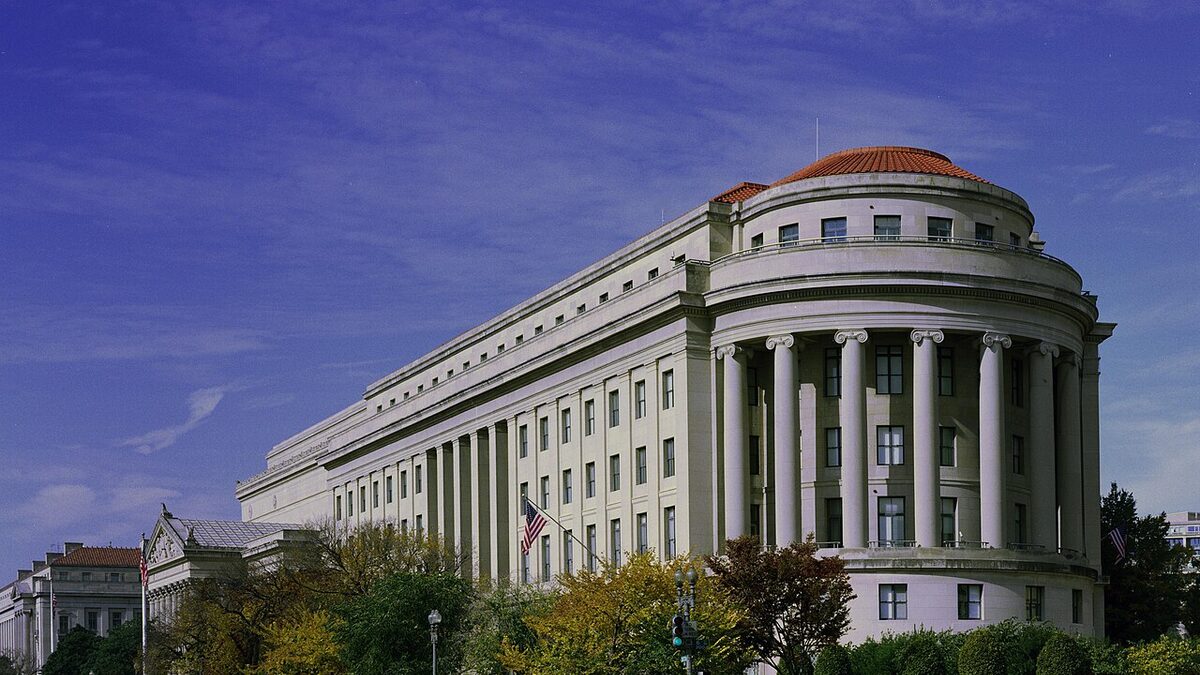
Cover image: The Federal Trade Commission's Apex Building on Pennsylvania Avenue, Washington DC (2005 file photo) — photo by Carol M. Highsmith, Public domain, via Wikimedia Commons.
Booking Holdings cut its third-quarter revenue by $900 million and accrued a further $100 million loss for a US Federal Trade Commission (FTC) matter involving Priceline, then guided fourth-quarter room-night growth to just 1–3 per cent on 3 November. Nothing is settled, and Booking warns the FTC may seek more.
Excluding the charge, the Booking Holdings Q3 2026 results were solid. Room nights rose 7 per cent to 345 million and gross bookings 10 per cent to $54.5 billion. Reported revenue fell 1 per cent to $8.9 billion, while adjusted revenue rose 9 per cent to $9.8 billion. Expedia Group and Airbnb, reporting on 4 and 5 November, both raised their 2026 outlooks.
What is the Booking Holdings FTC matter behind the $900 million charge?
Booking's 10-Q says FTC staff told Priceline in July that they intended to recommend a complaint against Priceline and "a business-to-business affiliate partner of Priceline" over alleged unfair or deceptive practices in disclosures, fees, customer support and billing. The filing says "a settlement has not been agreed and litigation remains possible", and that the FTC "may seek monetary penalties and restitution in excess of these amounts".
Booking does not name the partner.
Reuters reported on 7 October, citing two unnamed sources, that the FTC was examining Booking's relationship with Guest Reservations, a third-party website that advertises stays at specific hotels. One of them said the case could carry more than $500 million in potential penalties. An FTC spokesperson confirmed the investigation but declined further comment.
Laura Lee Blake, chief executive of the Asian American Hotel Owners Association, told Reuters she had herself booked on a third-party site believing she was booking directly with the hotel: "If someone who works in the hotel industry can make that mistake, imagine how easily the average traveler can be confused." Chains have sought to drive more direct bookings and avoid intermediaries' commissions, Reuters noted (our guide compares direct and OTA hotel prices).
The 10-Q also lists the European Commission's Digital Services Act investigation into Booking.com, opened in October, a $469 million liability for a Spanish competition fine under appeal, a French order for Agoda to change certain practices by the end of 2026, and Dutch claims including a consumer mass claim against Booking.com and Agoda.
Why did Booking guide Q4 room nights to only 1–3 per cent?
Room-night growth reached 7 per cent in the third quarter, up from 6 and 5 per cent in the first two quarters, on stronger international travel from Europe and Asia, the 10-Q says.
Then demand cooled. Booking said it "moderated somewhat toward the end of the third quarter" as international travel softened, and in October it cited disruption to Middle East travel, elevated airfares and "localized unrest in certain European cities", which it did not name.
The fourth-quarter guide has gross bookings up 2–4 per cent and adjusted EBITDA about flat, and assumes the Middle East conflict's effects on travel last to the end of the year. Booking gave no full-year room-night figure.
How did Expedia and Airbnb's Q3 2026 results compare?
Expedia matched Booking's 7 per cent room-night growth, but its business-to-business arm carried the quarter: B2B gross bookings rose 19 per cent to $11.1 billion, against 7 per cent for the consumer brands. Its fourth-quarter guide is 3.3–5.2 per cent gross bookings growth. Chief financial officer Derek Andersen expects B2B growth to slow against heavy promotions by some large B2B partners a year earlier, according to German trade daily Tageskarte's report of the call.
Airbnb is the outlier. Nights and seats booked rose 16 per cent, with growth above 20 per cent in Asia Pacific and Latin America.
It expects "at least low double-digit" growth in nights and seats booked in the fourth quarter, while "closely monitoring ongoing developments in EMEA".
| Q3 2026 | Booking Holdings | Expedia Group | Airbnb |
|---|---|---|---|
| Room nights* | 345m (+7%) | 115.7m (+7%) | 155.0m (+16%) |
| Gross bookings | $54.5bn (+10%) | $34.0bn (+11%) | $27.7bn (+21%) |
| Reported revenue | $8.9bn (−1%) | $4.94bn (+12%) | $4.87bn (+19%) |
| Q4 volume guide | Room nights +1–3% | Gross bookings +3.3–5.2% | Nights and seats: at least low double digits |
| Full-year 2026 | Kept: gross bookings high single digits | Raised: gross bookings +10% | Raised: revenue up high teens |
*Airbnb reports nights and seats booked, which includes services and experiences, and gross booking value. Source: company results releases.
Frequently asked questions
Has the FTC sued Priceline?
We found no filed complaint or settlement as of 6 November 2026. Booking's 10-Q says FTC staff told Priceline in July that they intended to recommend a complaint against Priceline and an affiliate partner. Priceline is in discussions with the agency, and litigation remains possible, the filing says.
How much has Booking Holdings recorded for the FTC matter?
$1 billion in total: a $900 million reduction in third-quarter revenue and a $100 million accrued loss. Both are excluded from Booking's adjusted figures. The company warns that the FTC may seek monetary penalties and restitution in excess of these amounts.
Who is the Priceline affiliate partner in the FTC case?
Booking's filings do not name it. Reuters reported on 7 October, citing two unnamed sources, that the FTC was examining Booking's relationship with Guest Reservations, a third-party site that advertises stays at specific hotels. Booking supplies it with room inventory through Priceline Partner Solutions, according to a San Francisco lawsuit cited by Reuters.
Why does Booking expect slower growth in Q4 2026?
Booking said demand moderated late in the third quarter as international travel softened, while domestic travel held up. In October it also cited Middle East disruption, elevated airfares and localised unrest in some European cities. It guides fourth-quarter room nights up 1–3 per cent, after 7 per cent in the third.