Diverted to the wrong airport? Your airline must still get you to your ticketed destination free. EU compensation up to 600 euros, US rules, and whether you can stay.
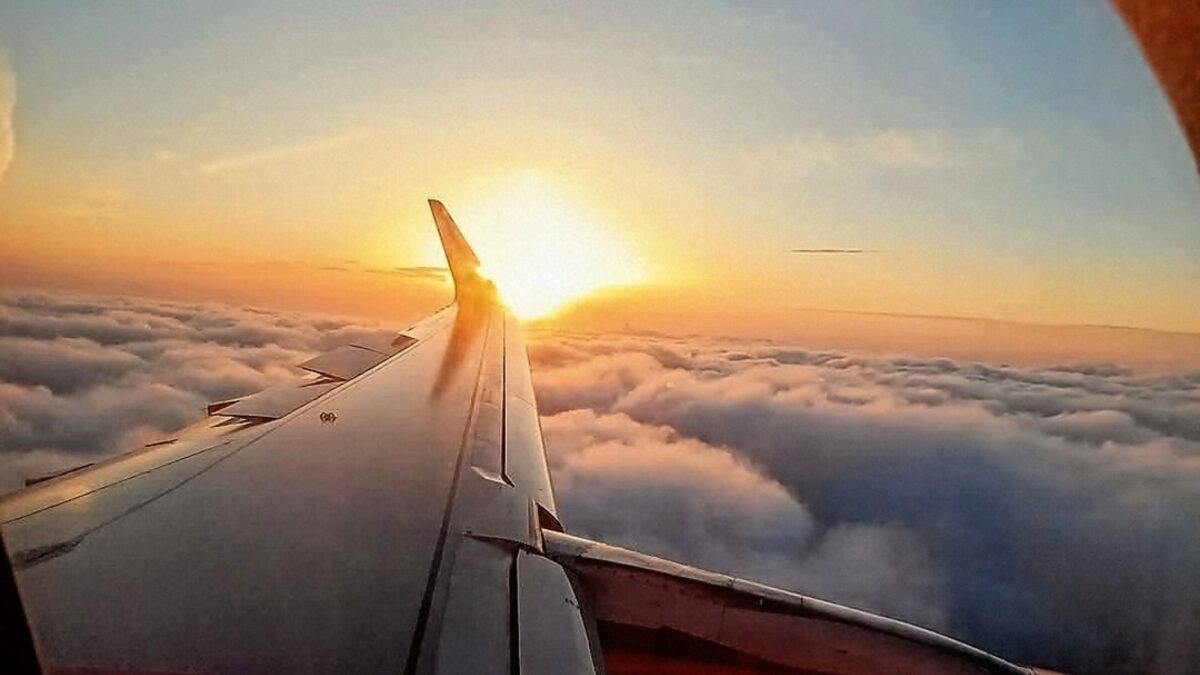
Cover image: Airliner wing above the clouds at sunset, seen from a passenger window — photo by Salwa Farwaneh Dameh, CC0, via Wikimedia Commons.
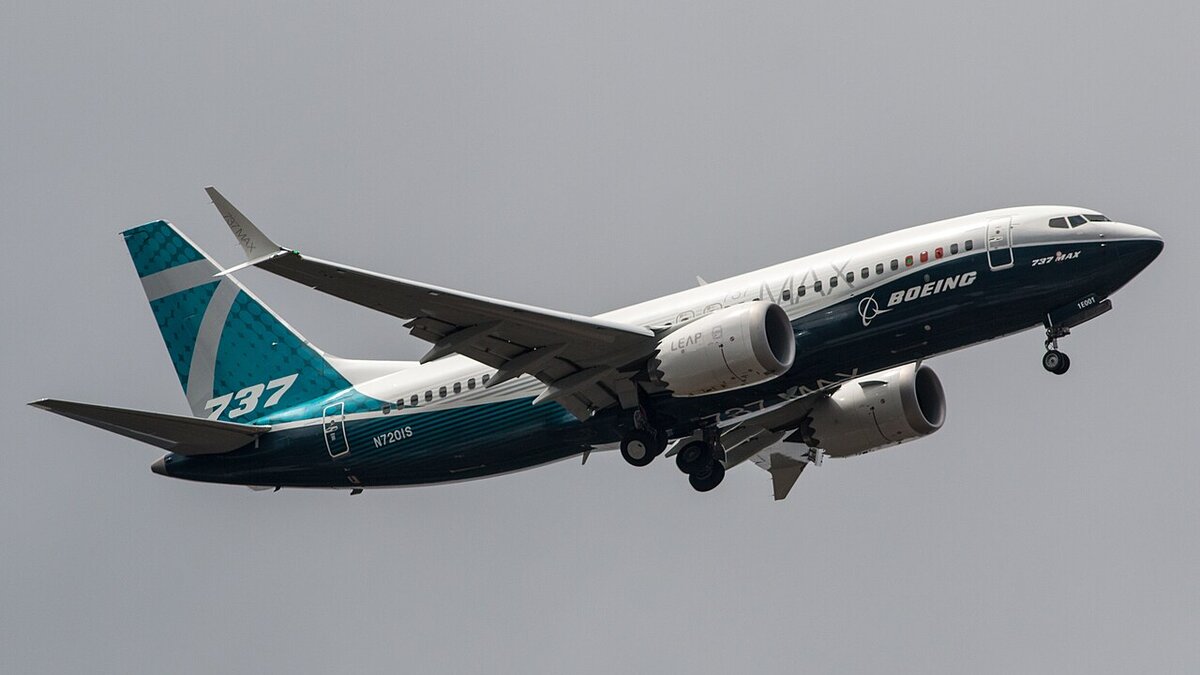
When your flight is diverted, the airline must still get you to the destination on your ticket at no extra cost. A diversion means landing at an airport other than the one booked, usually for weather, a medical emergency, a technical issue or air-traffic disruption. You will either wait and continue on the same aircraft, be moved to another flight or be put on ground transport. In Europe a diversion counts legally as a cancellation, which unlocks re-routing rights, free meals and hotels while you wait, and compensation of up to 600 euros if you arrive more than three hours late. In the United States there is no legally required cash compensation, but the airline must rebook you and honour whatever meals-and-hotels commitments it has published.
Diversions feel chaotic because the crew is solving a logistics problem in real time while a cabin full of people asks questions at once. Knowing the two or three rights that actually matter lets you stay calm, stay fed and keep every receipt that might later become money. Here is how it works on both sides of the Atlantic.
What the airline must do after a diversion
The obligation is the same almost everywhere: the contract is to carry you to your ticketed destination, and a diversion does not end it. Under the European rules, which the EU's own passenger-rights portal spells out, a flight that lands anywhere other than the airport on your ticket is treated as cancelled unless you accept re-routing and the two airports serve the same town, city or region.
That gives you a choice between a refund and onward travel at the earliest opportunity or at a later date that suits you, with transport between the diversion airport and your booked airport covered by the airline. While you wait you are entitled to care free of charge: meals and drinks, a hotel if the delay runs overnight, transport to it, and two calls or messages. Make yourself known to the airline's ground staff rather than wandering off, and keep receipts for anything you buy yourself. The same rebook-or-refund logic sits behind the broader flight delay compensation rules, which are worth reading alongside this guide.
Your compensation rights in Europe for a diverted flight
Compensation is separate from care, and it depends on how late you finally arrive and why the diversion happened. Amounts are fixed per passenger by distance band.
| Flight distance | Compensation | When it applies |
|---|---|---|
| Up to 1,500 km | 250 euros | Arrival 3+ hours late at final destination |
| 1,500 to 3,500 km (and intra-EU over 1,500 km) | 400 euros | Arrival 3+ hours late at final destination |
| Over 3,500 km | 600 euros | Arrival 3+ hours late at final destination |
For diversions the delay is measured at the airport in your original booking, or at the agreed alternative destination. Two catches apply everywhere in EU261. First, no compensation is due if the airline proves the diversion came from extraordinary circumstances it could not have avoided, such as severe weather or an air-traffic control shutdown; most weather diversions fall into this bucket. Second, the amount can be halved if the airline re-routes you and you arrive only slightly late. Note that a diversion for a technical fault with the aircraft is generally not extraordinary, so those cases are the ones most worth claiming. Denied boarding at the other end of a disrupted trip follows its own track, covered in our overbooking rights explainer.
What happens with a diverted flight in the US
American law takes a different approach: no cash compensation is required for delays or diversions on domestic flights, whatever the cause. What you do get is rebooking on the next available flight (or a refund if you prefer not to travel), plus whatever your airline has committed to in customer-service promises. The Department of Transportation's Airline Customer Service Dashboard publishes each major carrier's commitments on meals and hotels for controllable disruptions, so the value of checking it before you fly is real: two airlines can owe you very different things for the same diversion.
Since April 2024, US rules also require automatic refunds for cancelled or significantly changed flights, without you having to ask. A diversion that ends with you abandoning the trip can fall into refund territory, but a diversion that simply delays you does not create a compensation cheque the way EU261 does. Travel insurance with trip-delay cover is the main backstop for Americans: it pays fixed sums for meals and hotels after a set delay length, regardless of fault. If the disruption cascades into a cancellation, the cancelled-flight refund rules take over.
Can you just get off at the diversion airport?
Sometimes the diversion airport is somewhere you would happily stay. Getting off is not automatically allowed: ask the crew first, because leaving without permission can be treated as failing to board your onward travel. Even with permission, two consequences follow. Your checked bags will almost certainly continue to your ticketed destination without you, and any remaining segments on your booking, including the return leg, can be cancelled automatically once you no-show.
Deliberately booking a cheap flight and ending the trip early at the connection point is hidden-city ticketing, and airlines treat it as a fare violation with real penalties, as our skiplagging explainer details. A genuine diversion is different from a scheme, but the baggage and onward-segment mechanics work the same way, so only step off if you mean it and have told the airline.
What to do in the moment: a short checklist
Stay in the airline's system: accept the rebooking it offers or ask for the alternative explicitly, and get any promise in writing at the service desk. Photograph the departure board showing the diversion, keep boarding passes, and keep every receipt for food, transport and hotels. Check whether your arrival delay will pass the three-hour mark, since that is the threshold that turns an inconvenience into a European compensation claim. Then file the claim with the airline first, quoting the flight number, the booked and actual arrival times, and the reason the crew gave for the diversion.
Frequently asked questions
Does the airline have to pay for a hotel if my flight is diverted overnight?
In Europe yes: overnight delays trigger free hotel accommodation plus transport to it under EU261 care rules. In the US it depends on your airline's published commitments for controllable disruptions, so check the DOT dashboard for your carrier.
How much compensation can I get for a diverted flight?
Under EU261, 250 to 600 euros per passenger depending on distance, if you arrive more than three hours late and the cause was not extraordinary. In the US no cash compensation is legally required for diversions.
Can I get off the plane at the diversion airport and stay there?
Only with the crew's permission, and your checked bags will normally travel on without you while remaining flight segments may be cancelled. Tell the airline what you are doing before you leave the airport.
Is a diverted flight the same as a cancelled flight?
In Europe, legally yes: a flight that lands anywhere other than the booked airport counts as cancelled unless it was re-routed to an airport serving the same city or region. That is what unlocks the re-routing and care rights.