176 ticket stock means Emirates issued the ticket. How 13-digit ticket numbers, airline prefixes, GDS and NDC booking, GDS surcharges and BSP settlement work in 2026.
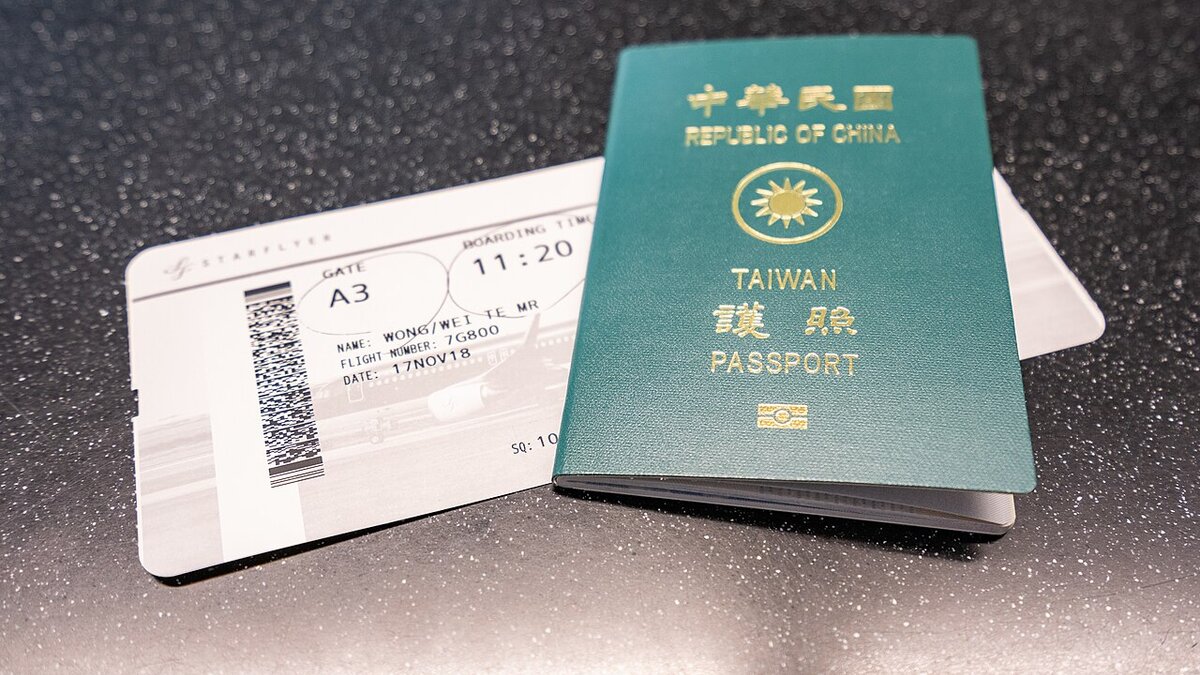
Cover image: airline ticket and boarding documents on a desk — photo by N509FZ, CC BY-SA 4.0, via Wikimedia Commons.
"176 ticket stock" means the ticket was issued by Emirates. The first three digits of every 13-digit airline ticket number are the issuing carrier's IATA accounting code, and IATA's airline directory lists 176 against Emirates (designator EK). The prefix names the airline that issued the ticket, which is not always the airline flying the plane.
Emirates itself says its tickets "normally" begin with 176. Around that number sits the industry's ticketing machinery: a global distribution system (GDS) such as Amadeus, Sabre or Travelport to make the booking, and IATA's Billing and Settlement Plan (BSP), which settles more than $242 billion a year between airlines and agents. The newer channel, NDC (New Distribution Capability), carried 21.2 per cent of the transactions settled through ARC, the US agency clearing house, in September 2026.
Last checked: 25 October 2026.
What does "176 ticket stock" mean?
Emirates describes its ticket number as "a 13-character number", printed near the top right of the ticket and again on the boarding pass. The first three digits are the airline's accounting code, assigned by IATA under Passenger Services Conference Resolution 767. The remaining ten identify the individual document.
"Ticket stock" is the trade's word for an airline's numbering range, and airlines use it in their own rules. Delta's partner terms refer to "Delta ticket stock (ticket numbers beginning with '006')", and Lufthansa Group's agency guideline applies its fees to tickets issued "on the ticket stock of an LHG airline". An agent who says a ticket is "on 176 stock" means Emirates is the validating, or issuing, carrier.
IATA's rules separate a three-digit accounting code for passenger documents from a prefix code for cargo, so cargo arms can hold their own numbers: IATA's directory lists Lufthansa at 220 and Lufthansa Cargo at 020. A passenger code requires a government-issued air operator certificate and either a two-way interline agreement with an airline holding an IATA code or participation in BSP, ARC or the A4A interline traffic agreement. A code granted on a promise to join BSP is recalled if the airline has not joined within 90 days.
One airline, three codes: Emirates is EK in IATA's two-letter designator system (the letters in its flight numbers), UAE in ICAO's three-letter system and 176 on its tickets. The table lists the prefixes of 25 large airlines in number order, so you can look one up from the start of a ticket.
| Ticket prefix | Airline | IATA code | ICAO code | Country or territory |
|---|---|---|---|---|
| 001 | American Airlines | AA | AAL | United States |
| 006 | Delta Air Lines | DL | DAL | United States |
| 014 | Air Canada | AC | ACA | Canada |
| 016 | United Airlines | UA | UAL | United States |
| 057 | Air France | AF | AFR | France |
| 065 | Saudi Arabian Airlines | SV | SVA | Saudi Arabia |
| 071 | Ethiopian Airlines | ET | ETH | Ethiopia |
| 074 | KLM | KL | KLM | Netherlands |
| 081 | Qantas | QF | QFA | Australia |
| 098 | Air India | AI | AIC | India |
| 125 | British Airways | BA | BAW | United Kingdom |
| 131 | Japan Airlines | JL | JAL | Japan |
| 157 | Qatar Airways | QR | QTR | Qatar |
| 160 | Cathay Pacific | CX | CPA | Hong Kong (SAR) |
| 176 | Emirates | EK | UAE | United Arab Emirates |
| 180 | Korean Air | KE | KAL | South Korea |
| 205 | ANA | NH | ANA | Japan |
| 217 | Thai Airways International | TG | THA | Thailand |
| 220 | Lufthansa | LH | DLH | Germany |
| 232 | Malaysia Airlines | MH | MAS | Malaysia |
| 235 | Turkish Airlines | TK | THY | Türkiye |
| 312 | IndiGo | 6E | IGO | India |
| 607 | Etihad Airways | EY | ETD | United Arab Emirates |
| 618 | Singapore Airlines | SQ | SIA | Singapore |
| 999 | Air China | CA | CCA | China |
Source: IATA, Current Airline Members directory, checked 25 October 2026.
How do you read a ticket number, and what does the prefix tell you?
Take an invented Emirates number, 176-2401234567. The 176 says Emirates issued it; the next ten digits are that document's own number.
Under IATA Resolution 722f, as Air Serbia's agency rules summarise it, one ticket number holds up to four flight coupons, issued in travel sequence, and a journey can use up to four consecutive "conjunction" tickets, so 16 flights at most. A return trip with one connection each way is four flights and fits on one number. Add a two-flight side trip and the agent issues a second, consecutive number.
Seats, excess baggage and rebooking fees bought separately are not new tickets. They go on an Electronic Miscellaneous Document (EMD), which IATA Resolutions 725f, 725g and 725h define as the method to document such charges and track their use.
The prefix then answers three practical questions:
- Who validated the ticket. Under IATA Resolution 852, as quoted by Air Serbia, an airline can be validating carrier only if it is a BSP or ARC member able to issue e-tickets in that market, has interline agreements with every marketing and operating carrier on the itinerary, and is on the itinerary itself or is general sales agent for a carrier that is. On a codeshare flight, where seller and operator differ, the prefix follows the issuer, not the aircraft.
- Whether partner flights earn miles as expected. Delta says Cape Air flights earn SkyMiles only on e-tickets "issued on Delta (006) ticket stock", and that on tickets issued from 10 September 2026, Delta-ticketed, Aeromexico-marketed flights earn by distance and fare class, not ticket price.
- Which distribution charge applies. Lufthansa Group's charge, tabled below, is levied on GDS tickets issued on the stock of Lufthansa, SWISS, Austrian, Brussels Airlines and Air Dolomiti.
How does GDS air ticketing work in 2026?
A GDS is the marketplace agencies use to see airline schedules, fares and seats, and to book and ticket them. Lufthansa Group's fee schedule names the systems by industry code: Amadeus (1A), Sabre (1S/1B) and Travelport (1G/1P/1V), plus Travelsky (1E) and Infini (1F). The classic link runs on EDIFACT, a data standard "established in the 1980s" that, in Lufthansa's words, "has reached its limitation". As our explainer on how airlines use AI to set fares sets out, legacy GDS channels were built around filed fare classes, so continuous prices travel mainly over NDC and airline websites.
Whatever the system, the booking creates a PNR, the ticket is issued on the validating carrier's stock and the sale is reported to BSP or, in the US, to ARC. ARC says 9,863 US retail, corporate and online travel agency locations sold $10.2 billion of air tickets in September 2026, up 18 per cent year on year. Sabre reported 76 million air distribution bookings in the second quarter of 2026, up 1 per cent, and chief executive Kurt Ekert told analysts on the 6 August earnings call that NDC "now represents about 5% of our distribution volumes".
What is NDC, and what are NDC fares and NDC tickets?
NDC stands for New Distribution Capability. IATA describes it as an XML-based data transmission standard and "a data exchange format based on Offer and Order management processes for airlines to create and distribute relevant offers to the customer regardless of the distribution channel", open to any third party, intermediary, IT provider or non-IATA member.
An "NDC fare" is an offer delivered over an NDC connection rather than filed for EDIFACT distribution. Lufthansa Group shows how one airline group tiers it: sellers under its NDC Public Model, available only through GDS NDC aggregators, get the "NDC Base Offer" and pay a charge, while those under its Bilateral Model get the "NDC Smart Offer" with no charge.
An "NDC ticket" is, in 2026, still a ticket. Lufthansa levies its NDC charge per ticket issued through aggregators, and ARC counts NDC sales among the transactions it settles: 21.2 per cent of the total in September 2026, from 1,264 reporting agencies. The 13-digit number and prefix work as on any GDS booking. ARC's share covers US agency transactions; Sabre's 5 per cent covers its own volumes.
Why do airlines add GDS surcharges?
Lufthansa Group calls its version a Distribution Cost Charge (DCC), and its price list shows which channel it wants agencies to use. The DCC is a fixed amount on almost every ticket issued through a GDS on its airlines' stock, differentiated by GDS since September 2022. Version 7.0 of the guideline, valid from 5 May 2026, sets these amounts:
| How the agency books | Charge in EUR | US-origin travel (USD) | UK-origin travel (GBP) | Collected as |
|---|---|---|---|---|
| Amadeus (1A), classic EDIFACT | 19.00 | 22.00 | 17.00 | YR tax |
| Sabre (1S/1B), classic EDIFACT | 22.50 | 26.00 | 20.00 | YR tax |
| Travelport (1G/1P/1V), classic EDIFACT | 23.00 | 27.00 | 20.00 | YR tax |
| GDS NDC aggregator, NDC Public Model ("Base Offer") | 8.00 | 9.50 | 7.00 | OB-T carrier ticketing fee |
| Lufthansa Group own sales, or NDC Bilateral Model ("Smart Offer") | None | None | None | Not charged |
Source: Lufthansa Group DCC guideline, version 7.0. Non-euro amounts apply by point of origin.
On a Travelport booking the gap between the classic and NDC channels is €15 a ticket (€23 against €8). The charge applies to original tickets only, not reissues or EMDs, and is refundable only in involuntary cases on completely unused tickets. Air Serbia runs a similar scheme: a Distribution Cost Fee on all its GDS-sold tickets since 28 March 2021, and none on direct sales.
How do BSP and ARC settle the money?
BSP standardises an accredited agency's financial relationships with airlines: the agent files one sales report and makes one remittance, and BSP makes one consolidated settlement to the airlines. By IATA's current figures, BSP links 400-plus participating airlines with 59,000-plus accredited travel agents, settles more than $242 billion a year and has a 99.99 per cent on-time settlement rate. Its BSPlink platform also handles refunds and agency debit memos (ADMs), which airlines such as Air Serbia raise against agents that break their ticketing rules.
In the US, ARC plays the same role, processing over $100 billion a year in agency air sales. Its third-quarter 2026 sales reached $29.7 billion, up 18 per cent on a year earlier.
What is ONE Order, and where does it stand in October 2026?
ONE Order is IATA's standard for replacing three legacy records, the PNR, the e-ticket and the EMD, with a single "Order". In its June 2026 fact sheet IATA says the industry "is reaching an inflection point", with major carriers in every region signing contracts with IT partners or launching programmes to implement order management at scale. Early implementers, it adds, expect a technology foundation "ready for Agentic AI-driven distribution".
There is no industry deadline. IATA says it "remains each airline's responsibility" to choose its own timeline, and until an airline moves to orders, its tickets keep their 13-digit numbers and prefixes. Consumer AI tools work with the old records meanwhile: Booking Holdings' new Vayo agent reads booking confirmations from the traveller's inbox to track fares. IATA enters this phase under new leadership, with Saadia Zahidi taking over as director general on 1 November 2026.
Frequently asked questions
What does 176 mean on an airline ticket?
176 is Emirates' three-digit IATA accounting code. A 13-digit ticket number starting with 176 was issued, or validated, by Emirates, even if a partner operates some flights. Emirates says its tickets normally begin with 176. Any other prefix can be checked in the "3 digit code" column of IATA's member-airline directory.
What is the full form of NDC in airline ticketing?
NDC stands for New Distribution Capability, an IATA programme and XML-based data standard that lets airlines build their own offers and distribute them to travel agents and other sellers through any channel. An "NDC fare" is an offer delivered over such a connection rather than through classic GDS (EDIFACT) distribution.
What does NDC ticket mean?
Usually a ticket booked over an NDC connection instead of a classic GDS link. In 2026 it is still an ordinary 13-digit e-ticket on the airline's own stock, settled through BSP or ARC; NDC made up 21.2 per cent of ARC-settled transactions in September 2026. IATA's ONE Order standard is designed to replace the ticket with a single order.
What does DDS mean in the airline industry?
In IATA and ARC usage, DDS stands for Direct Data Solutions, a global dataset of airline sales, market and itinerary data offered to airlines. IATA says it combines carrier-contributed data with BSP and ARC settlement transactions, covers direct and indirect channels and is updated daily. It supports network planning, revenue management and sales, and is not a booking channel.
Is my booking reference the same as my ticket number?
No. The booking reference, or PNR, is a six-character alphanumeric code that identifies the reservation. The ticket number has 13 digits and begins with the issuing airline's code, such as 176 for Emirates or 006 for Delta. On an Emirates e-ticket the booking reference follows the "BOOKING REFERENCE" field, while the ticket number sits near the top right.
Sources
- IATA, Current airline members (designators and 3-digit codes)
- IATA, Accounting and prefix code requirements (Resolution 767)
- Emirates, Help: finding your ticket number and booking reference
- Delta Air Lines, Earning miles with airline partners
- Air Serbia, Ticketing policy for travel agencies (IATA Resolutions 722f, 725, 852)
- Lufthansa Group, DCC guideline version 7.0, valid from 5 May 2026
- IATA, Distribution with Offers and Orders (NDC)
- The Motley Fool, Sabre Q2 2026 earnings call transcript
- IATA, Billing and Settlement Plan (BSP)
- ARC, US travel agency air ticket sales, September 2026
- IATA, ONE Order fact sheet (June 2026)
- IATA, Direct Data Solutions (DDS)