How IATA's Billing and Settlement Plan works: one report and one payment per period, the 2026 remittance rules, GoLite to GoGlobal accreditation and default.
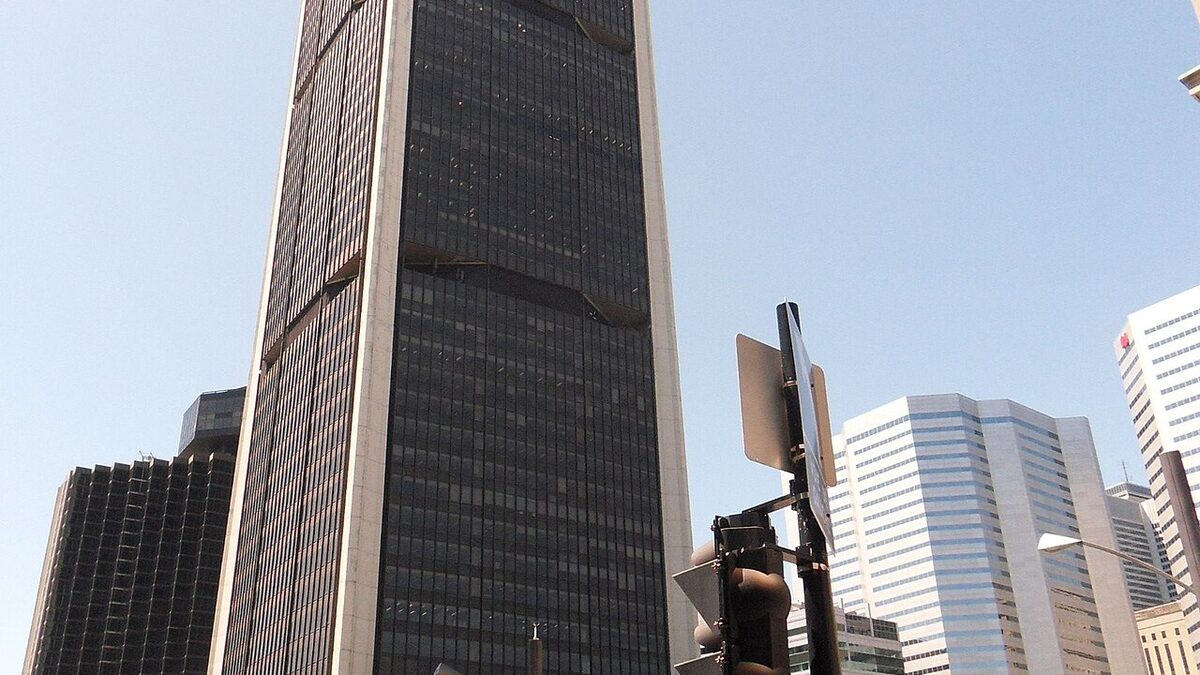
Cover image: The Montreal building that houses IATA's head office (2014 file photo) — photo by FBuHL09, CC BY-SA 4.0, via Wikimedia Commons.
IATA's Billing and Settlement Plan (BSP) is the clearing system through which accredited travel agents pay airlines for the tickets they sell. Instead of running an account with every carrier, an agent files one sales report and makes one remittance per period to IATA, which makes one consolidated settlement to each airline. In 2025 the BSP processed US$242.3 billion, net of US$19.7 billion in refunds, in more than 180 countries and territories, according to IATA's June 2026 financial services fact sheet.
This is IATA BSP explained from the agency side: the money flow, the due dates, accreditation and default, including the June 2026 change that put every weekly-remittance market on a standard schedule over agent associations' objections.
Last checked: 1 November 2026.
IATA BSP explained: what does the Billing and Settlement Plan do?
IATA's BSP page counts more than 400 participating airlines and more than 59,000 accredited travel agents. Airlines get one consolidated settlement; agents sign one Passenger Sales Agency Agreement instead of a contract with each carrier. IATA's June 2026 fact sheet puts the 2025 on-time settlement rate at 100.0 per cent.
Airlines write the rules in IATA's Passenger Agency Conference, after consulting agents through joint councils. The core text is Resolution 812, the Passenger Sales Agency Rules.
The United States runs separately: agencies there use IATAN accreditation and settle through ARC, whose monthly US agency sales figures we report.
How does a ticket sale flow from the agent to the airline?
Accreditation alone does not let an agent issue tickets. Each airline grants ticketing authority separately, under its own policy, through BSPlink. After that, IATA's BSP Manual for Agents describes this flow:
- Issue. The agent issues the ticket through a GDS or other ticketing system.
- Report. The system sends the sale to IATA's Data Processing Centre in daily files. IATA says NDC and GDS sales are reported in one format.
- Bill. For each period, the agent's tickets, refunds and agency debit and credit memos (ADMs and ACMs) appear on BSPlink with a remittance notice.
- Remit. The agent pays the BSP's clearing bank by the remittance date, by transfer or, where offered, direct debit.
- Settle. IATA pays each airline one consolidated amount.
Of the payment methods, only "cash" sales leave the agent owing the BSP for the ticket: money it collected itself and holds in trust for the airlines. A ticket on the customer's card runs on the airline's merchant agreement, so the airline's own card acquirer pays it; under Resolution 890 the agent is fully liable for chargebacks on card-not-present sales. IATA EasyPay, a prepaid e-wallet, blocks the funds at issue. IATA says it runs in more than 120 BSPs and has more than 8,000 agent users.
IATA does not check fare calculations. Each airline does, and may correct errors with an ADM or ACM. Our guide to ticket prefixes, GDSs and validating carriers covers the ticketing side.
When do travel agents have to pay the BSP?
IATA publishes a yearly calendar for every BSP, with three dates per period: the reporting period, the billing date when reports reach BSPlink, and the remittance date by which money must be credited to the clearing bank. IATA's January 2026 note quotes the Resolution 812 deadlines:
- Twice a month: billings for the 1st to the 15th are due by close of business on the last day of the month; the 16th to month-end by the 15th of the next month.
- Weekly or four times a month: due by "the fifth working day or seventh calendar day following the reporting date".
Weekly markets used to be able to pick their own payment day. The Passenger Agency Conference removed that option in November 2025, effective June 2026. IATA says 108 of the 134 weekly-remittance markets had already aligned, leaving 26 to change; the 42 fortnightly markets already had fixed dates.
The Universal Federation of Travel Agents' Associations (UFTAA) argued that shorter, inflexible periods would force agents to pre-finance airline sales, and that agents have no vote on binding BSP resolutions, India Outbound reported in January 2026. IATA says fixed dates cut the sales days at risk, which can lower the financial security agents post.
What does a BSP cycle look like? A worked example
Illustrative figures, not a real agency. An agency in a twice-monthly market has held GoStandard accreditation for 18 months. New cash agents run on Risk Status C conditions for 24 months, so its Remittance Holding Capacity (RHC), the cap on unremitted cash, equals its financial security: US$150,000.
From the 1st to the 15th it sells US$195,000 of tickets:
- US$120,000 in cash sales, on which airline commission policies let it keep US$1,200;
- US$45,000 on customers' cards, paid to the airlines by their acquirers;
- US$30,000 through IATA EasyPay.
The billing also carries a US$4,000 cash refund and a US$250 ADM. The agency owes US$120,000 less US$1,200, less US$4,000, plus US$250: US$115,050, due by close of business on the last day of the month. Card and EasyPay sales stay out of both the remittance and the RHC.
By the 28th it has taken another US$35,000 in cash, so unremitted cash reaches about US$150,050, just over its cap. IATA emails alerts at 50 and 75 per cent; at the cap it tells the GDS to switch off cash payment. The agency can keep selling on cards and EasyPay, remit the US$115,050 early, or post more security.
If it then misses the month-end deadline, the default clock below starts.
Who can use the BSP: GoLite, GoStandard, GoEurozone or GoGlobal?
Only IATA-accredited agents can join. The NewGen ISS edition of IATA's BSP manual lists four accreditation types, which IATA markets under these names.
| As of 1 November 2026 | GoLite | GoStandard | GoEurozone | GoGlobal |
|---|---|---|---|---|
| Type in IATA's manual | Standard, no cash facility | Standard with cash facility | Euro-Zone | Multi-Country |
| Coverage | One country | One country | Several Eurozone countries | Several countries |
| Cash sales | No | Yes | Yes | Yes |
| EasyPay and customer cards | Yes | Yes | Yes | Yes |
| Financial security | None, unless ADMs pass a threshold | Yes, at least the first two years | Yes, one guarantee for all locations | Yes, one guarantee for all locations |
| Financial review | None | Yearly, unless opted out | Yearly | Quarterly |
| Application fee | CHF 250 | CHF 1,500 | CHF 1,900 | CHF 2,500 |
| Annual fee, main entity | CHF 200/350/500 | CHF 200/350/500 | CHF 200/350/500 | CHF 48,000 |
The CHF 200/350/500 bands apply to annual BSP sales under US$200,000, up to US$2 million and above US$2 million. Fees from IATA's accreditation brochure, valid from February 2025; branches pay extra.
On approval the agent signs the agency agreement, pays the fees and, if required, provides security within 40 days. Agents revalidate yearly and can switch type later.
How does IATA manage agent risk and default?
Agents with a cash facility get a risk status from two tests: a financial review and their risk history, where events such as late payments stay on file for 12 or 24 months. Passing both gives status A; failing one gives B; failing both gives C.
Status sets the RHC, tiered on the agent's amount at risk, which reflects its three highest cash-sales periods of the past year. Status A agents get twice that amount on the first US$5 million, 1.75 times on the next US$5 million and 1.5 times beyond. Status B gets 1.5, 1.35 and 1.2 times; under C, capacity equals the security posted. In IATA's example, an A-rated agent with US$11 million at risk gets US$20.25 million.
A late or short payment is logged as a risk event and must be cleared by the end of the next business day. If it is not, IATA declares a default: all amounts owed fall due, ticketing authority with every airline is restricted, all BSP airlines are told, and the action reaches branches and commonly owned agencies. Reinstated agents run on status C conditions for 24 months. Agents can appeal IATA decisions to the independent Travel Agency Commissioner within 30 calendar days.
Airlines can be suspended too, under Resolution 850, for example for unpaid settlements. For travellers caught in an agency failure, see our guide to refunds when a travel company goes bust.
Frequently asked questions
Do travel agents need IATA accreditation to use the BSP?
Yes. Only IATA-accredited agents in a market can take part, alongside the airlines that sell there. Accreditation brings an IATA code, a Passenger Sales Agency Agreement and BSPlink access, but each airline still grants ticketing authority separately. Agencies in the United States use IATAN accreditation and settle through ARC instead.
What happens if a travel agent pays the BSP late?
IATA logs a late or short payment as a risk event, and the agent must pay by the end of the following business day. If it does not, IATA declares a default: everything owed falls due, ticketing authority is restricted with every BSP airline, and the action covers branches and commonly owned agencies.
What is the difference between BSP and BSPlink?
The BSP is the settlement system: the rules, the clearing bank and the consolidated payments. BSPlink is IATA's web platform for using it, reached through the IATA Customer Portal. Agents download billing reports there, which stay online for two months, and handle ADMs, ACMs and refund applications. Airlines use it to manage ticketing authority.
Do IATA EasyPay tickets count against the Remittance Holding Capacity?
No. EasyPay funds are blocked in the agent's e-wallet when the ticket is issued, so IATA leaves those sales out of the capacity calculation. The money moves to the clearing bank daily. The account has no minimum balance and no maintenance fee, and funds not blocked against a ticket can be withdrawn.
Sources
- IATA, Billing and Settlement Plan
- IATA, BSP Manual for Agents (effective 1 September 2025)
- IATA, Recent changes to BSP remittance rules
- IATA, Passenger Agency Conference Resolutions Manual: 2026 changes
- IATA, Financial Services fact sheet
- IATA, Payment Services fact sheet
- IATA, accreditation brochure
- IATA, Travel agent accreditation
- India Outbound, travel agents protest IATA BSP remittance change