Codeshare flights let one airline sell seats on another's aircraft, and the fine print decides your baggage allowance, seat selection and compensation rights. Here is how to spot the operating carrier and avoid the classic booking traps.
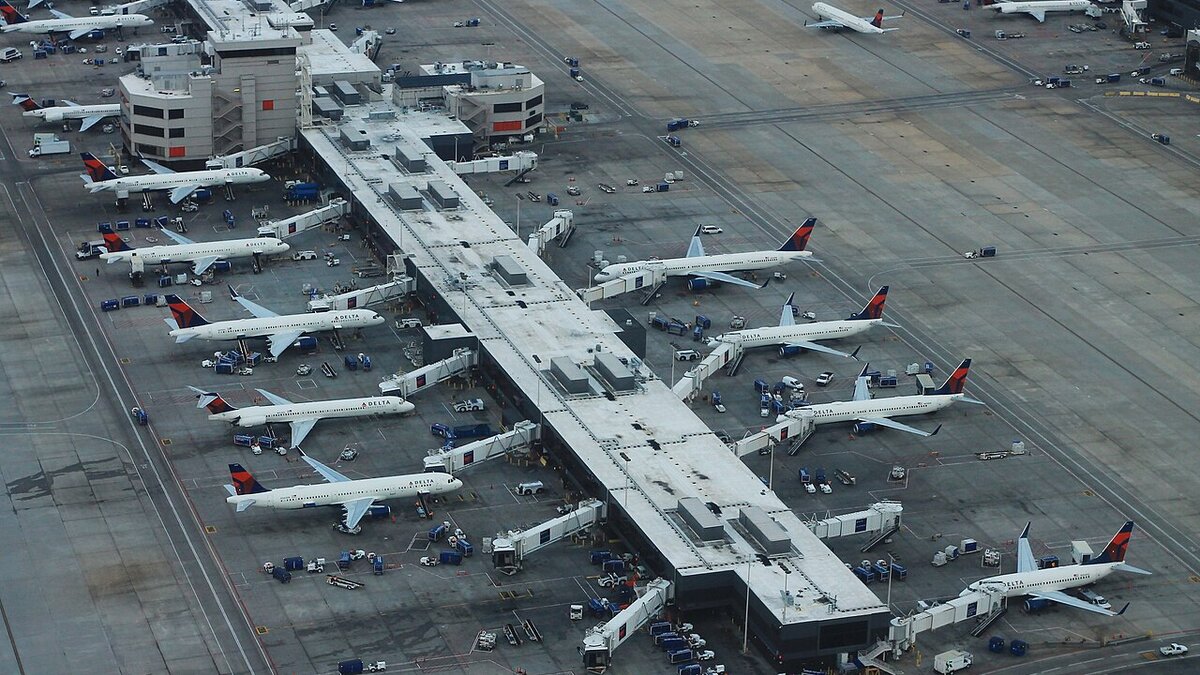
Cover image: partner airline aircraft parked at adjacent airport gates — photo by Bill Abbott, CC BY-SA 2.0, via Wikimedia Commons.
A codeshare flight is a single departure sold under two or more airline brands at once: the marketing carrier sells the ticket under its own two-letter code and flight number, while the operating carrier supplies the aircraft, crew and, crucially, most of the rules that govern your journey. A ticket bought as an American Airlines "AA" flight with a four-digit number may in fact be flown by British Airways; a Lufthansa "LH" code across the Atlantic may put you on a United aircraft. The tell is the phrase "Operated by", which sellers in the United States are legally required to display under the US Department of Transportation's codeshare disclosure rule, 14 CFR Part 257, in schedules, advertising and in writing at purchase. A second clue: four-digit flight numbers, typically 3000 and above, usually signal a codeshare, while the operating carrier's own flights carry shorter numbers. The distinction matters because seat selection and check-in generally follow the operating carrier, disruption compensation in Europe is owed by the operating carrier, and baggage allowances on US itineraries usually follow the first marketing carrier on the ticket.
What is a codeshare flight and why do airlines use them?
Under a codeshare agreement, one airline places its designator code, the two-character identifier assigned by trade body IATA, on a flight operated by a partner. Both airlines then sell seats on the same aircraft as if it were their own service. The commercial logic is network reach: a carrier can advertise hundreds of "destinations" it never physically serves.
That is why the practice is so widespread among alliance partners and new entrants alike. Start-ups use codeshares to plug network gaps from day one, much as Riyadh Air did when it launched long-haul service to London, and the Gulf majors use them to feed their hubs; Qatar Airways' 160-destination summer 2026 network counts numerous partner-operated points.
How can you tell who really flies your plane?
Regulators have made the operating carrier hard to hide, but easy to overlook. Check these before you pay:
- The "Operated by" line. DOT rules require any US-marketed flight sold under another carrier's code to state "Operated by" followed by the transporting airline's corporate name, on booking sites, itineraries and at purchase.
- The flight number. Codeshares typically carry four-digit numbers at the high end of the range. AA6868 is almost certainly a partner's aircraft; AS320 is Alaska's own.
- The aircraft type and departure terminal. If your "Delta" flight to Paris shows an Air France A350 departing from the Air France terminal, the metal is French.
- Metasearch filters. Google Flights and ITA Matrix label codeshares explicitly and can screen them out of results.
Interline vs codeshare vs joint venture: what is the difference?
Codeshares sit in the middle of a spectrum of airline cooperation. An interline agreement is the loosest tie; a joint venture, which usually requires government-granted antitrust immunity, is the deepest, letting two airlines coordinate schedules, pricing and revenue as if they were one company. Frequent flyer partnerships and alliances layer on top of all three, as covered in the guide to how Star Alliance, oneworld and SkyTeam actually work.
| Arrangement | What it allows | What the passenger sees |
|---|---|---|
| Interline | One ticket and through-checked bags across two airlines; rebooking support during disruption | Each flight keeps its own airline's code and number |
| Codeshare | Partner sells the flight under its own code and flight number | "Flight AA6123, operated by British Airways" |
| Joint venture | Antitrust-immunised coordination of schedules, fares and shared revenue on a route or region | Near-identical fares and seamless connections across both brands |
Whose baggage, seat and status rules apply on a codeshare?
Baggage: for itineraries whose ticketed origin or destination is in the United States, DOT policy requires the first marketing carrier's baggage allowance and fees to apply to the entire journey. Elsewhere, IATA's rules generally point to the marketing carrier unless it has published a rule deferring to the operating airline. In practice, check-in agents do not always apply this correctly, so carry a copy of your fare's allowance; the airline baggage rules guide explains how to read it.
Seats and check-in: these usually live in the operating carrier's system. You will often need to retrieve the operating airline's own booking reference, which is different from the marketing carrier's, to pick a seat or check in online, and some operating carriers charge for advance seating that the marketing airline would give you free.
Miles and status: earning is normally governed by the marketing carrier's flight number and booked fare class, and partner earning charts frequently credit at reduced rates. The same seat on the same aircraft can earn very different amounts depending on whose code you bought, a quirk explored in the primer on how airline miles actually work. Elite perks such as lounge access and priority baggage usually carry over within an alliance, but complimentary upgrades almost never apply on partner-operated metal.
What are the biggest codeshare booking pitfalls?
Disruption responsibility is split. Under the European Union's passenger-rights regulation EC 261/2004, compensation claims for delays and cancellations must be directed at the operating carrier, not the airline that sold you the ticket, while rebooking and refunds run through the ticketing airline. Knowing which door to knock on saves weeks; see the guide to flight delay compensation and passenger rights.
Other traps worth flagging: the onboard product may not match the brand you paid for, since a premium-economy fare sold by one airline can map to a different cabin on the partner; customer service can bounce you between carriers when schedules change; and price differences of tens or hundreds of dollars can exist between the marketing and operating carrier for the identical seat. When two prices exist for the same flight, buying from the operating carrier usually simplifies seats, check-in and disruption handling.
Frequently asked questions
Is a codeshare flight the same plane as the original flight?
Yes. A codeshare is one physical departure sold under multiple flight numbers. Everyone boards the same aircraft, operated by one airline's crew, regardless of which brand sold the seat.
Which airline do I check in with on a codeshare flight?
Check in with the operating carrier, the airline named after "Operated by" on your itinerary. You may need its separate booking reference, which the marketing airline or your travel agent can supply, to use its app or website.
Who pays compensation if my codeshare flight is delayed or cancelled?
Under EU rules, the operating carrier is liable for delay and cancellation compensation, even if you bought the ticket from a partner. Refunds and rebooking, by contrast, are handled by the airline or agent that issued your ticket.
Do I earn frequent flyer miles on codeshare flights?
Usually, but the amount depends on the marketing carrier's flight number and the fare class booked, and partner rates are often lower than flying on your own airline's code. Check your programme's partner earning chart before booking.