Staying airside is not always enough: the US, UK and Schengen hubs all have transit rules that bite even inside the terminal. When you need a visa for a layover.
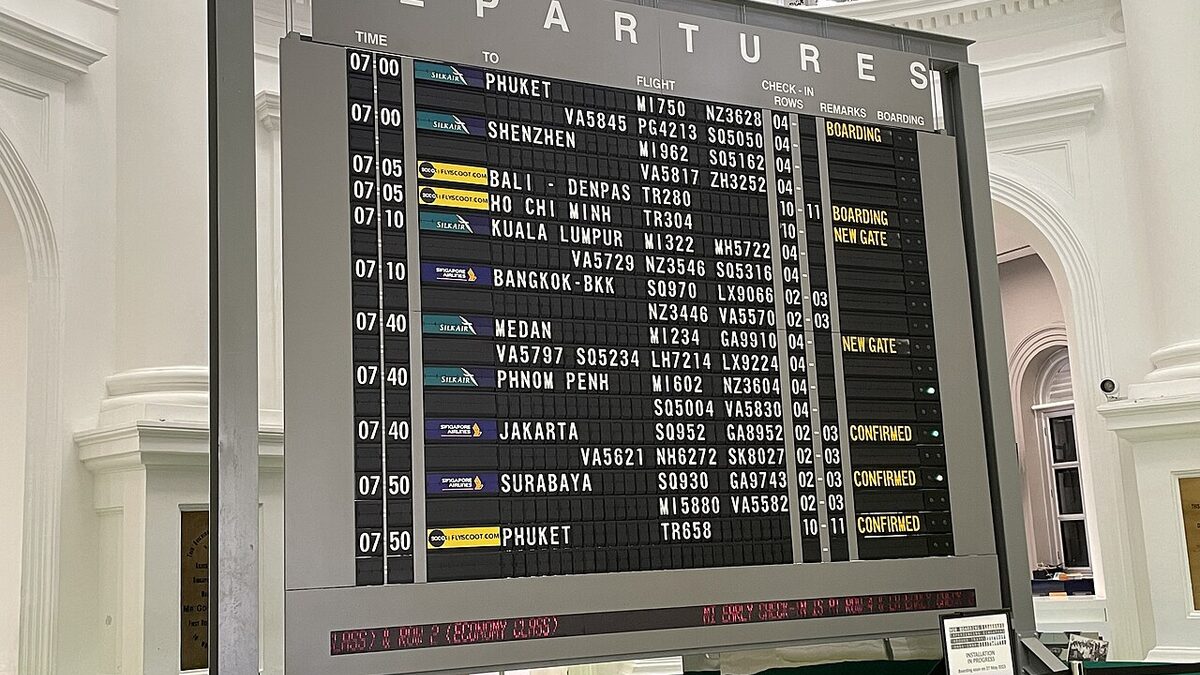
Cover image: The classic split-flap departures board at Singapore Changi Airport — photo by Sgconlaw, CC BY-SA 4.0, via Wikimedia Commons.
Sometimes yes, and the part that catches people out is that it depends on the airport, not the airline. If you stay inside the international transit area without clearing immigration, many nationalities need nothing at all. But some hubs demand a transit visa even when you never leave the terminal, and one common booking mistake turns an airside connection into a full entry. Here is how to tell which side of the line your layover falls on.
Airside vs landside: the distinction that decides everything
Airside transit means you step off one flight, follow the “transfers” signs, clear a security check and board the next flight without ever passing immigration. Landside means you clear passport control: to change terminals, collect and re-check bags, sleep in a hotel, or simply walk out and see the city. Landside always means entering the country, so you need whatever visa or waiver that entry requires.
The trap is the separate-tickets booking. Two flights on one ticket means the airline moves your bags and you stay airside. Two separate bookings, even with the same airline, usually means collecting luggage landside and checking in again, which needs an entry visa or waiver. Budget itineraries stitched together from cheap one-ways are where travellers get refused boarding. If your connection goes wrong for other reasons, know what happens when a flight is diverted and your delay compensation rights before you fly.
The hubs with special rules
United States: everyone clears immigration. America has no sterile international transit. Every connecting passenger, even one never leaving the terminal, must be admissible to the US, which means a C-1 transit visa or an ESTA for Visa Waiver nationalities, on a participating carrier. Allow extra time: US connections routinely need two hours or more.
United Kingdom: two different transit visas. Stay airside without clearing the border and you may need a Direct Airside Transit visa; clear immigration and leave within 48 hours and it is a Visitor in Transit visa instead. Holding a UK ETA, a Standard Visitor visa or an EU Settlement family permit means no transit visa at all. The rules are fiddly enough that we wrote a dedicated UK ETA explainer; check which side of the border your connection falls on with your airline.
Schengen Europe: some passports need a visa to stay airside. An airport transit visa (Category A) lets you connect through the international transit area of a Schengen airport, and nationals of certain listed countries must hold one even if they never clear immigration. The European Commission confirms the requirement and points to the EU Visa Code for the country list and the exemption categories, which cover holders of certain residence permits and visas. If your itinerary has you clearing immigration anywhere in Schengen, you need a full short-stay visa instead.
Elsewhere, check the hub, not just the country. Gulf and Asian hubs run their own transit schemes with different time limits and conditions, and the answer can differ between airports in the same country. Dubai's setup, for example, is covered in our Dubai visa guide. When fare-hunting routings through unfamiliar hubs, our cheapest way to fly to Europe playbook shows how to weigh a cheap connection against its visa cost and connection risk.
Layover visa rules at a glance
| Situation | What you need |
|---|---|
| Staying airside, single ticket, hub allows it | Often nothing; check your nationality against the hub's transit list |
| Any connection in the United States | C-1 transit visa or ESTA; everyone clears immigration |
| Airside in the UK without an ETA or UK visa | Direct Airside Transit visa (many nationalities) |
| Leaving the airport, or separate tickets with bag reclaim | Full entry visa or waiver for that country |
How to check before you book
Run your exact nationality and routing through the airline's document checker (Timatic, via most airline sites) before paying, not after. Confirm whether your connection stays airside, whether bags are through-checked, and whether an overnight layover forces you landside. Screenshot the result; if check-in staff query you at the airport, that record settles it.
Frequently asked questions
Do I need a visa for a layover if I do not leave the airport?
Sometimes. It depends on the hub and your passport: the US requires ESTA or a C-1 visa even airside, the UK may require a Direct Airside Transit visa, and some nationalities need a Schengen airport transit visa. Many other connections need nothing.
Do separate tickets change the visa requirement?
Often, yes. Separate bookings usually mean collecting bags landside and checking in again, which counts as entering the country and needs an entry visa or waiver rather than a transit one.
How long a layover needs a transit visa?
Duration is rarely the trigger; clearing immigration is. A 20-hour airside layover can need no paperwork while a 3-hour landside one needs a full entry visa. The UK's landside transit visa caps the stay at 48 hours.
Can I leave the airport during a layover without a visa?
No. Stepping out landside is entering the country, so you need whatever entry visa or waiver your passport requires. Some hubs offer transit tours or short-stay permits; arrange those in advance.
Sources
- UK transit visa rules — GOV.UK: Direct Airside Transit vs Visitor in Transit
- Visa policy of the United States — Wikipedia: no sterile transit, C visa and ESTA position
- Applying for a Schengen visa — European Commission: airport transit visa requirement and exemptions