Stay near the Skytrain and Bangkok becomes easy. Sukhumvit for all-rounders, Siam for shoppers, the riverside for sightseeing, Khao San for budgets.
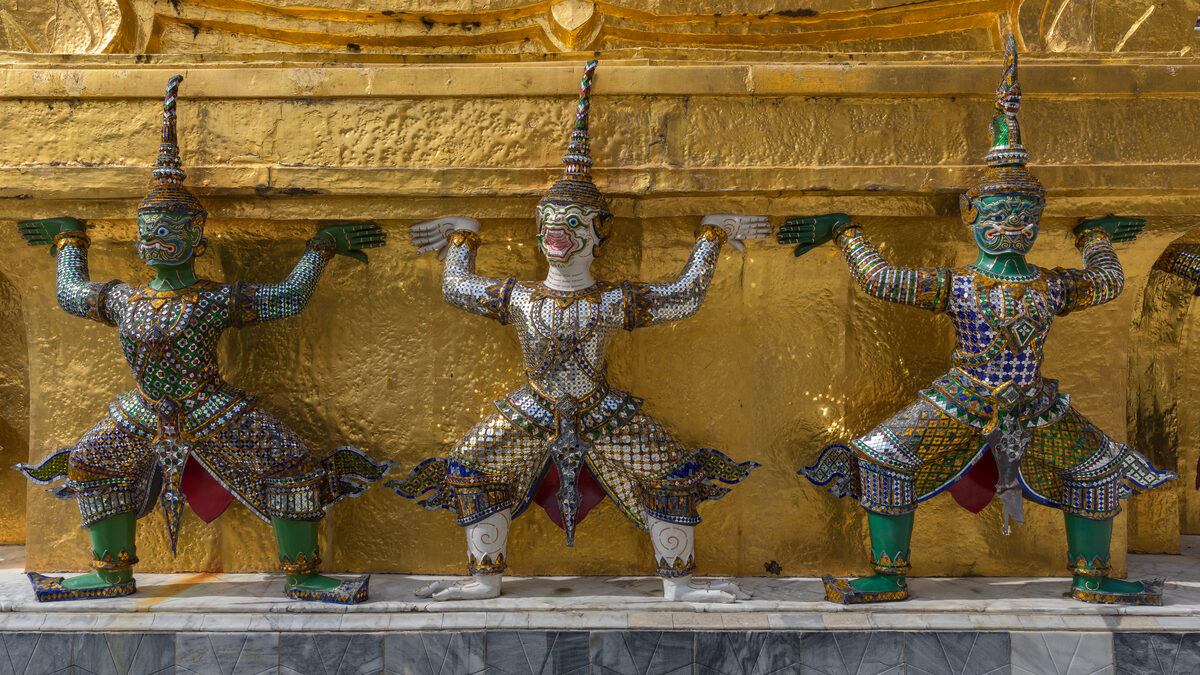
Cover image: Yaksha guardian statues holding up a golden chedi at Wat Phra Kaew, Bangkok — photo by Basile Morin, CC BY-SA 4.0, via Wikimedia Commons.
First time in Bangkok? Stay near the Skytrain or metro and the city becomes easy; stay far from both and every outing starts with a traffic jam. For most first-timers the answer is Sukhumvit for nightlife and dining, Siam for shopping and centrality, or the riverside for sightseeing in style. Each suits a different trip, and picking wrong costs you hours in the city's famous congestion.
Bangkok rewards a base near rail above all else. The BTS Skytrain runs three lines (Sukhumvit, Silom and Gold) across 60-plus stations, and the metro network keeps growing, so anchor yourself to a station and let the trains beat the traffic. If you are budgeting the trip too, see what two weeks in Thailand costs before choosing a star rating.
Sukhumvit: the best all-rounder
Sukhumvit Road runs for miles beneath the BTS Sukhumvit line, and its central stations (Asok, Phrom Phong, Thong Lo) put malls, street food, rooftop bars and nightlife within one train ride. Terminal 21 at Asok and EmQuartier at Phrom Phong anchor the shopping; Soi 11 and Thonglor handle the evenings. Hotels span every budget, from hostels to five-stars, and the airport connection is painless: Airport Rail Link from Suvarnabhumi to Phaya Thai, then one BTS change.
Trade-off: it is the least Thai-feeling of the central districts, all malls and condos. If temples top your list, pair a Sukhumvit base with an early start and the riverside old town by boat and train.
Siam and Pratunam: shop, then sleep central
Siam is Bangkok's commercial heart, and BTS Siam station is the interchange between the two main Skytrain lines, which makes it the best-connected bed in the city. Siam Paragon, MBK and CentralWorld cover every price point, and Pratunam's markets sit a short walk north. Families do well here: everything is walkable, air-conditioned and easy to navigate.
Trade-off: nightlife is thin and the area shuts early by Bangkok standards. For evening plans you will ride the BTS out and back, which is quick but worth factoring in.
The riverside: temples by boat, hotels with a view
The Chao Phraya river is Bangkok's original highway, and the stretch past the Grand Palace and Wat Arun is where the city's great sights cluster. Riverside hotels, including icons like the Mandarin Oriental plus newer luxury arrivals, run free shuttle boats that dodge road traffic entirely. Saphan Taksin BTS station feeds the public express boats, and Silom just behind the river offers strong mid-range value with both BTS and metro access.
This is the right base for a short, sight-heavy first visit or a honeymoon splurge. Check what is new in Bangkok this year when planning temple days, since several riverside developments have reshaped the waterfront. Dress modestly for palace and temple visits: covered shoulders and knees are the norm.
Khao San and the old town: backpacker energy, weak rail links
Khao San Road remains the backpacker capital, ringed by guesthouses, bars and travel agents, with the Grand Palace and Wat Pho a walk or short tuk-tuk ride away. Budget travellers who plan days around temples and nights around the strip will be happy here.
The catch is transport. The old town has the weakest rail access of any tourist district, so dinners across town mean taxis, boats or Grab through traffic. Read up on tipping etiquette in Thailand before haggling with drivers, and use ride-hailing with fixed prices late at night.
How to choose: airport, transit and street sense
Two airports serve the city. Long-haul flights almost always land at Suvarnabhumi, which has the Airport Rail Link running to Phaya Thai station; some regional budget flights use Don Mueang instead, so check your ticket and allow a taxi or bus transfer from there. From Phaya Thai the BTS reaches Sukhumvit and Siam in minutes.
Default to Grab over kerbside haggling, keep small bills for boats and markets, and give the city three to four full days: two for temples, river and palaces, one for markets and malls, one spare for a day trip or a slow riverside afternoon.
| Area | Best for | Transit |
|---|---|---|
| Sukhumvit | First-timers, food, nightlife | BTS Sukhumvit line, excellent |
| Siam / Pratunam | Shopping, families | BTS interchange, best in city |
| Riverside / Silom | Sightseeing, splurge stays | Boats plus BTS, good |
| Khao San / old town | Budget, temples on foot | Weak rail; boats, taxis, Grab |
Frequently asked questions
How many days in Bangkok is enough for a first visit?
Three to four full days. Two cover the Grand Palace, Wat Pho, Wat Arun and the river; a third handles markets and malls; a fourth allows a day trip or a slow day.
Which Bangkok airport will I land at?
Long-haul flights almost always use Suvarnabhumi, which connects downtown via the Airport Rail Link to Phaya Thai. Some regional budget carriers use Don Mueang, so check your ticket.
Is staying by the river worth it?
For a short or celebratory trip, yes. Riverside hotels cost more but their shuttle boats bypass road traffic, and the major sights sit along the water.
Khao San Road or Sukhumvit for a first-timer?
Sukhumvit for most visitors: better transit, wider hotel choice and safer late-night transport. Khao San suits under-25s and strict budgets who will spend days in the old town anyway.