Japan's JESTA travel authorisation is law but not live: it must start by 31 March 2029, with fiscal 2028 the target. The fee and most rules are not set.
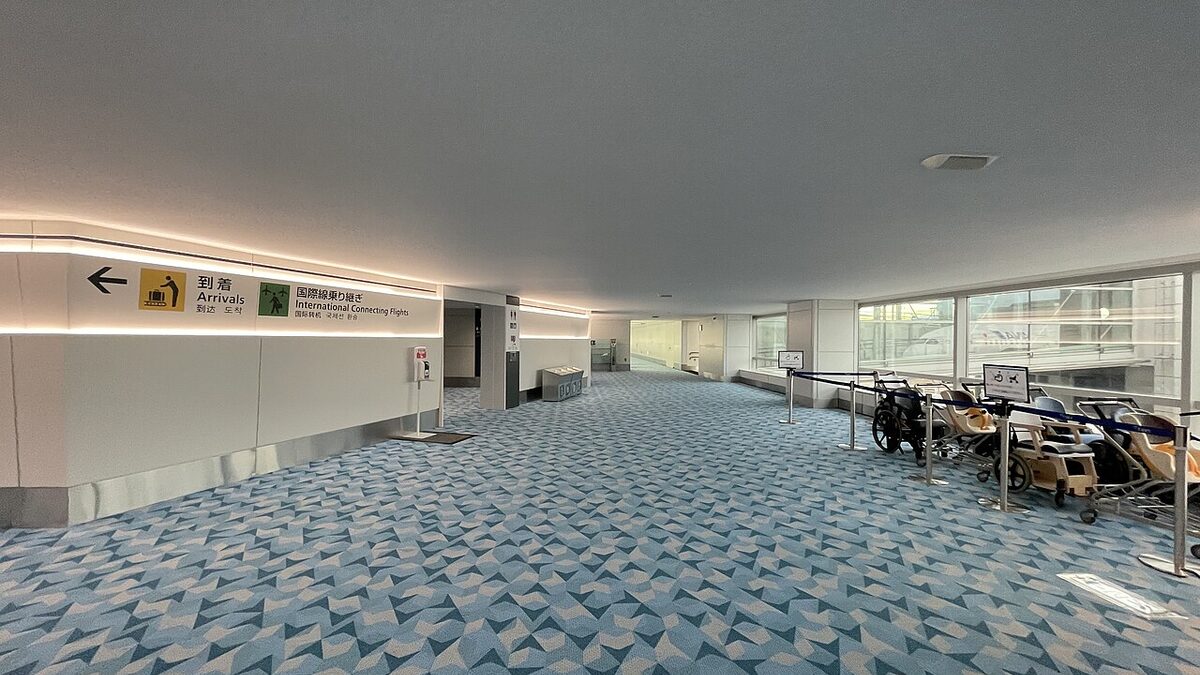
Cover image: Terminal 2 at Tokyo Haneda Airport (2023 file photo) — photo by MNXANL, CC BY-SA 4.0, via Wikimedia Commons.
JESTA, the Japan Electronic System for Travel Authorization, is the online pre-travel clearance Japan will require of visa-exempt visitors. Japan JESTA is law but not yet running: the Diet passed it on 29 May 2026, the government aims to launch it in fiscal 2028 (1 April 2028 to 31 March 2029), and the act says it must start by 31 March 2029. As of 1 November 2026, nobody needs a JESTA to travel to Japan.
At 2025 volumes, about 31.21 million arrivals a year would need one, the Immigration Services Agency (ISA) told the Diet, and airlines will have to report bookings to the agency.
Last checked: 1 November 2026.
What has Japan passed into law, and when does JESTA start?
The act amending the Immigration Control and Refugee Recognition Act passed on 29 May 2026 and was promulgated on 5 June as Act No. 32 of 2026, according to the ISA. Its JESTA provisions take effect on "a date set by Cabinet Order no later than 31 March 2029" (our translation). As of 1 November, the ISA's page for the law gives no fixed date.
Fiscal 2028 is the political target. Justice Minister Hiroshi Hiraguchi told the House of Representatives Judicial Affairs Committee on 17 April that the ministry "aims to introduce JESTA during fiscal 2028" (our translation). The ISA had originally aimed for 2030.
The timetable is tight. ISA deputy commissioner Soichiro Naito told the committee that a contractor had been chosen and design work was under way by April 2026, and that the agency needed at least about 17 months from that month for development, 8 months for testing links with other systems and 3 months for staff training. Run back to back, that is 28 months, pointing to around August 2028 at the earliest (our arithmetic).
Who will need a JESTA?
The ISA's outline of the act names three groups (our translation):
- Visa-exempt foreign nationals planning a short stay for tourism or similar activities, including residents of Taiwan, covered through a separate special act.
- Passengers on designated cruise ships who want to land for sightseeing.
- Some passengers changing aircraft or ships in Japan, to be specified by ministerial ordinance.
Under the new Article 7-2, the ISA may grant authorisation when the traveller's information shows a valid passport, planned activities that "are not false", a stay within the permitted period and no grounds for refusing landing (our translation).
Authorisation becomes a condition of landing. A visa-exempt visitor with neither a JESTA nor a visa will be barred, but someone refused a JESTA who holds a valid visa can still land on it.
Two transitional rules in the act matter (our reading): the ISA can take applications before launch, from a date no later than 31 October 2028, and for six months after launch travellers the ministry designates as low-risk, judged partly on their nationality's overstay numbers, are exempt.
Naito told the Diet that of about 38.46 million short-stay new entries in 2025, about 29.63 million came from visa-exempt countries and regions, and about 1.58 million more landed on port-of-call and similar permits. At 60 million visitors, the agency expects about 43.7 million people a year to need one.
Transit is narrower. Naito said the ministry envisages exempting transit travellers who are not seen as an immigration-control problem, citing low overstay numbers as an example (our translation).
What is still undecided, including the JESTA fee?
On the fee, the act provides for two charges, both fixed by Cabinet Order: one on applying, based on actual cost, and one when authorisation is granted, which may also reflect the cost of immigration control. Asked for a figure, Naito said "it is difficult to give a confirmed amount at this point" (our translation), citing processing cost, the benefit to travellers, policy costs and other countries' fees as factors. Kyodo News reported in December 2025, citing unnamed sources, that the government was considering ¥2,000 to ¥3,000.
Validity is the second open question. The outline says authorisation is given "for each new entry" in the interest of strict control (our translation). That reads as one clearance per trip, but the operating rules are unpublished.
The ISA expects to ask for name, date of birth, nationality, passport number, purpose of travel, places to stay and visit, and length of stay, which Naito said would be more detailed than today's disembarkation (ED) card. Whether to add health or criminal-record questions will be settled after enactment, Naito said.
Not decided or not published, as of 1 November 2026:
- The start date and the amount of either fee.
- How far ahead to apply, processing times and what happens when plans change.
- Which transit passengers are covered, and the final questions.
- When cruise lines must report passengers.
What changes for airlines, cruise lines and travel sellers?
Under the new Article 56-2, an airline flying to Japan must report the booker's name and other details to the ISA when it issues the ticket; for ships, the timing will be set by ordinance. The ISA must reply "without delay" on whether the person may be carried, and a carrier told no must not board them unless the notice arrives after departure. Failing to report, or carrying a flagged passenger, draws an administrative fine.
The ISA's flowchart shows how a trip would run (our summary):
- The traveller submits information online and the ISA grants authorisation.
- The airline issues the ticket and reports the booking; the ISA says whether the passenger may be carried.
- At check-in, the airline carries only cleared passengers.
- On arrival, the visitor uses a walk-through gate, and a record replaces the passport landing stamp.
In its fiscal 2027 tax-reform request, the ISA notes that tax-free shops currently rely mainly on checks that include that stamp, and asks for the process to be reviewed.
For agencies, tour operators and DMCs, that means a new document check for every visa-exempt client, possibly on every trip.
How does Japan JESTA compare with ETIAS, ESTA, UK ETA and K-ETA?
The clearest difference is validity: the four schemes below last two or three years.
| Scheme | Who needs it | Status on 1 November 2026 | Fee | Validity | Timing |
|---|---|---|---|---|---|
| Japan JESTA | Visa-exempt short-stay visitors, cruise passengers landing to sightsee, some transit passengers | Law enacted; must start by 31 March 2029 | Not set | Each new entry (ISA outline) | Not published |
| EU ETIAS | Visa-exempt visitors to 30 European countries | Not in operation; date to be announced months ahead | €20 (some exempt) | 3 years or passport expiry | Mostly minutes; up to 4 days, longer if more is needed |
| US ESTA | Citizens of 42 Visa Waiver Program countries | In operation | $40.62 | 2 years or passport expiry | CBP advises at least 72 hours before boarding |
| UK ETA | Most visa-free visitors, such as from Europe, the US and Canada | In operation | £20 | 2 years or passport expiry | Usually a day; up to 3 working days |
| South Korea K-ETA | Visa-free nationals, minus exempt groups | In operation; listed countries exempt to 31 December 2026 | KRW 10,000 plus about 3% card charge | 3 years or passport expiry | Usually within 72 hours |
K-ETA's exemption for listed countries ends on 31 December 2026, and as of 1 November the portal had posted no extension; our K-ETA exemption guide tracks it. US rules are in our ESTA entry requirements guide.
What do visitors to Japan need now?
A valid passport and, depending on nationality, a visa. JNTO, Japan's tourism board, says some passport holders need no visa for tourism stays of 90 days or less, and that some nationalities may be granted 15, 30 or 180 days.
A single-entry visa cost ¥3,000 and a multiple-entry visa ¥6,000, a foreign ministry official told the Diet in April; from 1 July 2026 the standard fees became ¥15,000 and ¥30,000, as we reported when Japan quintupled its visa fees.
Visit Japan Web, run by the Digital Agency, lets arrivals pre-register immigration and customs details and show a 2D code. JNTO says it is not required. Naito said JESTA's walk-through gates will require filing the arrival record through it. Budget for departure and lodging taxes too; our Japan tourist taxes guide adds them up.
Frequently asked questions
Do I need a JESTA to visit Japan in 2026 or 2027?
No. JESTA is not in operation as of 1 November 2026. The law says it must start on a date set by Cabinet Order no later than 31 March 2029, and the government is aiming for fiscal 2028. Until then, visa-exempt visitors enter Japan as they do now, and any website taking JESTA applications today is not official.
How much will Japan's JESTA cost?
Nobody knows yet. The act provides for two fees set by Cabinet Order, one paid on applying and one when authorisation is granted. The Immigration Services Agency told the Diet in April 2026 that it could not give a confirmed amount, and that it will weigh processing costs, the benefit to travellers and fees in other countries.
Will one JESTA cover several trips to Japan?
Probably not. The agency's outline of the law says authorisation is given for each new entry. ESTA, ETIAS, the UK ETA and K-ETA each last two or three years instead. Detailed rules, including how far ahead you can apply and what happens if plans change, have not been published.
Does JESTA replace a Japanese visa or Visit Japan Web?
No. JESTA is for visa-exempt visitors, so anyone who needs a visa still applies for one, and a valid visa still lets you land if a JESTA is refused. Visit Japan Web, which handles immigration and customs details today, stays a separate service, but the ISA told the Diet that JESTA holders will need it to file their arrival record to use the walk-through gates.
Sources
- Immigration Services Agency, 2026 Immigration Control Act amendment (Japanese)
- Immigration Services Agency, outline of the JESTA act (Japanese, PDF)
- House of Representatives, Judicial Affairs Committee, 17 April 2026 (Japanese)
- Ministry of Finance, ISA tax-reform request on JESTA and tax-free sales (Japanese, PDF)
- European Commission, What is ETIAS
- US Customs and Border Protection, official ESTA website
- GOV.UK, Electronic travel authorisation (ETA)
- Korea Ministry of Justice, K-ETA exemption extended to 31 December 2026 (Korean)