American, Delta and United persuaded the DOT to deny Air China's extra Washington and New York flights, escalating the fight over Russian airspace and the 50-weekly cap.
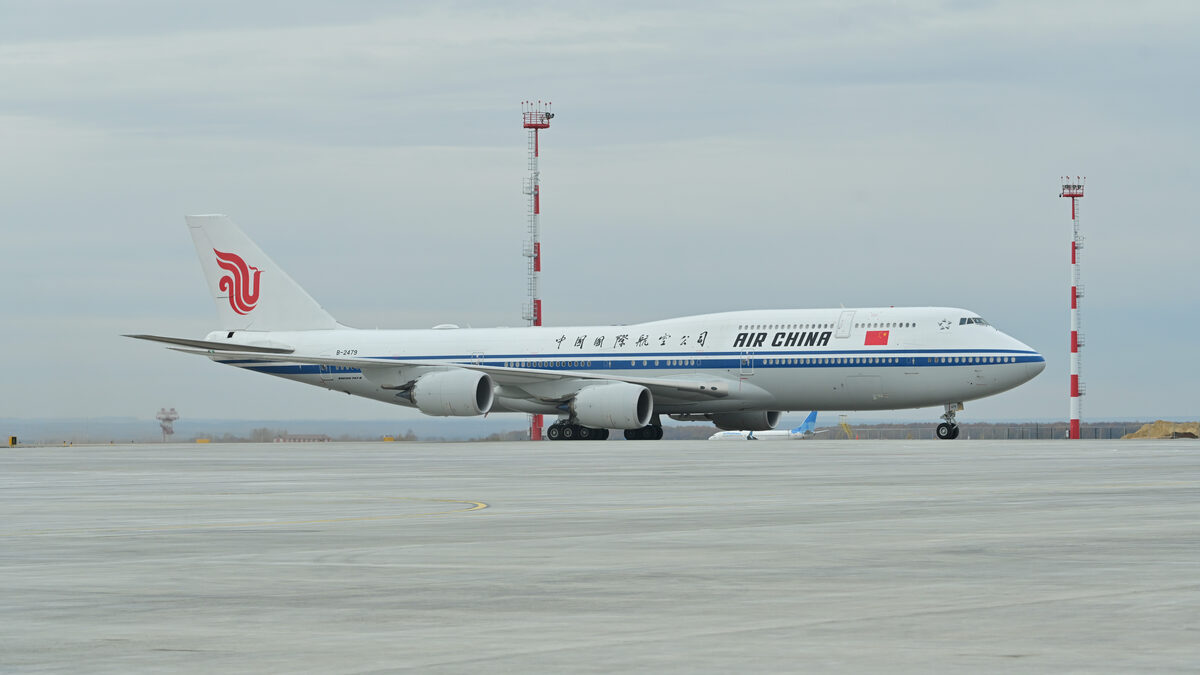
Cover image: Air China Boeing 747-8 on the tarmac — photo by Press Service of the Head of Tatarstan, CC BY 4.0, via Wikimedia Commons.
American Airlines, Delta Air Lines and United Airlines, backed by the Airlines for America trade group, have asked the US Department of Transportation to block Air China's bid for additional flights to the United States, and the request has been denied. At issue were two temporary Air China flights to Washington Dulles and New York JFK timed around China's state visit, which US carriers argued would breach bilateral limits unless treated as charters.
The fight is about far more than two flights. US airlines say the American market structurally favours Chinese carriers because US airlines remain barred from Russian airspace while Chinese airlines still fly the shorter polar and trans-Siberian routings. Until that gap closes, they want Washington to withhold any expansion of Chinese frequencies, and they fear approving even temporary extras would set a precedent for bypassing the 50-weekly-flight cap.
What did Air China ask for?
Air China sought permission for two additional flights: one to Washington (IAD) and one to New York (JFK), operating this week and next alongside the state visit. The request fits a broader push by Chinese carriers to rebuild US flying as demand recovers from pandemic lows, when traffic fell to a fraction of 2019 levels on both sides.
The US-China bilateral aviation agreement caps each side's scheduled passenger frequencies, and the US carriers' filing argued the extras would violate those limits unless formally classified as charters. The request was denied despite the diplomatic context, and no policy change is expected before the visit concludes.
Why are US airlines objecting?
The core grievance is Russian overflight. Since Russia's invasion of Ukraine in 2022, US carriers have been effectively barred from Russian airspace and must fly longer, costlier routings to East Asia. Chinese carriers face no such restriction and continue to use the shorter polar and trans-Siberian routes, which means lower fuel burn, reduced crew costs and shorter flight times on the same city pairs.
US airlines argue that granting more frequencies deepens an already imbalanced market. Fuel remains the industry's largest variable cost, so a structural routing advantage compounds quickly, a dynamic we tracked in our analysis of jet fuel costs and airfares in 2026. The carriers say they are not opposed to bilateral ties in principle, but want expansion tied to concessions that offset the airspace disparity.
What is the 50-weekly-flight cap?
The US DOT currently enforces a limit of 50 weekly round-trip passenger flights per side between the two countries, a fraction of pre-2020 levels. Air China already uses five weekly frequencies per city within its share, and US airlines fear that approving extras outside the cap, even labelled temporary, would erode the only leverage Washington holds for restoring balance.
The cap has been raised in steps as relations thawed, but remains far below the triple-digit frequencies each side operated before the pandemic. Traffic is still rebuilding, and US officials are aware of the overflight complaint, though no formal offset policy has been adopted. The dispute echoes other airspace-driven schedule surgery this month across the Gulf, covered in our report on Gulf airlines rebounding from airspace disruption.
What happens next for US-China flying?
Procedurally, DOT has broad authority to approve or reject foreign carrier applications on bilateral, reciprocity, competitive-balance and public-interest grounds, and expansion ultimately needs government-to-government coordination. The denial holds the line at 50 weekly frequencies while diplomacy plays out around the visit.
For the trade, the practical effects are capacity and price. Constrained US-China frequencies keep fares elevated and seats scarce, which pushes corporate traffic onto one-stop itineraries via Tokyo, Seoul and Taipei. A separate pressure point is sanctions enforcement on third-country carriers, as seen in the US sanctions squeeze on Iran-linked airline operations. Until the airspace question is resolved, expect US airlines to contest every Chinese frequency request, and expect DOT to keep deciding them one by one.
Frequently asked questions
Why did US airlines oppose Air China's extra flights?
American, Delta and United argued the flights would breach bilateral limits and set a precedent for bypassing the 50-weekly-flight cap. Their deeper complaint is that Chinese carriers can overfly Russia while US carriers cannot, creating an uneven cost playing field.
Which Air China flights were blocked?
Two temporary flights tied to the state visit: one to Washington Dulles and one to New York JFK, operating this week and next. US carriers said they should only be allowed if classified as charters, and the request was denied.
How many US-China flights are allowed now?
Each side may operate up to 50 weekly round-trip passenger flights under the current US DOT framework. That is far below pre-pandemic levels, when each side operated well over 100 weekly frequencies.
Can US airlines fly over Russia?
Effectively no. Since 2022, US carriers avoid Russian airspace and fly longer routings to East Asia, while Chinese carriers still use polar and trans-Siberian routes with lower fuel and crew costs.