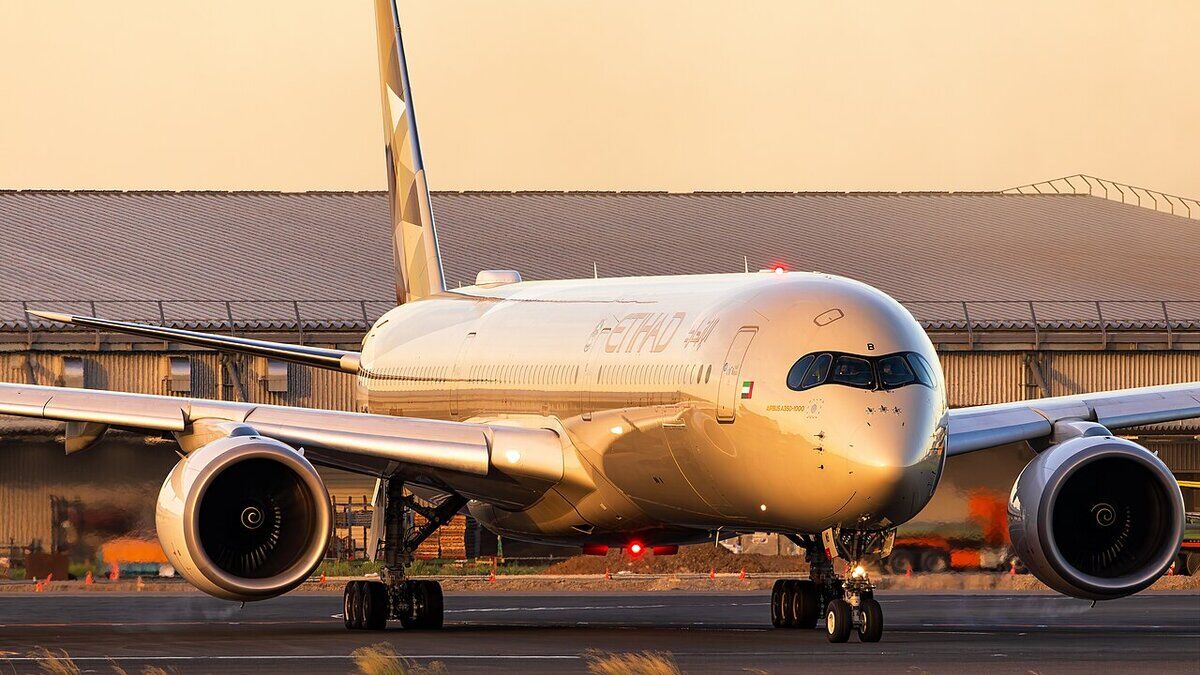
Emirates, Qatar Airways, Etihad and their rivals are restoring capacity fast after months of Middle East airspace disruption, with flight volumes climbing back toward pre-conflict levels.
Cover image: the terminal frontage at Dubai International Airport — photo by Ravi Dwivedi, CC BY-SA 4.0, via Wikimedia Commons.
After months of disruption that forced reroutings, cancellations and frayed schedules across the Middle East, the Gulf's big carriers are putting their networks back together — and faster than many expected. By late June 2026, flight volumes across the leading Gulf airlines had climbed back toward 82% of pre-disruption levels, with the largest carriers operating at or near 90% of pre-conflict capacity.
It is a significant turnaround for a region whose entire aviation model depends on the free flow of traffic across some of the world's most geopolitically sensitive airspace. When corridors close, Gulf networks are among the most exposed in the world; when they reopen, the recovery can be just as rapid.
From survival mode to expansion
The shift in tone is striking. Having spent the disruption period focused on rerouting around closed airspace and protecting core schedules, the major carriers have pivoted back to growth for the peak summer season. Emirates, Qatar Airways and Etihad — alongside flydubai, Gulf Air, Air Arabia and Kuwait Airways — have been restoring frequencies, reinstating suspended routes and, in several cases, adding new ones.
The recovery is not uniform. Some routes and connecting flows remain below their pre-disruption peaks, and a portion of the network is still being rebuilt. But the trajectory is clearly upward, and the airlines are competing again on expansion rather than merely on resilience.
A smarter approach to pricing
One notable change is how the carriers are managing fares as capacity returns. Rather than the broad, network-wide fare cuts seen in earlier recovery phases, the major Gulf airlines have moved to more targeted pricing — segmented promotions, limited-time offers, loyalty incentives and route-specific flash sales.
- Protecting yields on high-demand routes where premium and connecting traffic is strong.
- Stimulating demand selectively on routes still rebuilding their passenger base.
- Rewarding loyalty to recapture frequent flyers who may have shifted carriers during the disruption.
The competitive backdrop
The recovery is unfolding against an intensifying Gulf aviation contest. Even as they rebuild, the major carriers are upgrading premium cabins, expanding regional connectivity and — in Saudi Arabia's case — welcoming an entirely new competitor in Riyadh Air. The result is a region racing to add capacity and product just as global summer demand peaks.
What it means for travellers
For passengers routing through the Gulf, the practical news is good: more restored frequencies, returning destinations and selective deals as the airlines fight for share. The caveat is that recovery in a volatile region is rarely linear — schedules can still shift if airspace conditions change, and travellers on affected corridors should keep an eye on their bookings.
The bottom line
The speed of the Gulf rebound underscores both the fragility and the resilience of the region's hub model. Months of disruption dented the network; a few weeks of stability have brought much of it back. With summer demand surging and a new rival in the air, the Gulf's carriers are once again playing offence.