The US sanctioned all 27 remaining Iranian airlines on Sept 8 and suspended Iran overflight permissions. No Indian carrier is named, but Gulf one-stop routings and fares face knock-on effects.
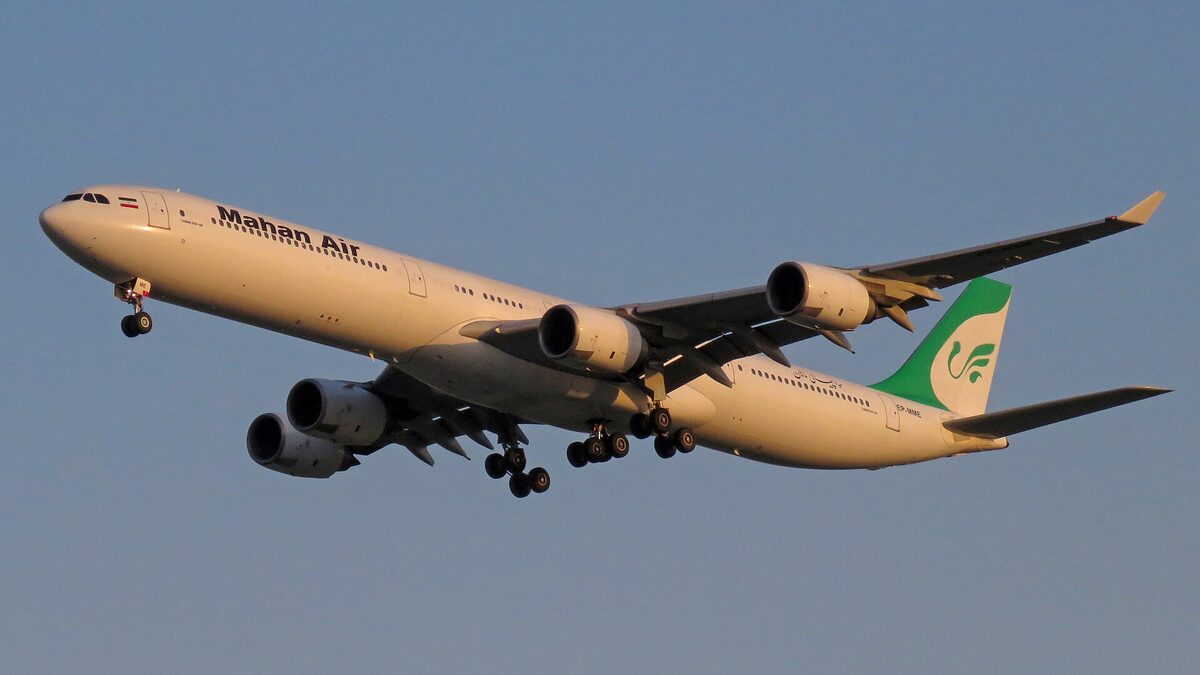
Cover image: a Mahan Air Airbus A340, registration EP-MME, on approach against a clear sky — photo by N509FZ, CC BY-SA 4.0, via Wikimedia Commons.
The United States has sanctioned every remaining active Iranian airline. On September 8, 2026, the Treasury Department designated 27 Iranian carriers plus 9 related firms and one individual under what it calls Operation Economic Outcast, and suspended permissions that let foreign airlines overfly Iran or bring American-built aircraft into the country. For travellers between India and the Middle East or Europe, the practical effect runs through routings and fares: fewer legal paths across Iranian airspace means longer detours, more fuel burn, and fresh compliance headaches for the Gulf carriers that carry millions of Indian passengers.
No Indian airline flies to Iran, and none is named in the action. But India–Gulf–Europe itineraries are exposed at one remove, because Emirates, Qatar Airways, Etihad and their peers operate US-origin fleets and bank through dollar channels that must now steer wider around Tehran. Here is what was announced, who is on the list, and what Indian travellers should watch.
What did the US announce on September 8?
The Office of Foreign Assets Control (OFAC) imposed blocking sanctions on 36 parties tied to Iran's air transport industry, the first wave of airline designations under a new aviation-sector determination issued August 24, 2026. The legal authority cited is Executive Orders 13224 and 13902. Alongside the designations, Treasury halted three aviation authorizations related to Iran, including permission to overfly Iranian airspace and permission for non-American carriers to operate US-built or US-regulated commercial aircraft into Iran. Flight-safety requests will be judged case by case.
The Financial Crimes Enforcement Network (FinCEN) issued a same-day advisory asking banks to report procurement activity linked to Iranian aviation. Treasury Secretary Scott Bessent warned that firms dealing with the designated carriers risk being, in his words, cut off from the global financial system. The stated rationale is that commercial carriers move arms, personnel and restricted freight for the regime and the Islamic Revolutionary Guard Corps, and help Tehran obtain American-origin jets and parts through front firms routed via the UAE and Oman.
Which airlines and firms were sanctioned?
The 27 designated carriers are described as Iran's remaining active airlines. The headline names include Iran Aseman Airlines, Qeshm Air, Zagros Airlines, Kish Air, Saha Airlines, Taban Air, Ata Airlines and Iran Air Tour, alongside smaller operators such as Fly Kish, Fly Persia, Karun Airlines, Varesh Airlines, Sepehran Airlines and Toos Airlines. Saha was already among three Iranian carriers penalised by the European Union in October 2024 over weapons transfers to Russia.
The nine additional designations target the procurement network around Mahan Air, the previously sanctioned carrier linked to the IRGC-Qods Force. Treasury says Mahan obtained at least three Boeing 777s in summer 2026 from a retired fleet, routed through the UAE and Oman with short-term registrations held by Sharjah firm ECT Aviation Support, with Turkish company Sky Phoenix acting as a second intermediary. ECT had publicly denied moving former Saudia 777s in a July 6, 2026 statement. Four service firms in Turkiye, Malaysia and Kazakhstan were penalised for supporting Mahan's international flights, including S Sistem Lojistik, which Treasury says coordinated shipments of drone parts and industrial equipment bound for Iran.
| Designation group | Count | Examples |
|---|---|---|
| Iranian airlines | 27 | Aseman, Qeshm, Zagros, Kish, Saha, Taban, Ata, Iran Air Tour |
| Front firms and intermediaries | 8 | ECT Aviation Support (UAE), Sky Phoenix (Turkiye), Aerobravo (UAE), Icargo (Malaysia) |
| Individuals | 1 | Ibrahim Ali Mohamed Mohamed Mahran, ECT's Egyptian owner-chief executive |
Will flights over Iran stop?
Most Western and Gulf carriers already avoid Iranian airspace, so schedules will not change overnight. The significance is that the remaining legal overflight permissions are now suspended, which removes flexibility airlines relied on during Gulf airspace disruptions earlier this year. When NOTAMs or tensions close other corridors, dispatchers have one fewer relief valve, and detours around the region add minutes and fuel burn that compound across a schedule.
The restriction on operating US-origin aircraft into Iran bites the other way: any foreign carrier with Boeing or US-regulated Airbus content in its fleet must now certify its Iran exposure, including codeshares and wet-leased capacity. Compliance departments, not route planners, will feel this first. For passengers, the visible symptom arrives later as fuel-driven fare pressure on Gulf routings, the same mechanism that lifted fares during previous airspace closures.
What does it mean for India–Middle East travellers?
Three things are worth tracking. First, routings: India–Europe nonstops on Air India and IndiGo already thread corridors north or south of Iran depending on daily restrictions, so the direct impact is small, but one-stop Gulf itineraries can pick up extra ground time when regional flows compress. Second, fares: sustained detours raise operating costs on exactly the high-volume India–Gulf–Europe paths where knowing your delay and compensation rights matters most. Third, banking: FinCEN's advisory pushes more aviation payments through sanctions screening, which can slow refunds and interline settlements on multi-carrier tickets touching the region.
None of this warrants changing a booked trip. It does argue for booking single-ticket itineraries with established carriers, keeping a buffer on Gulf connections, and watching airline travel waivers if regional NOTAMs multiply.
What happens next?
Treasury framed September 8 as the first wave under the August aviation determination, which implies further tranches against maintenance, insurance and parts suppliers. The next signals to watch are European alignment, any ICAO safety correspondence over the suspended authorizations, and airline schedule filings for winter 2026-27 that reveal whether Gulf carriers trim frequencies on corridors most exposed to detour costs. Proliferation-linked aviation enforcement has historically expanded from carriers to their service providers, and the S Sistem drone-parts allegation points exactly there.
Frequently asked questions
Do any Indian airlines fly to Iran?
No Indian carrier operates scheduled services to Iran, and no Indian airline or firm appears in the September 8 designations. The exposure for Indian travellers is indirect, through Gulf one-stop routings, shared airspace corridors and fare effects on India–Middle East–Europe itineraries.
Will my Emirates or Qatar Airways flight be cancelled?
No cancellations have been announced. Major Gulf carriers already avoid Iranian airspace on most routings, so near-term schedules are unaffected. The risk is measured in longer detours and higher operating costs if regional airspace tightens further, not grounded flights.
Can foreign airlines still overfly Iran?
The US has suspended the relevant American authorizations for overflight and for operating US-origin commercial aircraft into Iran, and says safety-related requests will be reviewed individually. Most Western carriers were already avoiding the airspace, so the practical change is reduced legal flexibility rather than an immediate traffic halt.
Could this raise India–Gulf airfares?
It can, at the margin. Longer detours burn more fuel, and fuel is the largest variable cost on Gulf routings. Past airspace closures have shown up in fares within weeks. Booking early and choosing single-ticket itineraries remains the best hedge.