Hotels and cruise lines still pay travel agents commission; many airlines pay no base rate. Rates, fees, overrides, host splits and GDS incentives explained.
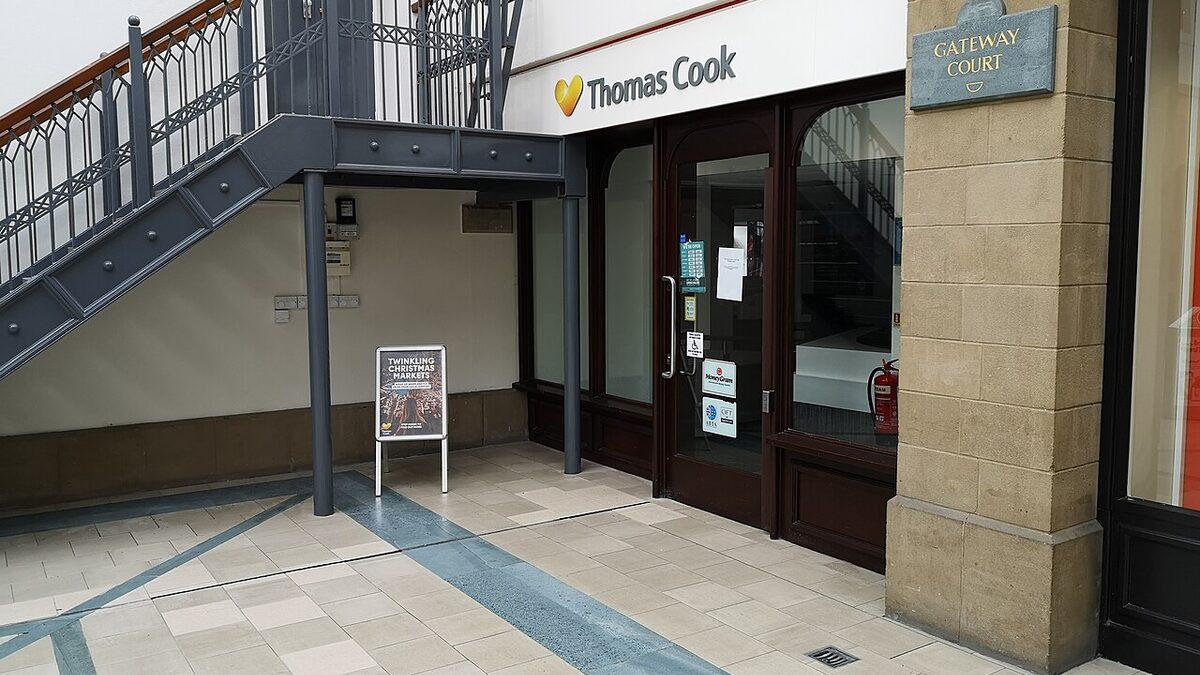
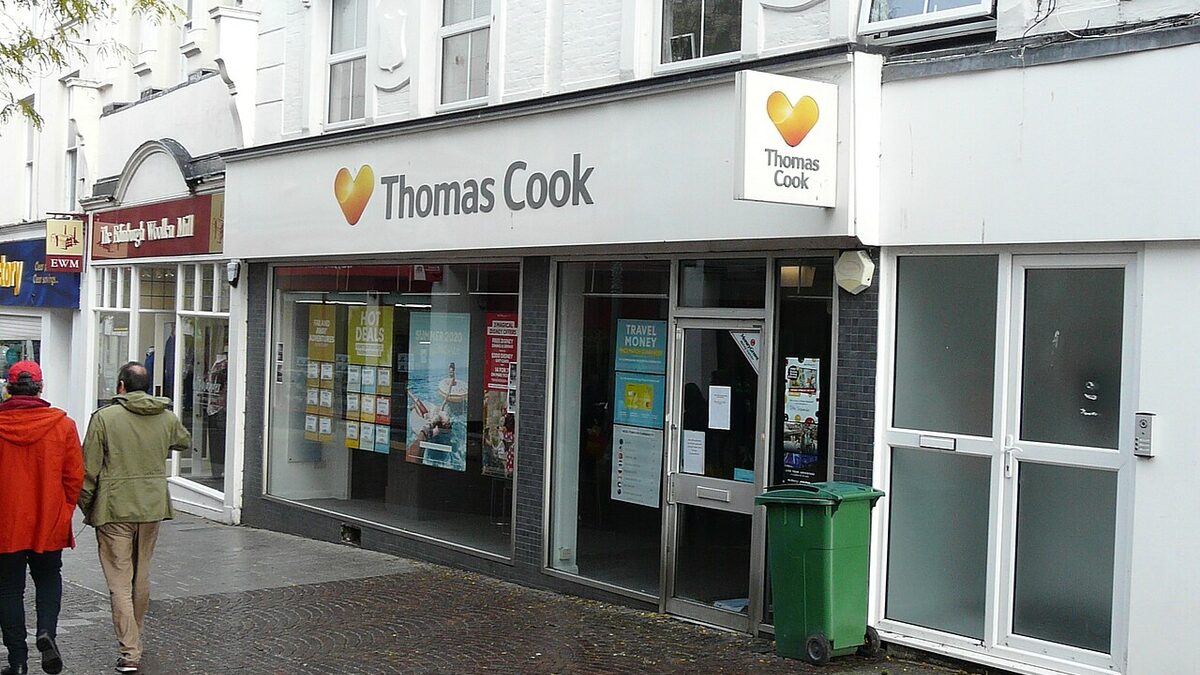
Cover image: A high-street travel shop in Folkestone, England (2019 file photo) — photo by John Baker, CC BY-SA 2.0, via Wikimedia Commons.
Travel agent commission is the share of a booking's value that a supplier pays the agency that sold it. Hotels, cruise lines, tour operators and insurers still pay it, usually as a percentage of the commissionable price. Many large airlines have cut base commission to zero since 2000, so in those markets agents earn on flights through incentive deals and fees charged to clients. Among hotel chains, Marriott pays 10 per cent on transient stays to agencies in its Preferred programme and 8 per cent to other accredited agencies, and Hilton pays up to 10 per cent, less a processing fee of 3 per cent of the commission.
The mix decides what an agency sells and what it charges. Host Agency Reviews, a US research site, in an article last updated in May 2024, calls 10 per cent of booking value a very general rule of thumb: on its 2023 average sale of $4,375, about $438 before fees and overrides.
Last checked: 1 November 2026.
Do airlines still pay travel agents commission?
In many markets, not as a base rate. By the early 1990s US agents earned a standard 10 per cent of ticket value, according to the 2002 final report of the US National Commission to Ensure Consumer Information and Choice in the Airline Industry. Cuts began in February 1995 with a $50 cap on domestic tickets. The domestic rate fell to 8 per cent in 1997 and 5 per cent in 1999, and in March 2002 it went to zero.
Other markets followed. In April 2004 Germany's competition authority, the Bundeskartellamt, declined to act against Lufthansa for cancelling basic commission, noting its minimum six-month transition and that agencies could charge customers directly. Lufthansa's own €30 or €45 surcharge on direct sales, the authority said, set a price range for agency fees.
In Asia, the Travel Industry Council of Hong Kong recorded in 2008 that Singapore Airlines had removed agency commission "at one stroke as early as 2000".
Two things replaced the base rate. Overrides, or incentive commissions, go to agencies that hit an airline's market-share or growth targets; the US commission said it understood overrides had increased since base commission went to zero, but smaller agencies outside consortia were less likely to get them. Service fees are the other. Citing the American Society of Travel Agents, the report said fewer than 2.8 per cent of agents charged fees before 1995, against a projected 95 per cent of agencies by 2002. Host Agency Reviews puts typical ticketing fees at about $40 domestic and $60 international.
When base commission existed, US agents deducted it before remitting ticket revenue to ARC's settlement plan, the commission noted. Our guide to airline ticketing, GDS and BSP settlement explains how settlement works today.
How much commission do hotels pay travel agents?
Marriott and Hilton publish their policies and pay through central systems. Marriott processes commission for more than 9,000 participating hotels in one weekly payment, for agencies whose ARC, IATA, IATAN, TIDS or CLIA number (CLIA in the US and Canada only) is on the booking.
Agencies meeting its Preferred Travel Agency criteria, which reward commitment to selling Marriott brands and engagement with its Hotel Excellence! training, earn 10 per cent on consumed transient reservations at commissionable rates. Others earn 8 per cent. All published public rates are commissionable; at extended-stay brands such as Residence Inn, commission stops after 29 nights. Marriott says it can change the policy at any time.
Hilton says more than 99 per cent of its hotels take part in its central programme, which pays weekly in the agent's currency via a processor called TACS. It pays 10 per cent of room revenue in the US, Mexico and Canada. Elsewhere it is 8 per cent of room revenue including tax, or 10 per cent excluding tax, and percentages may vary in some countries. A 3 per cent processing fee turns a $100 commission into $97.
Payment follows the stay. Marriott takes missing-commission enquiries from 45 days to 12 months after departure, and routes payments in more than 30 currencies through Onyx CenterSource, although agencies need no Onyx contract. Hilton's enquiry window is 12 months.
Online travel agencies negotiate their own terms, as our comparison of booking a hotel direct versus through an OTA sets out.
How do cruise, tour and insurance commissions work?
Carnival Corporation & plc's annual report for the year to 30 November 2025 says its agents "generally receive a base commission, plus the potential of additional commissions, including discounts or complimentary tour conductor cabins, based on the achievement of pre-defined sales terms". The filing gives no percentages.
The rate applies only to the commissionable part of the price. Host Agency Reviews shows how non-commissionable fees (NCFs) on a cruise, plus non-commissionable air, can turn a 16 per cent rate into about 10 per cent of total booking value.
Rates can also rise with an agency's cumulative sales with a supplier, Host Agency Reviews says. In its tour example, a $10,000 tour pays one agency 10 per cent ($1,000) and a top-tier agency 16 per cent ($1,600), at the same price to the traveller.
Travel insurance can pay far more: up to the 40 per cent range on premium policies, Host Agency Reviews says, against 0 to 20 per cent across other suppliers.
What are overrides, consortia, host agencies and GDS incentives?
Consortia, groups of agencies, matter for overrides, as the US commission noted in 2002, and Hilton lists TMC and consortia parity rates among its commissionable rates.
Host agencies serve independent advisers who book under the host instead of their own accreditation. Host Agency Reviews says splits run from 50 to 100 per cent to the adviser.
GDS companies pay agencies too. Sabre's 2025 annual report calls travel agency "incentive consideration" a large portion of its expenses, mostly tied to booking volumes such as flight segments booked. Rates per booking often rise past volume or share thresholds, and some contracts pay upfront at signing or modification. Sabre's incentive consideration rose by $56 million in 2025, and it carried $289.1 million of accrued subscriber incentives at 31 December 2025.
What are typical travel agent commission rates by supplier?
| Income source | Who pays | Basis | Published or reported rate |
|---|---|---|---|
| Airline base commission | Airline | Cut to zero in many markets since 2000 | Varies, not published |
| Airline overrides | Airline | Volume or market-share targets | Varies, not published |
| Air ticketing fee | Client | Flat fee per ticket | About $40 domestic, $60 international (Host Agency Reviews, US-based) |
| Marriott hotels | Hotel, paid centrally | Consumed transient stays at commissionable rates | 10% Preferred, 8% Standard |
| Hilton hotels | Hotel, via TACS | Room revenue | 10% US, Mexico, Canada; elsewhere 8% incl. tax or 10% excl. tax; less 3% of commission as a fee |
| Cruise lines | Cruise line | Fare excluding NCFs, plus target-based extras | Varies, not published |
| Tours | Tour operator | Percentage, tiered by volume | 10% to 16% in Host Agency Reviews' example |
| Travel insurance | Insurer | Percentage of premium | Up to about 40% on premium policies (Host Agency Reviews) |
| GDS incentives | GDS company | Per booking or segment, rising with volume | Varies, not published |
| Host agency split | Host agency | Adviser's share of commission | 50% to 100% (Host Agency Reviews) |
How much does an agent earn on a typical trip?
This illustrative example uses Hilton's published terms and Host Agency Reviews' typical ticketing fee; the tour rate and host split are assumptions.
- Two return international flights at $1,500 each, no base commission assumed, $60 ticketing fee per ticket: $120 in fees.
- Five nights at a Hilton outside the Americas at $200 a night before tax: 10 per cent of $1,000 is $100, less the 3 per cent fee: $97.
- A $2,000 tour at an assumed 12 per cent: $240.
The agency earns $337 in commission plus $120 in fees: $457 on $6,000 of travel, or 7.6 per cent.
On an assumed 80/20 host split, with the fees kept in full, the adviser takes home $269.60 plus $120, or $389.60, and the hotel money arrives only after check-out. Our explainer on how online travel agencies work covers the commission and merchant models OTAs use.
Frequently asked questions
Do travel agents get commission on flights?
In many markets, not as a base rate. US airlines cut domestic base commission to zero in March 2002, Germany's competition authority let Lufthansa scrap it in 2004, and Singapore Airlines removed it around 2000, according to the Travel Industry Council of Hong Kong. Agents now earn on flights mainly from airline incentive deals, GDS incentives and ticketing fees charged to the client.
When do travel agents receive their commission?
For hotel bookings, after the stay. Marriott pays only on consumed reservations and sends one weekly payment and statement; Hilton pays weekly in the agent's chosen currency through TACS. Marriott accepts enquiries about missing commission between 45 days and 12 months after departure, and Hilton allows 12 months.
Does travel agent commission make a trip more expensive?
Not directly. Commission comes out of the supplier's price, so the traveller pays the same whether the agency earns 10 or 16 per cent, as Host Agency Reviews' tour example shows. What a client may pay on top is a service, ticketing or planning fee, which US agencies began charging widely after airlines cut base commission.
What is a host agency commission split?
It is the share of supplier commission an independent adviser keeps when booking under a host agency rather than their own accreditation. Host Agency Reviews says splits run from 50 to 100 per cent to the adviser. A host's combined sales can unlock higher commission tiers; an adviser with their own accreditation keeps everything but may earn lower rates.
Sources
- US National Commission to Ensure Consumer Information and Choice in the Airline Industry, Final Report, ch. 2: The travel agency system today (2002)
- Bundeskartellamt, No proceedings against Lufthansa's cancellation of agency commission (2004)
- Travel Industry Council of Hong Kong, Zero commission is not end of world (2008)
- Marriott, Commissions Policy
- Hilton, Transient Commissions
- Sabre, Form 10-K for 2025
- Carnival Corporation & plc, Form 10-K for fiscal 2025
- Host Agency Reviews, How Much Does a Travel Agent Make per Booking? (2024)