A converted Cessna Caravan flew 3,199 miles from California to North Carolina with zero pilot inputs, remotely monitored from up to 2,323 miles away.
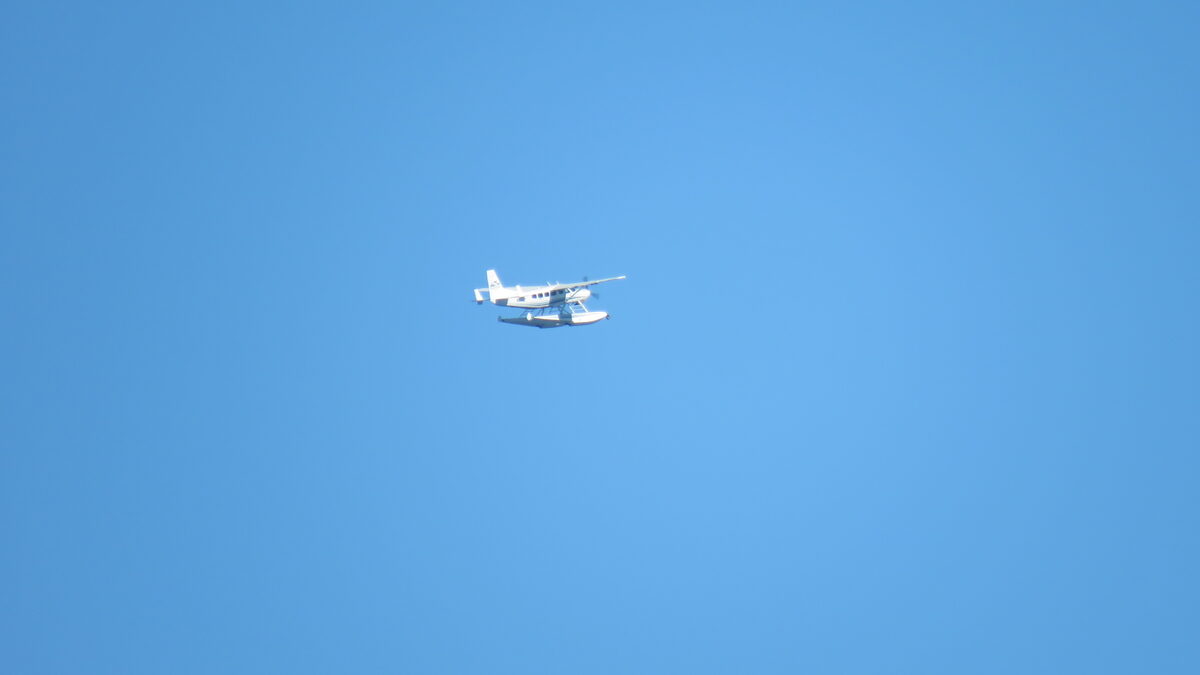
Cover image: Cessna 208 Caravan floatplane in flight, the same aircraft type Joby converted for its autonomous cross-country flight — photo by Calistemon, CC BY-SA 4.0, via Wikimedia Commons.
Joby Aviation has completed what it calls the first fully autonomous flight across the United States: a converted Cessna Caravan that flew 3,199 miles from California to North Carolina with zero control inputs from its onboard safety pilot. The aircraft handled its own taxi, departure, enroute navigation and arrival while engineers monitored it remotely from up to 2,323 miles away.
The flight, announced 18 September 2026, was the eastbound leg of Joby's month-long Electric Skies cross-country tour. It ended at Dare County Regional Airport in North Carolina's Outer Banks, where the aircraft made a low pass near the Kitty Hawk First Flight Monument, a deliberate nod to the site of the Wright brothers' first powered flight.
How did Joby fly 3,199 miles with no pilot inputs?
The aircraft is a conventional Cessna Caravan fitted with Joby's autonomy stack, technology acquired with Xwing in 2024. Rather than certifying a brand-new autonomous aircraft, Joby put its system onto an already-certified airframe, a shortcut the company presents as a scalable path to autonomous air logistics. The stack has now logged more than 400 flights and 800 automated hours, plus three major US military exercises.
Supervision, not control, is the model. Engineers at Joby's autonomy headquarters in California and at Shaw Air Force Base in South Carolina watched the flight remotely. The aircraft rerouted around severe weather in real time and slotted into dense traffic, including Phoenix's Deer Valley airport, one of the busiest general aviation fields in the country, without prior familiarity with the airports it used.
The autonomy push parallels Archer's autonomous flight work with Boeing, but Joby's cross-country distance claim goes further than anything a competitor has demonstrated publicly. The technology is aimed first at cargo, medical transport, disaster response and defence logistics rather than passenger air taxis.
Which stops did the autonomous flight make?
| Stop | Purpose |
|---|---|
| Concord, California (Buchanan Field) | Tour departure point |
| Phoenix Deer Valley, Arizona | Demonstration for defence, first responders and cargo operators |
| Fort Worth Alliance, Texas | Freight demo alongside Joby's first air taxi flight under the eIPP programme |
| Shaw Air Force Base, South Carolina | Military operations readiness demonstration |
| Outer Banks, North Carolina | Final autonomous landing plus Kitty Hawk low pass |
The Fort Worth stop carried political weight. US Transportation Secretary Sean Duffy and Texas Senator Ted Cruz attended under the White House-backed eIPP programme for electric and autonomous aviation. Joby is also working with the Arizona uFLY coalition and a UDOT-led multi-state coalition on high-altitude airspace integration for the FAA, and with North Carolina's eLIFT-NC initiative on statewide healthcare logistics.
Why does the defence angle matter?
Chief executive JoeBen Bevirt said the journey "offers a glimpse into a new era of aviation" and that "autonomy has an important role to play in the future of flight", adding that it can "support military operations, and keep pilots out of harm's way". The company says the system delivered parts 24 hours faster during exercises including Agile Flag and REFORPAC, and was operated from Guam to Hawaii, a stretch of nearly 4,000 miles.
Dull, dirty and dangerous missions are the near-term market: resupply flights, medical logistics and disaster response where removing the crew removes the risk. Investors have noticed, and the cross-country demonstration is designed to convert a research project into a procurement conversation.
The contrast with passenger eVTOL timelines is worth noting. While electric air taxis such as Heart Aerospace's X1 and India's Shunya eVTOL programme work through test flights toward certification, Joby's autonomy business can fly paying-style missions on a legacy airframe today. The aircraft now heads west with stops planned at Raleigh, the Washington DC area, Louisville, Wichita, Oklahoma City, Salt Lake City and Portland.
Frequently asked questions
Was there really no pilot input on Joby's cross-country flight?
According to Joby, the converted Cessna Caravan flew 3,199 miles with zero control inputs from its onboard safety pilot, handling taxi, departure, enroute navigation and arrival itself. Engineers monitored remotely from California and Shaw Air Force Base, up to 2,323 miles from the aircraft.
What aircraft did Joby use for the autonomous flight?
A converted Cessna Caravan, designated J208, fitted with the autonomy stack Joby acquired with Xwing in 2024. Using an already-certified airframe avoids the cost and time of certifying a new autonomous aircraft from scratch, which Joby presents as a scalable shortcut to autonomous air logistics.
What is the flight's significance for cargo and logistics?
Joby positions autonomy for freight, medical transport, disaster response and defence logistics first, not passengers. The company cites 400-plus flights, 800 automated hours and three military exercises, plus parts delivered 24 hours faster during Pentagon exercises including Agile Flag and REFORPAC.
Where does Joby's autonomous aircraft go next?
After the eastbound leg ended in North Carolina's Outer Banks, the aircraft begins a westbound return with planned stops in Raleigh, the Washington DC area, Louisville, Wichita, Oklahoma City, Salt Lake City and Portland, continuing the month-long Electric Skies tour.