Tata Elxsi and Sarla Aviation will accelerate Shunya, billed as India's first indigenous eVTOL aircraft, under a partnership announced 1-2 September 2026.
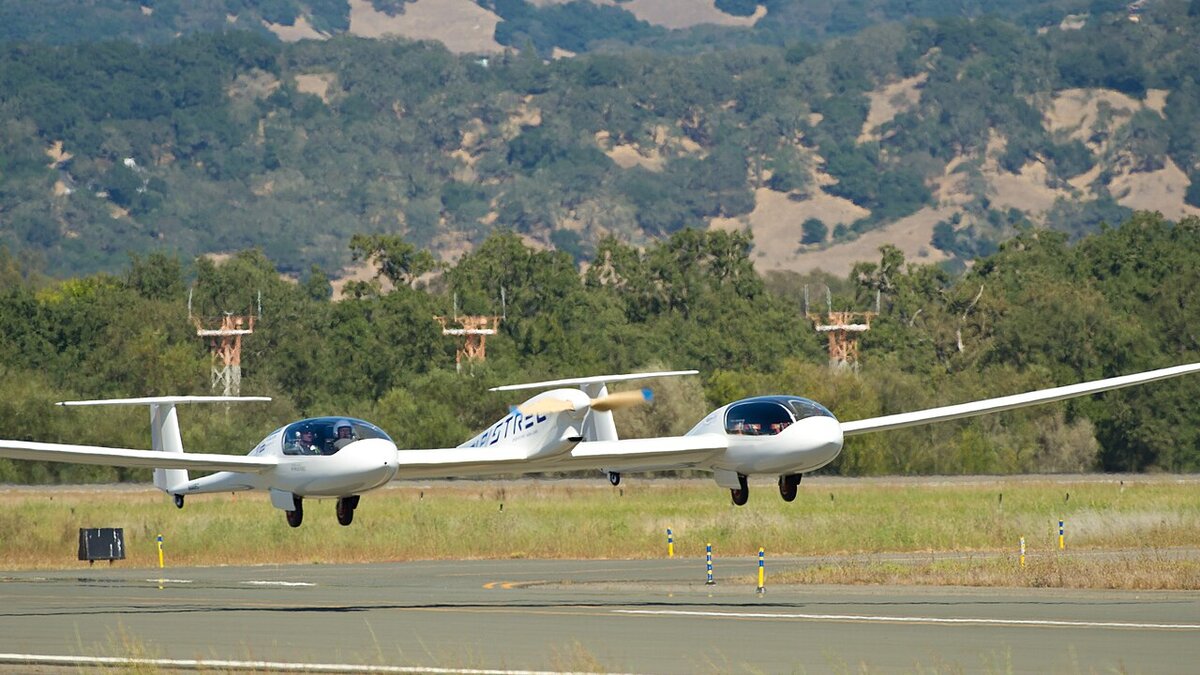
Cover image: concept rendering of an eVTOL aircraft in urban flight — photo by Bill Ingalls, Public domain, via Wikimedia Commons.
India's first indigenous eVTOL aircraft, Shunya, moved a step closer with a design-and-engineering partnership between Tata Elxsi and Bengaluru-based Sarla Aviation, announced via PR Newswire on 1 to 2 September 2026. Tata Elxsi will bring its aerospace design, systems integration and certification-support expertise to Sarla's clean-sheet electric vertical take-off and landing platform.
The tie-up is pitched as an indigenous alternative to imported air-taxi prototypes, aimed at urban air mobility for Indian cities where road congestion and airport transfers impose heavy time costs. No new flight-test date was disclosed in the 2 September summary, but the partnership signals a shift from concept to detailed engineering.
What is Shunya?
Shunya is Sarla Aviation's electric air-taxi concept — a multi-rotor eVTOL designed for short intra-city and airport-shuttle hops, with vertical take-off and landing to avoid runways. PR Newswire's headline frames it as India's first indigenous eVTOL aircraft, positioning it ahead of other Indian urban air mobility studies that remain at paper stage.
Tata Elxsi's role spans styling, aerostructures, avionics integration, and testing rigs. The company has previously supported global aerospace programmes, which Sarla will tap to shorten development cycles. For travellers, the relevant comparison is not to a Boeing or Airbus jet but to helicopters and to emerging eVTOLs such as Joby and Archer in the US.
Why Tata Elxsi plus Sarla matters
India's urban air mobility market is constrained less by demand than by aircraft availability and certification pathways. Imported eVTOLs face high costs and regulatory fit issues for Indian conditions. An indigenous platform can be optimised for hot-and-high performance, dust, and short-field vertiport footprints from the outset.
The partnership also pools certification know-how. Tata Elxsi has supported DO-178 and ARP-4754 processes on prior programmes, while Sarla brings the air-vehicle intellectual property. That combination is what the FAA's urban air mobility framework and global regulators look for: a single accountable design organisation with end-to-end traceability.
For context on how autonomy and electric flight fit into Indian aviation's near term, see Archer–Boeing autonomous flight work and our explainer on airline AI and dynamic pricing, where data and certification similarly decide rollout speed.
Where would Shunya fly first?
Sarla has previously discussed airport-to-city-centre shuttles and inter-city hops under 100 km as early use cases — think Bengaluru airport to Electronic City, or Mumbai airport to Pune connectors — where a 20 to 30 minute electric flight replaces a 90 to 150 minute road transfer. Vertiports would likely co-locate at existing airports and business districts, not greenfield sites.
Payload and range details were not enumerated in the 2 September PR Newswire headline summary. Earlier Sarla materials have pointed to a multi-passenger cabin in the four-to-six-seat class, but the partnership release will need to confirm exact specifications, certification basis (likely CS-23/27 adaptations under DGCA), and timeline.
What travellers should watch next
- DGCA certification path: whether Shunya pursues a type certificate under Indian special conditions for eVTOLs and how that aligns with EASA/FAA SC-VTOL.
- Supply chain: battery-sourcing and motor redundancy for Indian heat and monsoon conditions.
- Vertiport readiness: airport operators' plans at Bengaluru, Delhi and Mumbai for power, charging and airspace integration.
Frequently asked questions
Is Shunya really India's first indigenous eVTOL?
PR Newswire's 1-2 September announcement bills Shunya as India's first indigenous eVTOL aircraft. No other Indian eVTOL has reached prototype flight at this scale, though research projects exist at IITs and HAL.
What will Shunya be used for?
Short urban and airport shuttle flights under about 100 km, aiming to cut city-to-airport transfers from over an hour by road to 20-30 minutes by air.
When will Shunya fly passengers?
No passenger-service date was given in the 2 September summary. Expect detailed design, ground testing and uncrewed flight steps before any crewed trials.
Who is building it?
Sarla Aviation as air-vehicle developer, with Tata Elxsi as design and engineering partner covering aerostructures, systems and certification support.