YQ and YR are airline-set surcharges, not taxes. How they show on a ticket, why they rose in 2026, where regulators control them and how agents must quote all-in fares.
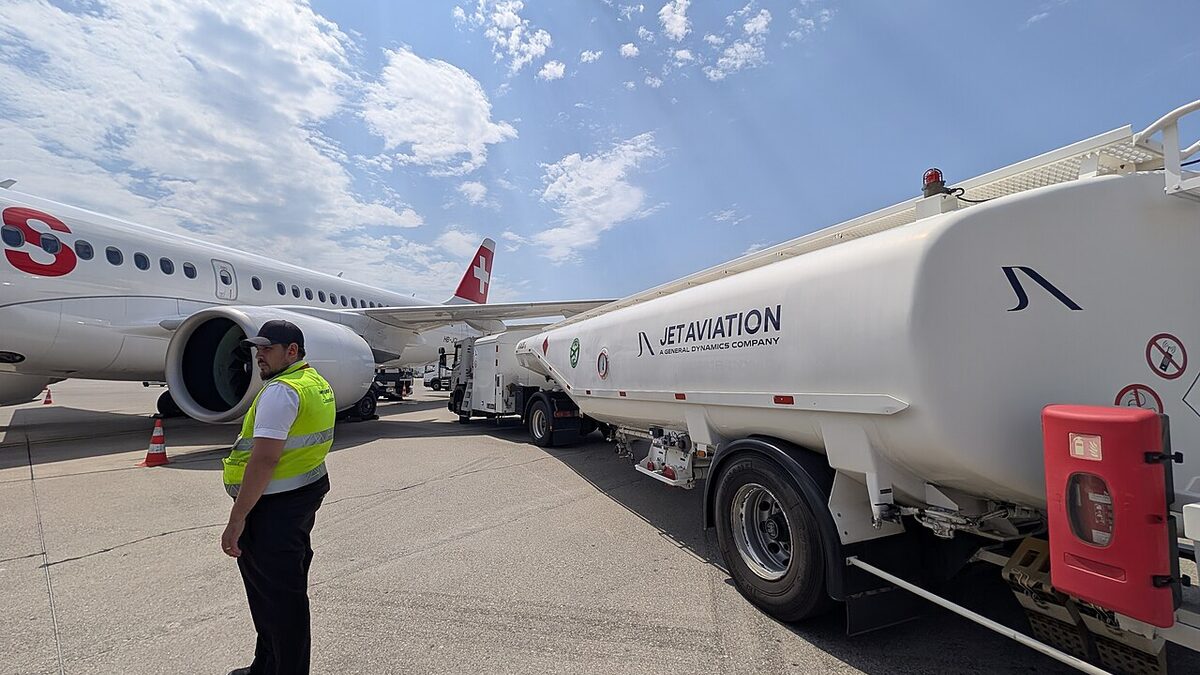
Cover image: A SWISS Airbus A220-300 being refuelled (2026 file photo) — photo by Stimpy, CC BY-SA 4.0, via Wikimedia Commons.
The fuel surcharge YQ is a charge an airline adds to a ticket on top of the base fare. It is not a tax. YQ and its sister code YR are the codes used to ticket what fare-data company ATPCO calls carrier-imposed fees, covering fuel, insurance and other cost recovery: the airline sets the amount and keeps the money, while government taxes go to the authorities that levy them.
It matters because surcharges are moving fast. IATA forecast in June that jet fuel would average $152 a barrel this year, almost 70 per cent above 2025, and ANA's surcharge on a single Japan to Europe or North America (except Hawaii) sector is ¥62,000 for tickets issued between 1 November and 31 December 2026, up from ¥55,000 in September and October.
Last checked: 1 November 2026.
What does the fuel surcharge YQ code mean, and how is YR different?
On a fare quote or e-ticket, government taxes and airport charges sit in the tax box alongside YQ and YR, so a surcharge is easy to mistake for a tax. ATPCO groups the fuel, insurance and other cost-recovery fees ticketed under both codes into one carrier-imposed fees product, which means the letter alone does not tell you what a charge pays for. Lufthansa Group, for instance, collects its Distribution Cost Charge on classic GDS bookings as a YR, as our explainer on ticket stock, GDS distribution and BSP settlement sets out.
Amounts need not be flat. According to ATPCO, carrier-imposed fees can vary by cabin, fare family, booking class and route path, and one pricing analyst it quoted in 2018 said: "Sometimes the YQ is over half the ticket revenue on a leisure ticket sale."
Origin counts too. ANA charges ¥15,100 per sector between Japan and Hong Kong on journeys starting in Japan, and HK$832 on journeys starting in Hong Kong, for tickets issued from 1 November.
Who sets each part of the fare, and who keeps the money?
The airline controls the base fare and YQ/YR. Taxes belong to the government that levies them, even though the airline collects them: GOV.UK says airlines pay UK Air Passenger Duty for every passenger flying from the UK and that ticket prices usually include a charge to cover it. HMRC rates from 1 April 2026 run from £8 to £253 per passenger, with higher charges for some private planes.
| Component | Who sets it | Who keeps it | Refundable? |
|---|---|---|---|
| Base fare | The airline, in its filed fares | The airline | Only as the fare rules allow |
| YQ/YR in a liberalised market (Hong Kong since November 2018) | The airline, at its discretion | The airline | Under the carrier's own rules |
| YQ/YR in a regulated market (Japan, the Philippines) | The airline, within an approved amount or a regulator's ceiling | The airline | Under the carrier's own rules; ANA refunds unused sectors in full |
| Government taxes (e.g. UK APD, £8 to £253 per passenger) | The government | The government; the airline collects and pays it | UK APD may be reclaimed if you do not fly; an admin fee may apply |
Refunds follow the same split, so check both lines when a client cancels.
Why did fuel surcharges rise in 2026?
Fuel. IATA's June 2026 outlook, headlined on Middle East disruptions and high fuel prices halving industry profitability, forecast the fuel bill rising from $252 billion in 2025 to $350 billion in 2026. With consumption flat at 104 billion gallons, price alone lifts fuel to 31.4 per cent of operating costs, from 25.4 per cent.
Hedging only partly cushions it. IATA says airlines hedged roughly a third of expected 2026 consumption, and many hedge crude oil, which leaves them exposed to the jet crack spread, forecast to average a historic high of $57 a barrel. Fares are rising to recoup part of the cost, but director general Willie Walsh said airlines "are still absorbing part of the hike in their bottom lines".
Surcharges move both ways. ANA's long-haul sector charge was ¥65,000 for July and August tickets and ¥55,000 for September and October before rising to ¥62,000. In India, IndiGo, Air India, Air India Express and Akasa Air all added or revised surcharges in early October, as we reported in our coverage of the October jet fuel squeeze.
Which regulators cap or control fuel surcharges?
Hong Kong's government cites "a global trend of deregulating fuel surcharges", but as of 1 November 2026 some Asia-Pacific markets, including Japan and the Philippines, still control them.
Hong Kong liberalised passenger fuel surcharges in November 2018. Airlines decide whether and how much to charge on flights from Hong Kong, but their direct sales outlets must show the final price with a breakdown of every "must pay" element, including the surcharge. Asked in April 2026 about re-regulating, the government defended liberalisation and said it would urge airlines to give reasonable notice of changes.
Japan. ANA sets its international surcharge in two-month periods and says the amounts are "subject to government approval of related countries".
The Philippines. The Civil Aeronautics Board sets a ceiling level, and airlines must file an application before collecting. For 1 to 15 November 2026 it set Level 17: P559 to P1,635 per passenger on domestic flights and P1,846.10 to P13,726.58 on international flights, according to the Daily Tribune's report of the board's 27 October advisory. As of 1 November 2026, the board reviews the level every 15 days under an interim mechanism.
Do award tickets and child fares pay YQ?
On ANA, yes. The airline says its fuel surcharge "will apply to AMC award tickets as well", so a Mileage Club redemption from Japan to Europe ticketed in November or December carries ¥62,000 per sector in cash, like a paid seat. Programmes set their own policies, so price the cash co-payment on the exact routing before transferring points; our guide to how airline miles work covers redemption.
Child discounts do not reach the surcharge either. ANA charges adults, children and infants the same amount, except under-twos without a seat.
How should travel agents quote fares that include surcharges?
All in. Article 23 of EU Regulation (EC) No 1008/2008 requires the final price for flights from an EU airport to be shown "at all times", including taxes, charges, surcharges and fees that are unavoidable and foreseeable when published. The fare, taxes, airport charges and "other charges, surcharges or fees, such as those related to security or fuel" must also be specified, and optional extras must be opt-in.
In the US, 14 CFR 399.84 treats any advertised price that is not "the entire price to be paid by the customer" as unfair and deceptive, for ticket agents as well as airlines. Taxes may be listed separately, but not prominently or in the same or larger size as the total. As of 1 November 2026 that text stands: the Department of Transportation's July proposal to relax it, covered in our report on the DOT Full Fare Rule, has not been finalised.
Timing matters too. ANA fixes the surcharge on the date of ticket issue, not booking, and makes no adjustment if it changes afterwards unless a wholly unused ticket is changed.
A Japan to Europe return issued on 31 October 2026 carried ¥110,000 in ANA surcharges (2 x ¥55,000). Issued between 1 November and 31 December, it carries ¥124,000 (2 x ¥62,000): ¥14,000, or 12.7 per cent, more per passenger, and ¥56,000 more for four seated passengers.
- Quote the total first, then show YQ/YR apart from government taxes so the client sees which part is airline revenue.
- Re-price held bookings when a surcharge period changes: ANA applies the amount in force at purchase, even within the ticket time limit, unless its Keep My Fare option is used.
Frequently asked questions
Is the YQ fuel surcharge a government tax?
No. YQ and YR are carrier-imposed charges that the airline sets and keeps, even though they appear in the tax box of a ticket. Government taxes, such as the UK's Air Passenger Duty, are levied by the state: the airline collects them from passengers and pays them over. The difference matters for refunds, award bookings and how a fare must be displayed.
Are fuel surcharges refunded if I do not fly?
That depends on the airline's rules. ANA, for example, refunds its surcharges in full for any unused sectors presented for refund. Taxes are a separate question: for UK Air Passenger Duty, GOV.UK says a passenger who does not fly may be able to reclaim the amount from the airline, although an administration fee may apply. Check the carrier's refund conditions before cancelling.
Do award tickets carry fuel surcharges?
They can. ANA says its fuel surcharge applies to ANA Mileage Club award tickets as well, so a Japan to Europe redemption ticketed in November or December 2026 carries ¥62,000 per sector in cash surcharges, the same as a paid ticket. Before transferring points to any programme, price the full cash co-payment for the exact routing, because the miles do not cover it.
Why are fuel surcharges higher in 2026?
Jet fuel costs more. IATA's June 2026 outlook forecast jet fuel at an average of $152 a barrel this year, against $90 in 2025, lifting the industry fuel bill to $350 billion. Airlines reset surcharges as prices move: ANA's Japan to Europe sector charge rose from ¥55,000 for September and October tickets to ¥62,000 for tickets issued from 1 November.
Sources
- IATA, 2026 industry outlook press release (7 June 2026)
- ATPCO, "Yankee Queen and Yankee Romeo: a data love story" (20 March 2018)
- ANA, fare rules and fuel surcharge tables
- Hong Kong Government, LegCo reply on fuel surcharges (22 April 2026)
- Daily Tribune, CAB raises fuel surcharge to Level 17
- Official Journal of the EU, Regulation (EC) No 1008/2008
- eCFR, 14 CFR 399.84 price advertising
- GOV.UK, Air Passenger Duty and HMRC, rates for Air Passenger Duty