An amended CDC order extends the Ebola attestation to all crew, including on cargo flights. A4A wants a delay; as of 1 November, the 3 November start stands.
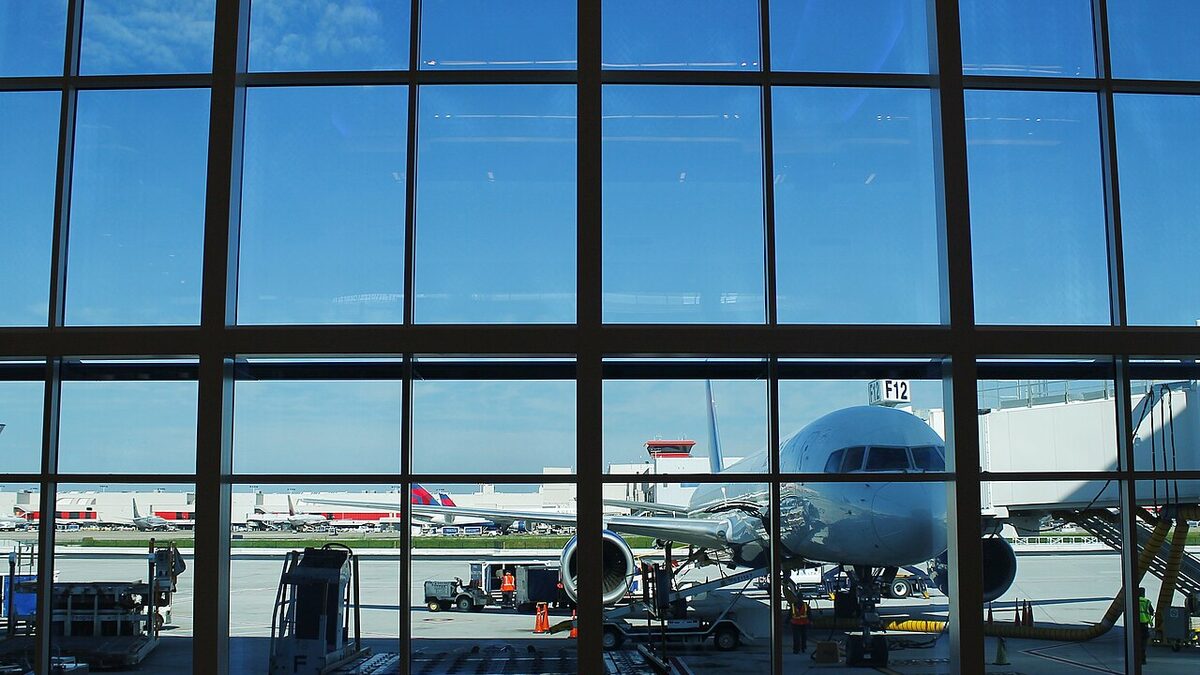
Cover image: A Boeing 767 at gate F12 in Atlanta's international Concourse F (2013 file photo) — photo by formulanone from Huntsville, United States, CC BY-SA 2.0, via Wikimedia Commons.
The US has widened its Ebola boarding rule days before it starts. An amended order signed on 28 October makes the CDC Ebola attestation apply to every person on a US-bound aircraft, including deadheading crew and the crews of all-cargo flights. Airlines for America (A4A) had asked for crew to be exempted.
As of 1 November, the start has not moved: the rule applies to flights departing at or after 11:59 pm US Eastern time on 3 November (04:59 GMT on 4 November), and lapses at 11:59 pm on 18 December unless extended. A4A and the International Air Transport Association (IATA) asked the Centers for Disease Control and Prevention (CDC) to reconsider, in letters first reported by Reuters on 28 October. The CDC did not immediately respond to Reuters, and its guidance page was last updated on 30 October. Our 25 October report on the Ebola attestation explains what passengers sign.
What did IATA and A4A ask the CDC to change?
IATA, which represents more than 370 airlines in over 130 countries, called it “unreasonable” to make every airline serving the US collect attestations from each passenger and crew member in under two weeks, Reuters reported. Its letter to the CDC’s Dr David Fitter called the rule “inconsistent with a risk-based approach”, according to Paddle Your Own Kanoo.
A4A, whose members include United, American and Delta, called the plan unworkable. “Changes to check-in systems, digital signatures, station procedures, and training cannot readily be completed in the allotted time,” it wrote. It wants more time, a transition period agreed with industry, and exemptions for crew, the US military and jumpseat travellers.
A4A’s sharpest number: US Customs and Border Protection screened about 130 million air passengers in 2025, and fewer than 25,000 of them, under 0.02 per cent, had a connection to the Democratic Republic of the Congo (DRC).
How has the CDC Ebola attestation changed since 22 October?
The Federal Register notice describes “minor changes”, such as swapping “passenger” for “person” to clarify that crew are covered. Covered persons now include crew positioning on “deadhead” status, and the aircraft definition now names cargo aircraft, so an all-cargo flight needs an attestation from each crew member.
Groups gain. The 22 October text let one person sign for another only for a minor or someone unable to act; the amendment extends that to “any person who is in their traveling party”.
The date stayed. Both versions say any delay “would be impracticable and contrary to the public interest”.
| Airline request or objection | Raised by | Position as of 1 November 2026 |
|---|---|---|
| Delay the 3 November start | A4A | Unchanged |
| A transition period agreed with industry | A4A | None in the amended order |
| Exempt crew | A4A | Crew explicitly covered, deadheading included |
| Exempt US military and jumpseat travellers | A4A | No such exemption in the amended order |
| Why only air, not sea or land? | IATA | Still air only |
What does the rule mean for airline and cargo operations?
The CDC’s paperwork filing shows the scale. Its 27 October Paperwork Reduction Act notice estimates 135.3 million traveller responses a year and as many for airline staff, at five minutes each: 11,275,000 hours a year of airline staff time. The estimate is annual; the order runs for 45 days.
The form is thin. OpsGroup, a flight-operations information service, says it has room for the passenger’s name only, with no flight number, seat or date, so operators must link each signature to the booking themselves.
An operator that cannot confirm everyone on board has attested will not get controlled free pratique, the health clearance to disembark at a US port of entry. The order also cites fines of up to $200,000 for organisations.
What should travel sellers tell clients before 3 November?
Every client on a ticket that lands in the US needs an attestation, whatever their nationality, including those only connecting there: a passenger on Tokyo–Los Angeles signs the same form as one leaving Africa. Anyone who has been in the DRC in the previous 21 days, even only changing planes, cannot board until day 22. Our layover and transit guide covers other US connection checks.
Late-December trips need a recheck: the CDC says any extension will rest on outbreak metrics such as case counts and geographic spread.
The outbreak has killed about 4,700 people in Africa, Reuters reported, citing the Africa CDC. Our 2026 entry requirements roundup tracks the other US Ebola measures.
Frequently asked questions
Does the CDC Ebola attestation apply to airline crew?
Yes. The amended order signed on 28 October covers every person on a US-bound aircraft, including crew on duty, crew positioning on “deadhead” status and crew on all-cargo flights. Airlines for America asked for crew exemptions, but the amended order adds none.
Has the 3 November start date been delayed?
Not as of 1 November 2026. The Federal Register notice of 30 October says the amended order applies to flights departing at or after 11:59 pm US Eastern time on 3 November (04:59 GMT on 4 November). It runs to 18 December unless amended or rescinded.
Can one person sign the Ebola form for a family or travelling party?
Yes, since the 28 October amendment. A parent, guardian, travel companion or other adult in the same travelling party may attest on behalf of each member of that party. The airline must still keep a record of an attestation for every individual on board.
Does the Ebola attestation apply to private jets and cargo flights?
Yes. The order covers commercial, general aviation, cargo and private aircraft flying to the US from any foreign country, including flights that only connect there. Operators must check each attestation before boarding, refuse anyone without one and keep copies for at least 42 days.
Sources
- Federal Register, Amended Ebola attestation order
- Federal Register, Original 22 October order
- Federal Register, Ebola attestation paperwork notice
- CDC, Attestation order and FAQs
- Reuters, Airline groups urge CDC to reconsider
- OPSGROUP, Burdensome new Ebola rule
- Paddle Your Own Kanoo, Airlines call attestation unworkable