Wet lease vs dry lease explained: who supplies aircraft, crew, maintenance and insurance, whose AOC and flight number apply, and the EU, US, India and Singapore rules.
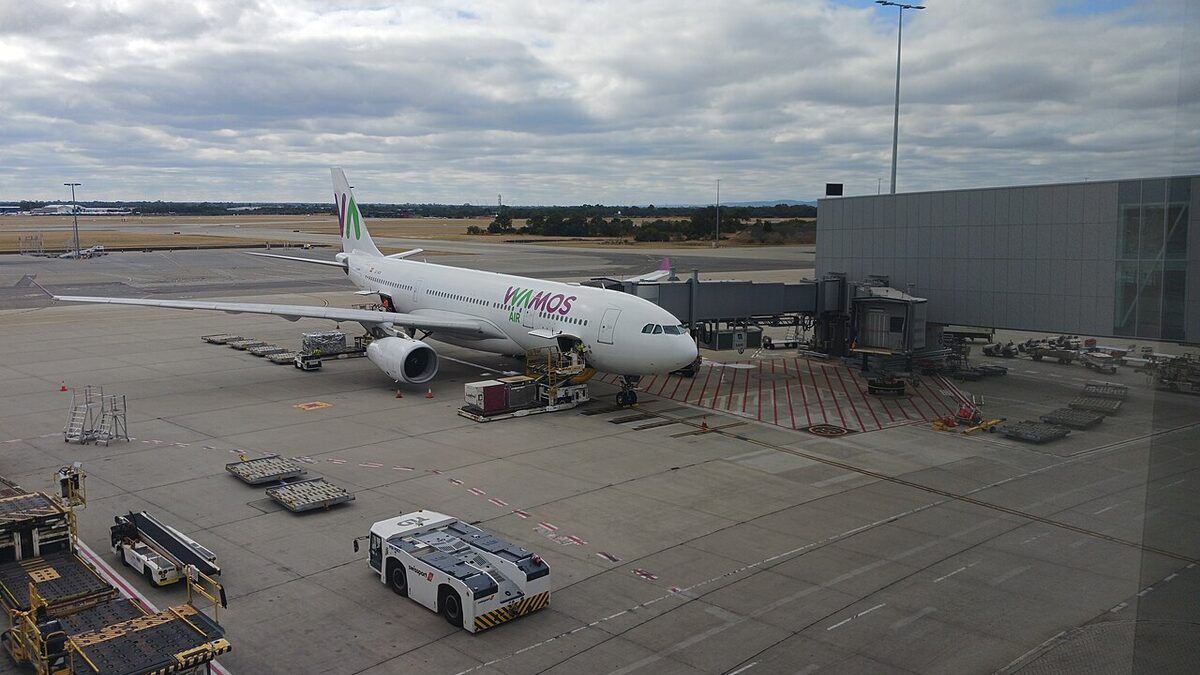
Cover image: A Wamos Air Airbus A330 at Perth Airport, Western Australia (2023 file photo) — photo by Calistemon, CC BY-SA 4.0, via Wikimedia Commons.
A wet lease, known in the trade as ACMI, gives an airline an aircraft complete with crew, maintenance and insurance, flown under the lessor's air operator certificate (AOC) while the lessee sells the seats. A dry lease is the aircraft alone: the lessee puts it on its own AOC, crews it and pays for maintenance and insurance. A damp lease sits between them, with the lessor's pilots and the lessee's cabin crew. EU Regulation 1008/2008 reduces wet lease vs dry lease to one test: a dry-leased aircraft is "operated under the AOC of the lessee", a wet-leased one "under the AOC of the lessor".
The two do different jobs. Wet leases fill gaps for weeks or months, and regulators put a clock on them. Dry leases are long-term fleet finance: at Air Lease Corporation, a US lessor that owned 490 aircraft and has been called Sumisho Air Lease Corporation since its April 2026 takeover, the average remaining lease term was 7.2 years at the end of 2025, according to its annual report.
Last checked: 1 November 2026.
Wet lease vs dry lease: what is the difference?
Beyond the certificate, Singapore's regulator, CAAS, spells out the commercial split in an advisory circular effective from 1 April 2026: in a wet lease the lessor "is responsible for flight operations, whilst the lessee has commercial control and uses its own airline designator code and traffic rights". In a dry lease the lessee runs both.
Fuel is not part of the package. Air Charter Service, a charter broker, says the ACMI lessee pays by the block hour and "arranges its own ground services such as fuel, handling and catering".
| Element | Wet lease (ACMI) | Damp lease | Dry lease |
|---|---|---|---|
| Aircraft | Lessor | Lessor | Lessor |
| Flight crew | Lessor | Lessor | Lessee |
| Cabin crew | Lessor | Lessee | Lessee |
| Maintenance and insurance | Lessor | Lessor | Lessee |
| AOC and operational control | Lessor* | Lessor* | Lessee |
| Flight number and traffic rights | Lessee | Lessee | Lessee |
| Fuel, handling, catering | Lessee | Lessee | Lessee |
| How it is paid | Per block hour | Per block hour | Fixed rent, owed whether or not the aircraft flies, plus deposits and maintenance reserves |
| Typical length | Generally up to 12 to 18 months | Generally up to 12 to 18 months | At least two years; 7.2 years' average remaining term at Air Lease |
Sources: EU Regulation 1008/2008, CAAS, Air Charter Service, Air Lease Corporation. *Singapore is an exception (see below). Terms vary by contract.
What is a damp lease, and is ACMI the same as a wet lease?
ACMI stands for aircraft, crew, maintenance and insurance, the four things the lessor supplies. Air Charter Service uses it as the umbrella term for two products: a wet lease, where the lessor provides all four, and a damp lease, where "the lessee provides their own cabin crew". CAAS agrees: in a damp lease the lessor supplies the flight crew and operates under its own AOC, and the lessee supplies the rest of the crew.
There is also a reverse version. In a hybrid or CMI lease, the broker says, an airline's own aircraft is dry-leased to an operator, which wet-leases it back with crew, maintenance and insurance, for example to cover a strike.
Who holds operational control, and whose flight number is used?
Operational control is the authority over "the initiation, continuation, diversion or termination of a flight", in CAAS's wording. In a wet or damp lease the lessor normally holds it; in a dry lease, the lessee. India's DGCA criteria of December 2024, for example, leave a wet-leased foreign aircraft under the lessor's operational control and safety oversight, with the Indian airline "focusing on commercial aspects", according to TeamLease RegTech.
The US leaves the call to the regulator. A US airline wet-leasing an aircraft to another carrier must first give the FAA a copy of the lease; the FAA then decides which party has operational control, weighing crew and training, maintenance, dispatch, servicing and scheduling (14 CFR 119.53).
Singapore goes further. CAAS says it will consider approving wet or damp leases only "on an exceptional basis" and only where the Singapore operator keeps full operational control, "regardless of whether the operator is the lessor or lessee". It will not consider dry leases without a change of aircraft registration.
The flight number belongs to the lessee, which flies under its own designator code. In the US, a "long-term wet lease", meaning aircraft and crew dedicated to particular routes for more than 60 days, falls under the same disclosure rule as a codeshare, where the operating airline must be named: carriers and ticket agents showing schedules to US consumers must give the corporate name of the operating carrier (14 CFR Part 257).
What limits do regulators put on wet leases?
As of 1 November 2026, Article 13 of Regulation 1008/2008 lets EU airlines operate wet-leased aircraft registered in the EU freely, unless safety is at risk. Dry leases, and wet leases where the EU airline is the lessee, need prior safety approval. An aircraft registered outside the EU is harder to bring in. The airline must show equivalent safety standards and, unless an EU wet-lease agreement provides otherwise, meet one of three grounds:
- Exceptional needs: approval for up to seven months, renewable once for up to seven more.
- Seasonal capacity that EU-registered aircraft cannot reasonably supply: renewable.
- Operational difficulties that EU-registered aircraft cannot reasonably solve: only for as long as strictly necessary.
The US is stricter in one direction. No US certificate holder may wet-lease from a foreign air carrier (14 CFR 119.53(b)).
India's DGCA criteria of 24 December 2024 allowed wet and damp lease-in of foreign-registered aircraft for six months, extendable by six, with a further one-time six months in exceptional cases, according to TeamLease RegTech. The DGCA issued revised criteria on 6 November 2025, so check the current text. Singapore approves wet and damp leases for up to six months at first, with extensions up to 12 months in total, and wants applications at least six months ahead.
Worked example: an airline needs an aircraft with crew for 18 months. In the EU, on exceptional-needs grounds, a non-EU-registered aircraft can be approved for 7 + 7 = 14 months, four short. Under India's December 2024 criteria the ceiling was 6 + 6 + 6 = 18 months; the DGCA revised its criteria in November 2025. In Singapore it is 12 months, six short. Article 13 sets no time limit for an EU-registered wet-leased aircraft. Nor is a dry lease a way round the clock: the EU's air-operations rules (ORO.AOC.110) cap dry lease-in of a non-EU-registered aircraft at seven months in any 12.
Why do airlines use wet leases, and what do they cost?
Air Charter Service lists the usual triggers: seasonal demand, testing new routes, maintenance delays, late delivery of new aircraft, crew shortages and aircraft on the ground (AOG).
A dry lease prices risk differently. Air Lease Corporation's leases are "triple net": the lessee is responsible for all operating costs, including taxes, insurance and maintenance, and must pay "whether or not the aircraft is operated". They typically require cash deposits and maintenance reserves, and are signed 18 to 36 months before a new aircraft is delivered.
Two Indian airlines show how quickly wet-leased capacity comes and goes. IndiGo flew Norse Atlantic's Boeing 787s for what Norse's chief executive, Eivind Roald, called "the past eighteen months"; Norse called it an "ACMI cooperation", and it was discontinued effective 1 November 2026. Norse said IndiGo had given notice to return one aircraft at the end of August after closing its Manchester route, and the two then agreed to end the rest. Roald blamed "elevated fuel prices, airspace disruptions and longer flight routes resulting from the Middle East conflict". Our report on IndiGo's July–September results covers how it is now serving Amsterdam.
SpiceJet is using leases to rebuild a depleted fleet. It said in September it had signed wet and damp leases for 20 aircraft for winter 2026, 15 Boeing and five Airbus jets from three operators, due to arrive between mid-October and mid-November.
Frequently asked questions
What is the difference between a wet lease and a damp lease?
The cabin crew. In a wet lease the lessor supplies the aircraft, pilots, cabin crew, maintenance and insurance. In a damp lease the lessor still supplies the aircraft, flight crew, maintenance and insurance and flies under its own AOC, but the lessee provides the cabin crew. In both, the lessee sells the seats and pays by the block hour.
Does a wet-leased flight use the airline's own flight number?
Yes. Singapore's regulator defines a wet lease as one where the lessor operates the flight under its own AOC while the lessee uses its own airline designator code and traffic rights. In the US, a wet lease of aircraft and crew dedicated to particular routes for more than 60 days must be disclosed like a codeshare, with the operating carrier named.
How long can an airline wet lease an aircraft?
It depends on the regulator. As of 1 November 2026, an EU airline taking a non-EU-registered aircraft for exceptional needs can hold approval for up to seven months, renewable once for up to seven more. India's December 2024 DGCA criteria allowed six months plus six, and six more in exceptional cases; revised criteria followed in November 2025. Singapore caps wet and damp leases at 12 months in total.
Is a wet lease more expensive than a dry lease?
It depends on how long the aircraft is needed. The broker Air Charter Service calls ACMI cost-effective for seasonal peaks, late deliveries and groundings, and dry leasing the cost-effective option over the longer term. Dry-lease rent is owed whether or not the aircraft flies, and the airline adds its own crew, maintenance and insurance.
Sources
- EUR-Lex, Regulation (EC) No 1008/2008 (consolidated)
- EUR-Lex, Regulation (EU) No 965/2012 (Air Operations, consolidated): ORO.AOC.110
- eCFR, 14 CFR 119.53: Wet leasing of aircraft
- eCFR, 14 CFR Part 257: Code-share and wet lease disclosure
- Civil Aviation Authority of Singapore, AC 119-3-2 (Rev 2): Aircraft leasing
- TeamLease RegTech, DGCA criteria for wet/damp leasing
- Norse Atlantic ASA, Operational and strategic update (31 July 2026)
- Air Lease Corporation, Form 10-K for 2025
- Air Charter Service, Guide to ACMI leasing