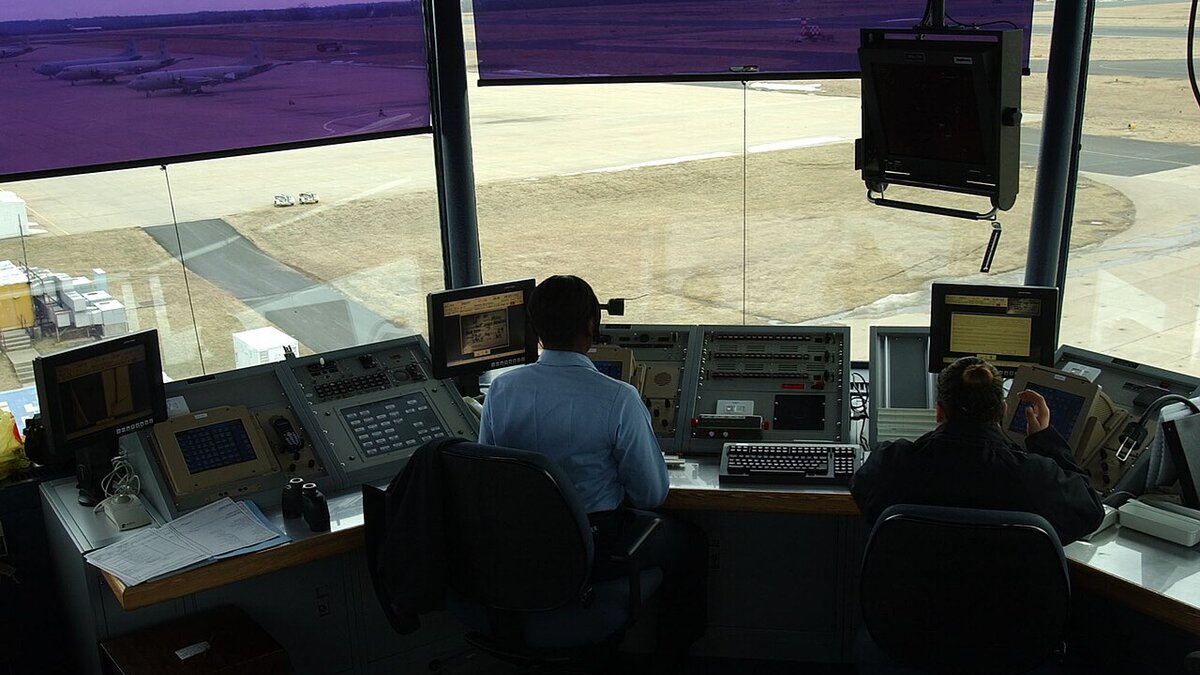
The FAA switches on its SMART AI traffic tool at Reagan National, Dulles and BWI today for a 90-day trial, the first live deployment of its $875M ATC modernisation.
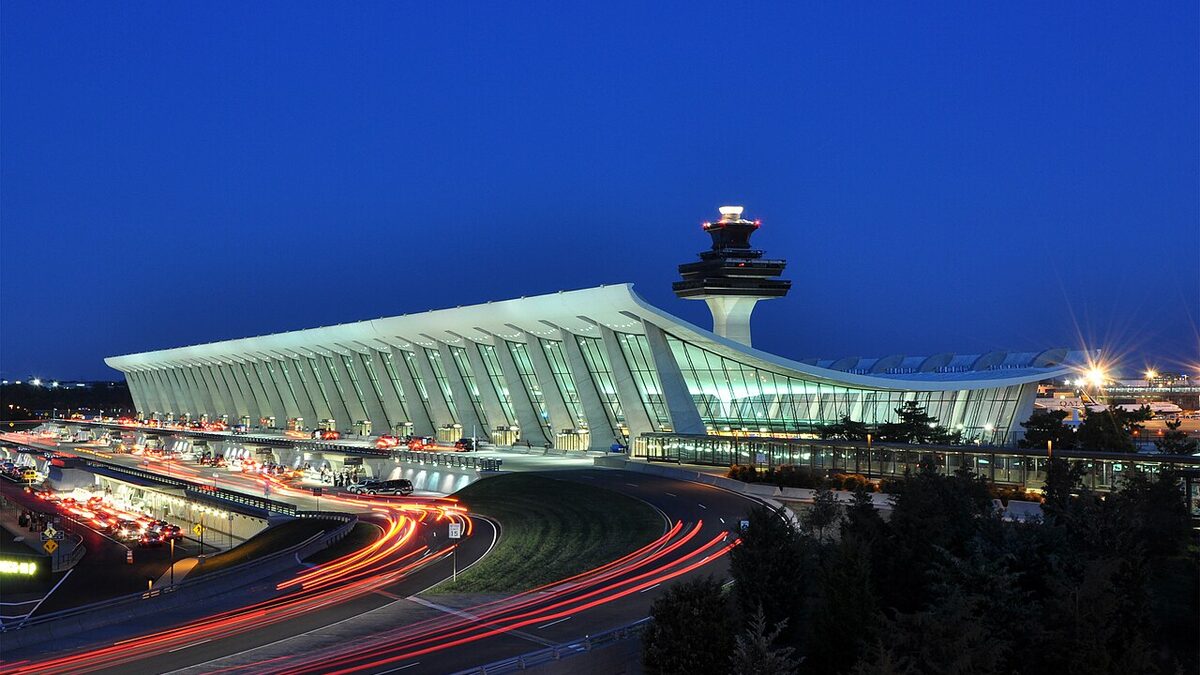
Cover image: Washington Dulles International Airport terminal and control tower at dusk — photo by Joe Ravi, CC BY-SA 3.0, via Wikimedia Commons.
The FAA's AI era starts today. The Federal Aviation Administration switches on SMART, an AI traffic-management tool, at the three main Washington airports (Reagan National, Dulles and BWI) on Monday September 21, beginning a 90-day trial before a planned national rollout. The deployment, reported by US media on September 18, turns the $875 million modernisation contract the agency awarded into live equipment for the first time.
Trade readers should pay attention because this is the most consequential ATC technology change in decades, and it arrives with the industry split. Three airlines urged the FAA to narrow the scope, while Airlines for America called it "one of the most exciting and bold initiatives taken on by the FAA in decades". When we covered the $875 million award and the FMDS programme in August, deployment was still theoretical. It is theoretical no longer.
What is SMART and what does it do?
SMART stands for Strategic Management of Airspace, Routes and Trajectories. Built by vendor Air Space Intelligence under a 12-year, $875 million deal, it continuously analyses carrier timetables, weather, airport capacity, airspace state and operational limits to forecast congestion and propose alternative routings before aircraft leave the gate.
The crucial design point: SMART is decision support, not an authority. It feeds options through existing dispatcher and traffic-manager channels and does not issue clearances or alter final separation. Controllers keep the final call, a line US officials have stressed repeatedly with "humans not being replaced" assurances. Future capability could extend to arrival-spacing control and planning up to 45 days out, shifting slot management from airline scheduling toward central FAA control.
Why Washington, and what happens next?
The National Capital Region is the proving ground: DCA, IAD and BWI run the system for 90 days while the FAA stands up a new central traffic-management office at Department of Transportation headquarters. The original plan was a broad nationwide release; airline pressure narrowed it to the DC-first trial. Full national deployment is pencilled in for the end of 2028.
SMART sits inside the larger Flow Management Data and Services (FMDS) programme, the replacement for the legacy Traffic Flow Management System and the future backbone of the ATC System Command Center.
| SMART rollout at a glance | Detail |
|---|---|
| First airports | DCA, IAD, BWI (Washington region) |
| Go-live | September 21, 2026 |
| Trial length | 90 days |
| Contract | $875 million over 12 years, Air Space Intelligence |
| National rollout | Expected by end of 2028 |
For airlines, the prize is fewer ground-delay programmes and cancellations at chronically constrained airports. For context on what failure looks like, see the UK ATC failure earlier this month, which cancelled flights across British airspace.
Why did airlines push back?
Three carriers argued the tool should start smaller, urging a "start, crawl, walk, run" approach amid worries about how algorithmic flow decisions interact with airline scheduling and crew planning. The concern is less about safety than control: FAA Administrator Bryan Bedford said "the way we manage traffic today is chaotic, and we can do better", adding that "we need to manage that at the FAA, rather than rely on commercial airlines to simply schedule however they want". That sentence explains both the pushback and the promise.
The tension will define the trial. If SMART trims delays at DCA, one of America's most delay-prone airports, airline scepticism will fade fast and the 2028 national timeline firms up. If the trial produces schedule churn or dispatcher confusion, expect the scope fight to reopen. Either way, the data the FAA publishes from these 90 days becomes the most important ATC dataset in years, and we will track it alongside other airport technology bets such as JFK's $19 billion AI-driven new terminal and the spread of biometric boarding.
Frequently asked questions
What is the FAA SMART AI tool?
SMART (Strategic Management of Airspace, Routes and Trajectories) is an AI system that forecasts air-traffic congestion from schedules, weather and capacity data and proposes alternative routings. It advises controllers and dispatchers but does not issue clearances.
Which airports get SMART first?
Reagan Washington National (DCA), Washington Dulles (IAD) and Baltimore/Washington (BWI), starting September 21, 2026 for a 90-day trial ahead of national deployment expected by end of 2028.
How much does the FAA AI programme cost?
The Air Space Intelligence contract is worth $875 million over 12 years, covering SMART within the wider FMDS modernisation that replaces the legacy Traffic Flow Management System.
Do pilots or controllers face replacement by AI?
No. US officials stress the system is support-only: human controllers keep final authority, and SMART works through existing dispatcher and traffic-manager workflows rather than automating separation.