NATS suffered a flight-plan system failure on Sept 8, cancelling 600+ flights at Heathrow, Gatwick and other UK airports. What caused it, your refund rights, and advice for India-London travellers.
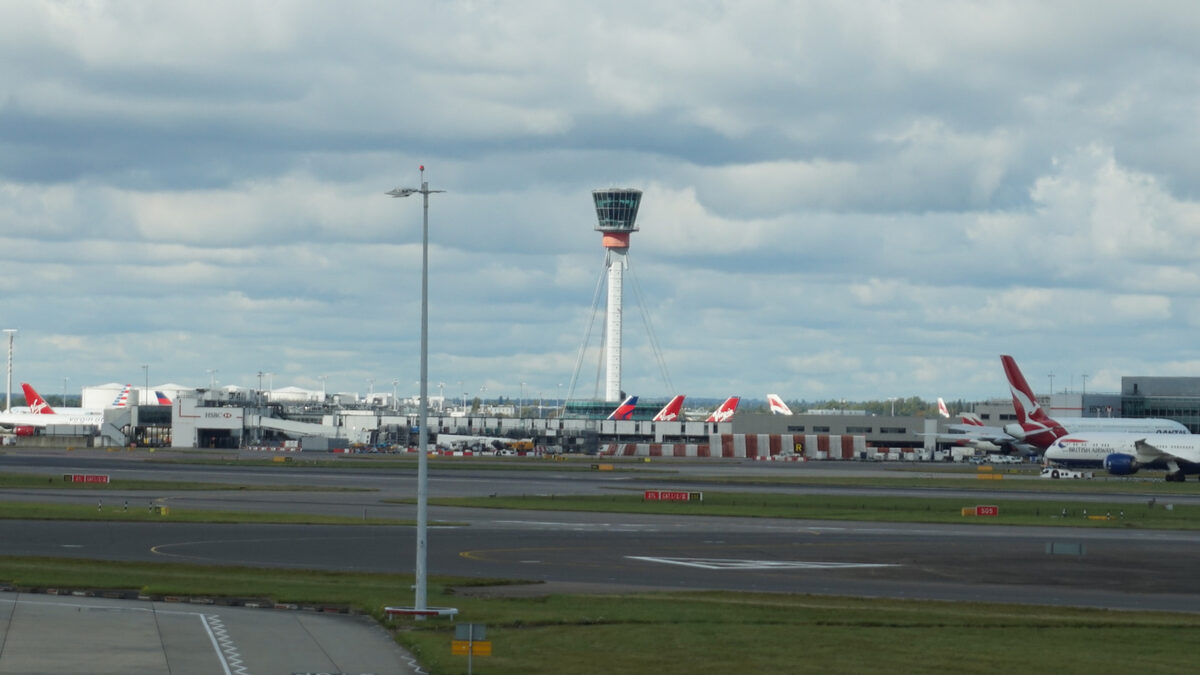
Cover image: Air traffic control tower at London Heathrow Airport — photo by Ian S, CC BY-SA 2.0, via Wikimedia Commons.
The UK's air traffic control system failed on the afternoon of Tuesday, September 8, 2026, grounding departures across the country and cancelling hundreds of flights at Heathrow, Gatwick, Manchester, Stansted and other airports. NATS, the UK's air traffic control provider, reported a technical problem with the system that processes flight plans at 13:46 local time, restricted departures while engineers worked on it, and put a repair in place around 16:40. By then, aircraft and crews were out of position, and airlines warned the knock-on disruption would last into the night and beyond.
Flight trackers put the scale of the meltdown in stark terms. Flightradar24 counted at least 625 cancelled services to and from UK airports during the day, while FlightAware logged about 490 held-up outbound flights plus 525 delayed or cancelled inbound flights across Heathrow, Gatwick, London City, Luton, Edinburgh and Bristol by mid-afternoon. Ryanair said more than 65,000 of its passengers faced delays of up to eight hours, with over 50 of its services cancelled, and British Airways axed at least 16 Heathrow departures. The Associated Press put the cancellation tally at nearly 300 in its early-afternoon reporting, a figure that kept climbing as the evening wore on.
What caused the UK air traffic control failure?
NATS said the fault lay in the system that handles flight plans, the data that tells controllers which aircraft are going where. Departures were deliberately limited while the fault persisted, which is standard safety practice: when controllers cannot be sure of traffic data, they slow the flow rather than risk it. The underlying reason for the breakdown had not been disclosed by Tuesday evening. NATS apologised, saying it was "continuing to work closely with our airline and airport customers on recovery" and adding: "We apologize sincerely for the disruption to people's journeys today."
This is not the first time the system has failed. A flight-plan processing breakdown in August 2023 disrupted thousands of flights and reportedly cost airlines more than 100 million pounds in passenger repayments, and another technical issue disrupted operations for more than four hours in July 2025. The repeat has enraged carriers. Ryanair chief operations officer Neal McMahon said: "Following the 2023 collapse, we were told lessons would be learned. We were told resilience would improve. We were told the systems had been fixed. Yet here we are again." Ryanair is demanding the resignation of NATS chief executive Martin Rolfe, while Wizz Air called the organisation "not fit for purpose". The UK Civil Aviation Authority expects a full report from NATS before deciding whether further reliability measures are needed.
Which airports and flights were affected?
The disruption centred on London but spread nationwide. Heathrow, Gatwick, Manchester, Stansted, London City and Birmingham all reported problems, alongside several Scottish airports. Flights elsewhere in Europe were also hit because aircraft bound for Britain were held on the ground at their origin airports, a knock-on familiar to anyone who has lived through a major delay event and the passenger rights that follow it.
| Measure of disruption | Figure (Sept 8) | Source |
|---|---|---|
| Cancelled services to/from UK airports | At least 625 | Flightradar24 |
| Outbound flights held up at six airports | About 490 | FlightAware |
| Inbound flights delayed or cancelled | About 525 | FlightAware |
| Ryanair passengers facing long delays | 65,000+ | Ryanair |
| British Airways Heathrow cancellations | At least 16 | Airline reports |
What should affected passengers do now?
If your flight was cancelled, the airline must offer you a choice between a full refund and rebooking on the next available service, including with rival carriers where that gets you home sooner. You are also entitled to meals, refreshments and hotel accommodation for as long as the delay lasts. Do not accept vouchers if you would rather have cash: under UK rules the refund right is yours. Keep every receipt for food, transport and hotels, because reasonable costs are reclaimable. Travellers who have been through previous mass-cancellation days will recognise the drill, and the same refund-first logic applies here.
Passengers due to fly on September 9 should check their flight status before leaving for the airport, since displaced aircraft and crew rotas mean morning schedules may still be patchy even with the system repaired. Allow extra time at the airport: security rules such as the UK's liquid restrictions still apply, and rebooked passengers joining long queues should have liquids and laptops ready to speed screening.
What does this mean for Indian travellers?
Heathrow is one of the busiest long-haul gateways for India traffic, with Air India and British Airways operating multiple daily services between London and Delhi, Mumbai, Bengaluru and Ahmedabad. Any Heathrow ground-stop ripples directly into those rotations, and with September a peak month for student travel to the UK, many Indian passengers were likely caught in Tuesday's chaos. If you are flying India-London this week, confirm your booking with the airline before heading to the airport, and note that capacity pressure on London's airports means rebooking options are thinner than travellers expect.
Frequently asked questions
Why were so many UK flights cancelled on September 8, 2026?
NATS, the UK air traffic control provider, suffered a technical failure in its flight-plan processing system from early afternoon. Departures were restricted for safety while engineers worked, and a fix was in place by about 16:40 local time, but hundreds of flights were cancelled and knock-on delays continued into the evening.
Can I get a refund if my UK flight was cancelled?
Yes. The airline must offer a full cash refund or rebooking on the next available flight, plus meals, refreshments and hotel accommodation during the wait. Keep all receipts for reasonable expenses so you can reclaim them from the airline afterwards.
Will flights be normal on September 9?
Not necessarily. Airlines warned that displaced aircraft and crew would cause further delays and cancellations the next morning. Check your flight status with the airline before travelling to the airport.
Is this the first UK air traffic control failure?
No. A similar flight-plan system failure in August 2023 disrupted thousands of flights and cost airlines over 100 million pounds in repayments, and another technical fault hit operations for over four hours in July 2025. The repeat has prompted airlines to demand leadership changes at NATS.