Dynamic packaging bundles live flight, hotel and extras into one price at the moment of search. How it works, who sells it, and the EU and UK package rules.
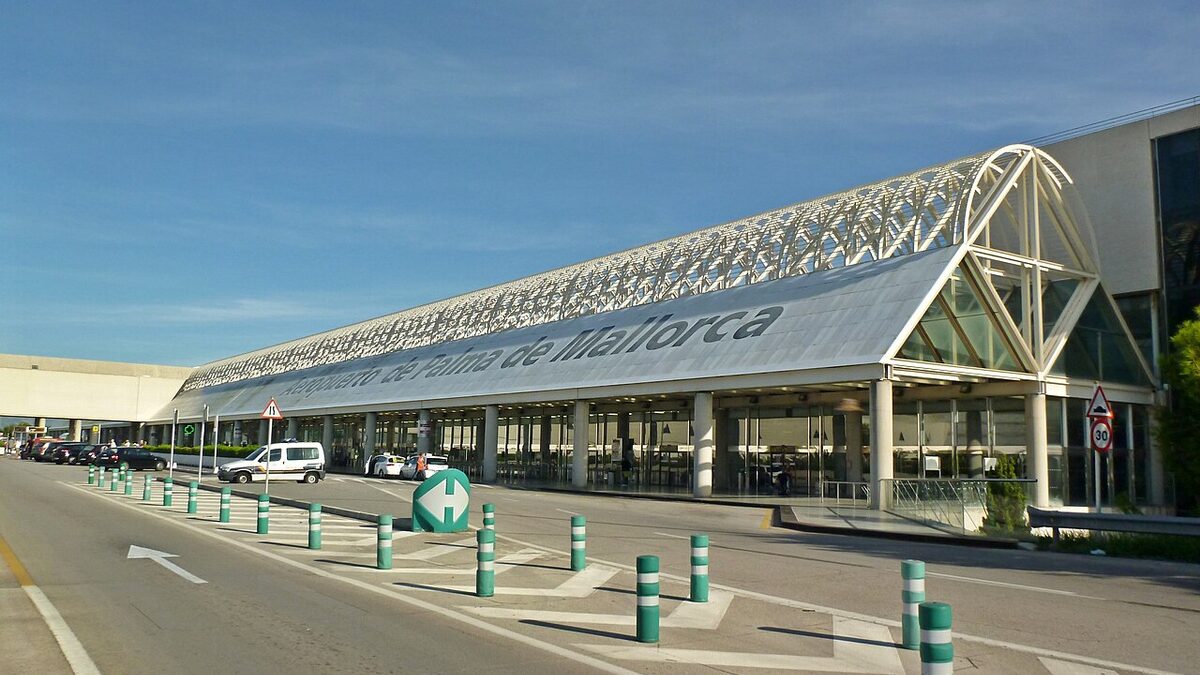
Cover image: Terminal C at Palma de Mallorca Airport (2013 file photo) — photo by Wusel007, CC BY-SA 3.0, via Wikimedia Commons.
Dynamic packaging in travel means building a holiday at the moment a customer searches: the seller pulls live flight and hotel prices, often adds transfers or car hire, and sells the lot at one total price. The parts come from airline systems, global distribution systems (GDSs), bed banks and hotels contracted directly, and the customer rarely sees what each one cost. Expedia Group's annual report explains the appeal: certain bundles can sell "at prices lower than those charged on an individual component basis without impacting their other pricing models".
TUI Group carried 3.3 million dynamic package passengers in its 2025 financial year, up 11 per cent. In the EU such bundles are usually legal packages, and a 2026 directive widens the net.
Last checked: 1 November 2026.
How does dynamic packaging in travel work?
Online travel agencies (OTAs), tour operators and airline holiday arms run the same loop:
- Search. The customer enters origin, destination, dates and party size.
- Live shopping. A packaging engine asks flight and hotel sources for availability and prices on those dates.
- Combination. It pairs flights with hotels that fit, adds extras and applies mark-up rules.
- One price. The customer sees one total for the bundle.
- Booking. After payment, each component is confirmed with its supplier.
The hard part is scale. WebBeds, the ASX-listed bed bank, says connected buyers send it more than 8.5 billion searches a day, against 9.9 million bookings in the year to 31 March 2026.
That is roughly 300,000 searches per booking, on our arithmetic.
Where do the flights and hotels come from?
Flights arrive by three routes. GDSs hold airlines' fares and availability for agencies to book (our guide to airline ticketing and GDSs explains the plumbing). Airlines also sell through their own connections, including those built on IATA's NDC standard. And a packager that owns an airline can use its own seats.
Of TUI's 18.2 million flight customers in the 2025 financial year, 58 per cent flew TUI Airline, 29 per cent used third-party seats bought wholesale and 13 per cent flew on third-party seats bought dynamically, its factbook shows.
Hotels come from bed banks or the packager's own contracts. A bed bank is a business-to-business hotel wholesaler. WebBeds says it holds direct contracts with more than 60,000 chain properties and 38,000 independent hotels, plugs in over 65 other wholesalers and sells to more than 50,000 buyers, including OTAs, airlines, tour operators and destination management companies.
Ground services form a third layer: easyJet holidays refers to its "local DMC and hotel partners" (see our explainer on what a destination management company does).
Who sells dynamic packages?
Online travel agencies. Expedia says its packages "generally include a merchant hotel component and some combination of an air, car or destination services component". Merchant transactions, where Expedia is the merchant of record, produced 70 per cent of its $14.7 billion revenue in 2025. (Our explainer on how online travel agencies work covers that model.)
Tour operators. TUI's 3.3 million dynamic package passengers were 16 per cent of the 20.2 million customers in its Markets + Airline business, or roughly 23 per cent of its 14.4 million package customers on our arithmetic. TUI targets low double-digit annual growth in dynamic packages over the medium term.
Airline holiday arms. easyJet holidays, launched in 2019, had 3.09 million customers in the year to 30 September 2025, up 20 per cent, and £250 million of headline profit before tax, up from £190 million. It offers more than 8,000 hotels in over 120 destinations and wants £450 million of pre-tax profit by its 2030 financial year, partly by "increasing attachment rates on leisure routes".
Why do travel companies sell dynamic packages?
First, the hidden discount. Expedia says its merchant model lets it sell certain bundles below the sum of the components "without impacting their other pricing models": a supplier's lower rate never appears on its own.
Second, conversion. Expedia says customers often buy one product and receive "a discounted price to attach additional products", the same logic behind easyJet's attachment target.
Third, margin with little inventory risk. easyJet says its hotel partnerships "thrive without financial commitments or inventory risk" and describes easyJet holidays as the "highest-margin tour operator among our key competitors".
Worked example (illustrative figures, not real prices). Two adults book seven nights with return flights and transfers:
- Flights at the airline's live fare: €400
- Hotel at a package-only net rate from a bed bank: €700 (€900 on the hotel's own website)
- Transfers, net: €60 (€80 bought separately)
Cost is €1,160. Sold at €1,350, the packager makes €190, about 14 per cent of the price. Bought separately the trip costs €1,380, so the customer saves €30, and the room goes out €200 below the hotel's public rate without the lower rate ever showing. Sold at one inclusive price, it is a package under EU rules, and the packager is liable for all of it.
How is a dynamic package different from a static one?
Both sell at one price. The difference is when the bundle is built and who carries the risk.
| Feature | Static (pre-built) package | Dynamic package |
|---|---|---|
| When it is built | Before sale, for a season | At the moment of search, for the customer's dates |
| Flights | Own aircraft or seats bought wholesale in advance | Live fares from GDSs, airline connections or the seller's own airline |
| Hotels | Rooms secured for the season | Live availability from bed banks and direct contracts |
| Price | Set before sale | Recalculated on every search |
| Inventory risk | Seller carries unsold committed seats and rooms | Low where nothing is pre-committed |
| EU legal status | Package | Package when combined by one trader or sold at an inclusive price |
What are the package travel rules for dynamic packages?
The EU's Package Travel Directive (EU) 2015/2302, applied from 1 July 2018, addressed dynamic packaging, noting that travel services "are often combined in a customised way". A package includes services combined by one trader "at the request of or in accordance with the selection of the traveller", or sold at an inclusive price. Its organiser is responsible for every service (Article 13) and needs insolvency protection (Article 17), even when based outside the EU and selling into a member state.
Directive (EU) 2026/1024, adopted on 29 April 2026 and in force since 28 May 2026, changes that regime:
- Linked travel arrangements are deleted; the recitals find "no evidence" they delivered "tangible benefits for travellers".
- An inclusive price creates a package "regardless of any separate billing".
- A linked online booking becomes a package if any personal data identifying the traveller passes to a second trader and that contract follows within 24 hours, replacing the name, payment details and email test.
- A trader inviting a customer to add a service must warn prominently that the result is not a package. Without that warning, an offer made before the first payment and taken up at the same point of sale within 24 hours creates a package, with the trader as organiser.
- Extras such as excursions sold with one flight, hotel or car hire make a package only if they reach at least 25 per cent of its value, previously a recital benchmark, or are an essential feature.
Member states must transpose the changes by 29 September 2028 and apply them from 29 March 2029, so the 2015 rules still govern sales today.
The UK is not bound by the 2026 directive but has its own reform: from 6 April 2027, linked bookings made on one visit to a point of sale become packages and the 24-hour linked category goes, says law firm Weightmans. A business selling a flight-inclusive package, as defined in the Package Travel and Linked Travel Arrangements Regulations 2018, to UK consumers must be an airline selling its own services, an ATOL holder or exempt, the Civil Aviation Authority says, wherever the flight departs or the seller is based. The old Flight-Plus category was removed on 1 July 2018; separately contracted flight-and-hotel packages are now licensed as "Multi-contract Packages", and linked travel arrangements are not licensable under ATOL, according to ICAEW's summary of the reform.
Frequently asked questions
What is the difference between dynamic packaging and a traditional package holiday?
A traditional package is built before sale, usually around seats and rooms secured in advance. A dynamic package is assembled at the moment of search from live flight and hotel inventory, for whatever dates the customer picks. In the EU both are normally legal packages under Directive (EU) 2015/2302.
Is a dynamic package cheaper than booking a flight and hotel separately?
Often, but not always. Expedia Group says travellers on its sites can assemble packages "at a lower price as compared to booking each component separately". Savings vary by date and supplier, so compare totals. In the EU, a package also brings one organiser liable for the whole trip, plus insolvency protection.
What does the EU's 2026 package travel directive change?
Directive (EU) 2026/1024 deletes linked travel arrangements, makes an inclusive price a package "regardless of any separate billing" and widens the 24-hour linked-booking test to any personal data identifying the traveller. Traders inviting customers to add another travel service must warn that the result is not a package. Member states apply the changes from 29 March 2029.
Is a flight and hotel booked together ATOL protected?
Only if an ATOL holder stands behind it. ATOL refunds or repatriates customers when their travel organiser fails as an ATOL holder, the Civil Aviation Authority says. Sellers of flight-inclusive packages to UK consumers must be an ATOL holder, exempt (for example as an ATOL holder's agent) or an airline selling its own services. Flight-Plus ended on 1 July 2018.
Sources
- Official Journal of the EU, Directive (EU) 2015/2302 on package travel
- Official Journal of the EU, Directive (EU) 2026/1024 amending the Package Travel Directive
- UK Civil Aviation Authority, Do I need an ATOL
- ICAEW, ATOL News July 2018: amended ATOL Regulations
- Expedia Group, Form 10-K for 2025
- TUI Group, Factbook FY25 – Update
- easyJet plc, Annual Report and Accounts 2025
- WebBeds Group (then Web Travel Group), FY26 Annual Report
- Weightmans, Package travel regulation reforms: a practical guide