Why hotels sell more rooms than they have, what being walked means, what Marriott and Hilton guarantees cover, and the legal rights walked guests have.
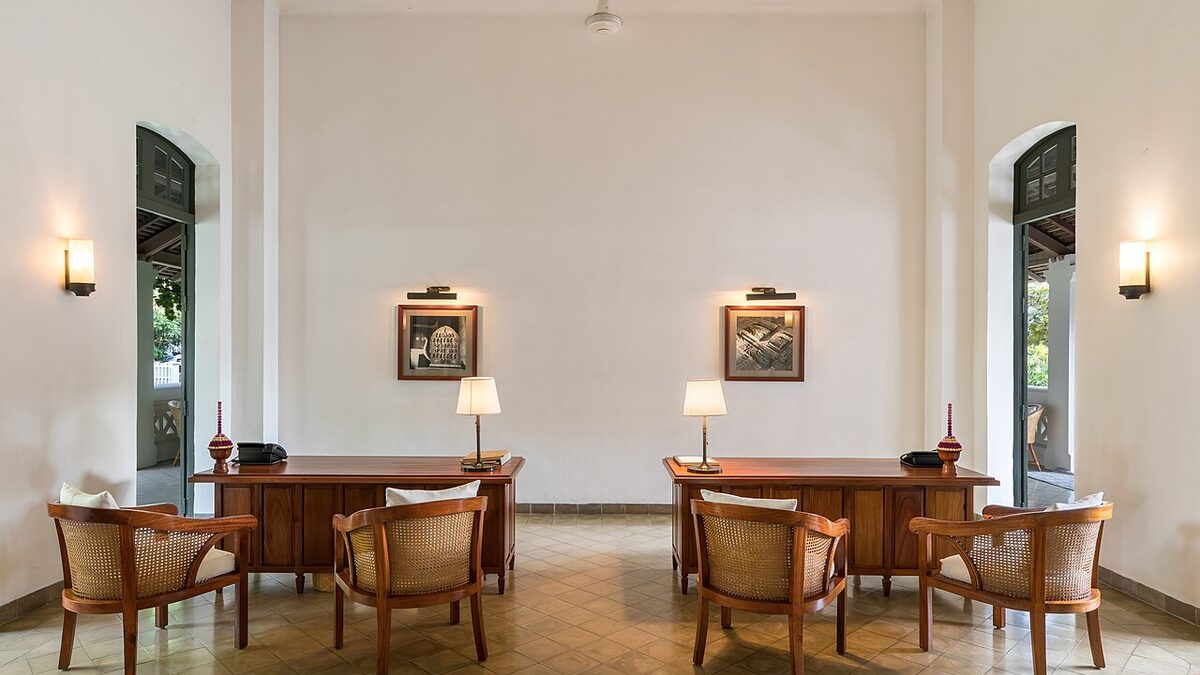
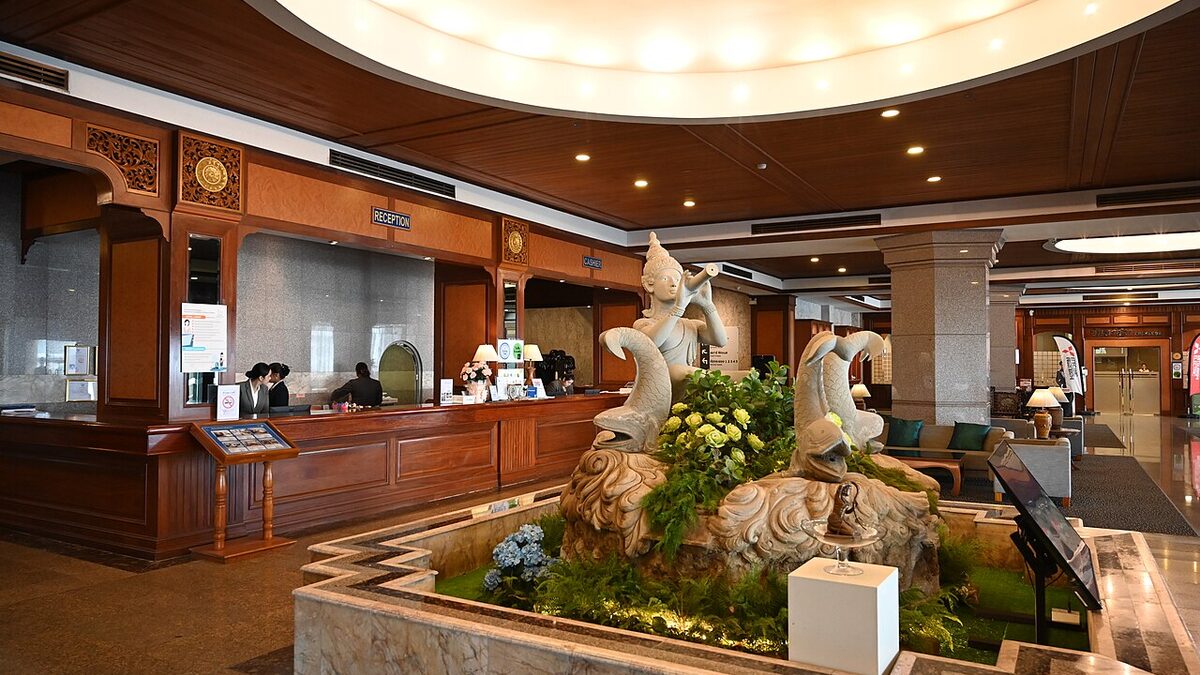
Cover image: A hotel lobby and reception area (2025 file photo) — photo by PattayaPatrol, CC BY-SA 4.0, via Wikimedia Commons.
Hotel overbooking means accepting more reservations for a night than the hotel has rooms, on the forecast that cancellations and no-shows will free up the difference. When the forecast is wrong, the hotel “walks” the surplus guests, relocating them to another property. ABTA, the UK travel association, gives a simple example: a 100-room hotel that sells 102 rooms “on the basis that at least two pre-bookings will cancel”.
The guest’s protection is thinner than an airline passenger’s. EU law gives a bumped flyer a fixed cash sum; none of the legal sources we checked sets one for a walked hotel guest. Instead, a confirmed reservation is treated as a contract and the walk as a breach of it, with extra cover from package-travel law and, for elite members, loyalty rules such as Marriott Bonvoy’s.
Last checked: 1 November 2026.
Why do hotels overbook?
Because some bookings never become occupied rooms, and an empty room earns nothing that night. Hotel technology company D-EDGE wrote in October 2024 on Hospitality Net that hotel no-show rates are “commonly between 1-5%”. Its data put cancellation rates at about 4.6 per cent for bookings through the GDS, the systems travel agents use, 11.1 per cent for direct bookings and 37.2 per cent for Booking Group platforms.
Revenue managers forecast that attrition night by night and sell into it; forecast demand also drives the rate, as our guide to how hotel room pricing works explains. ABTA says overbookings are “much more likely to occur at peak periods when accommodation is at a premium”.
Done with restraint, it pays. A 2018 University of Delaware doctoral study by Arash Riasi, using survey data from 365 US hotels, found overbooking beat not overbooking, with risk-based methods posting the highest RevPAR index. Hotels did best overbooking by less than 5 per cent of capacity on 6 to 10 nights a month; more than 10 per cent, or more than 20 nights a month, could lower the RevPAR index.
The survey response rate was 3.77 per cent, so treat those thresholds as indicative.
How do hotels decide how many extra rooms to sell?
They weigh the revenue lost on an empty room against the cost of walking a guest. An extra booking is worth taking while its expected gain beats its expected walk cost.
A worked example, with illustrative figures: a 100-room hotel sells rooms at US$150. A walk costs it about US$400, meaning a nearby room bought for US$200 on a busy night plus a payout like the US$200 Marriott gives elite members at its full-service brands.
- Booking 101 earns US$150 if at least one booking fails to turn up, and costs US$400 if none does. If that happens on 90 per cent of similar nights, the expected value is 0.9 × 150 − 0.1 × 400 = +US$95. Sell it.
- Booking 104 needs at least four rooms to fall vacant. If that happens on 60 per cent of similar nights, the sum is 0.6 × 150 − 0.4 × 400 = −US$70. Stop.
The break-even probability is the walk cost divided by rate plus walk cost: 400 ÷ 550, or about 73 per cent. A dearer walk raises that bar, so the hotel overbooks less. Goodwill is left out of the sum.
What does being walked mean, and what do hotels provide?
A walk is a relocation on arrival because the hotel cannot honour a confirmed reservation. Marriott Bonvoy writes the remedy into its programme rules as the Ultimate Reservation Guarantee, for Silver Elite members and above whose membership number and a valid credit card number are on the reservation. The hotel “will pay for comparable accommodation nearby for the Member that night” and compensate the member, provided it is open and operational.
As of 1 November 2026 that means US$200 and 90,000 points at full-service brands such as JW Marriott and Westin; US$100 at select-service brands such as Courtyard, plus 90,000 points for Platinum Elite and above; and US$50 at brands such as Four Points Flex and StudioRes, plus 45,000 points for Platinum and above. At The Ritz-Carlton, Ritz-Carlton Reserve and St. Regis only Titanium and Ambassador Elite members qualify, for US$200 and 140,000 points. Hotels outside the US pay the local-currency equivalent.
The catch for the trade: Marriott classes rooms booked through online travel channels such as Expedia and Booking.com, and tour-operator, wholesaler and package rates, as Non-Qualifying Rates, which do not qualify for elite benefits.
Hilton’s Diamond 48-hour guarantee is a different promise. Hilton Honors’ terms guarantee one room at the hotel’s prevailing rate for a paid reservation made at least 48 hours before arrival through Hilton or the hotel. It lapses on Extraordinary Demand Dates and once a hotel is overbooked by 10 per cent or more (2 per cent at certain hotels). It is a booking guarantee, not walk compensation. Our comparison of hotel loyalty programmes covers the other elite benefits.
What are your legal rights if a hotel overbooks?
Mostly contractual. Travel Law, a 2021 US legal treatise on vLex, says “there is little doubt that a confirmed reservation constitutes a valid contract” and that dishonouring one is “at the very least, a breach of contract”. Courts “are presently divided” on damages, it adds, though “if negligence and fraud can be proven, substantial damages can be recovered”.
EU package travellers are better placed. Directive (EU) 2015/2302 makes the organiser responsible for every service in the package, whoever performs it. It must remedy a service not provided as agreed unless that is impossible or disproportionately costly, and the traveller gets a price reduction for the affected period and, with narrow exceptions, compensation for damage. Where a significant proportion cannot be provided, the organiser must offer suitable alternatives at no extra cost.
In the UK, ABTA says the tour operator “will have a contract with the customer to provide suitable accommodation in line with the original booking”; failing a suitable alternative, the customer can “choose a full refund of the package cost, plus compensation”.
A room-only booking is not a package, which needs at least two types of travel service. The claim then rests on the booking contract.
How does hotel overbooking compare with airline denied boarding?
Airlines overbook for the same reason, but regulators script the aftermath. Under EU Regulation 261/2004 an airline expecting to deny boarding must first call for volunteers; anyone bumped against their will is owed €250, €400 or €600 by distance, plus meals, a hotel where an overnight stay becomes necessary, and transport to it. Our guide to airline overbooking and denied-boarding compensation covers the US, UK, Canadian and Indian rules.
No hotel source we checked requires a call for volunteers or fixes a tariff. The walked guest negotiates.
What should travellers and agents do if a hotel is overbooked?
- Guarantee the booking. Put a card and the loyalty number on the reservation; Marriott’s guarantee requires both.
- Check the rate type. An OTA or package rate may carry no walk guarantee.
- Flag a late arrival in writing so you are not treated as a no-show.
- Reconfirm peak and event dates before arrival and keep the confirmation.
- Agents who combine packages are the organiser under EU law and carry its liability, so hotel contracts should say who pays for a walk.
If you are walked, ask for these at the desk.
| What to ask for | Why | Published basis (as of 1 November 2026) |
|---|---|---|
| A comparable room nearby, paid for by the walking hotel | The first hotel failed to honour the booking | Marriott Bonvoy rules: “comparable accommodation nearby” for that night |
| Loyalty compensation, requested at the desk | US$50 to US$200 plus up to 140,000 points at Marriott | Marriott Ultimate Reservation Guarantee, Silver Elite and above, qualifying rates |
| Transport to the other hotel, and a room back for any remaining nights | Avoids extra costs on a multi-night stay | Not set out in the rules we checked; negotiate |
| For packages: alternatives, a price reduction and compensation | The organiser is responsible | Directive (EU) 2015/2302, Articles 13 and 14; ABTA guidance |
| A written note confirming the walk and the reason | Evidence for a claim against the hotel, agent or insurer | No rule; ask |
Frequently asked questions
Is hotel overbooking legal?
Overbooking itself is common, and none of the sources we checked bans it: Hilton’s own Honors terms refer to hotels “overbooked by 10% or more”. The legal problem starts when a confirmed guest is turned away. The US legal treatise Travel Law calls that “at the very least, a breach of contract”, adding that substantial damages can follow if negligence and fraud are proven.
What does it mean when a hotel walks you?
It means the hotel cannot honour your confirmed reservation on arrival and moves you to another property. Under Marriott Bonvoy’s rules, a hotel that cannot honour an eligible member’s booking pays for comparable accommodation nearby that night and adds compensation. Elsewhere it depends on your contract, so ask for the room, transport and a written note confirming the walk.
How much compensation do you get if a hotel is overbooked?
There is no standard amount. Marriott Bonvoy’s Ultimate Reservation Guarantee pays eligible elite members US$50 to US$200 by brand, plus 45,000 to 140,000 points at some brands and tiers, on top of the replacement room. EU package travellers can claim a price reduction and compensation from the organiser. Everyone else negotiates or claims for breach of contract.
Do hotel loyalty guarantees cover rooms booked through an OTA?
Not at Marriott. Its rules class rooms booked through online travel channels such as Expedia and Booking.com, and tour-operator, wholesaler and package rates, as Non-Qualifying Rates, which carry no elite benefits. The guarantee also needs the membership number and a valid credit card on the reservation. Hilton’s 48-hour guarantee covers only bookings made through Hilton or the hotel.
Sources
- Marriott Bonvoy, Program Rules
- ABTA, Hotel overbookings: why does it happen?
- Hospitality Net (D-EDGE), Preventing no-shows and late cancellations
- University of Delaware, Riasi (2018), Overbooking practices in the hotel industry
- Hilton Honors, Terms and Conditions (effective 15 July 2026)
- Travel Law (vLex), § 4.05 Dishonoring reservations
- EU Official Journal, Directive (EU) 2015/2302 (package travel)
- EU Official Journal, Regulation (EC) No 261/2004