Travel to Scandinavia is forecast to rise by as much as 35% in 2026, according to Sixt, as record heatwaves across southern Europe push summer demand towards Norway, Finland and Iceland. Norwegian hotel data, however, suggests the coolcation boom is maturing rather than overheating.
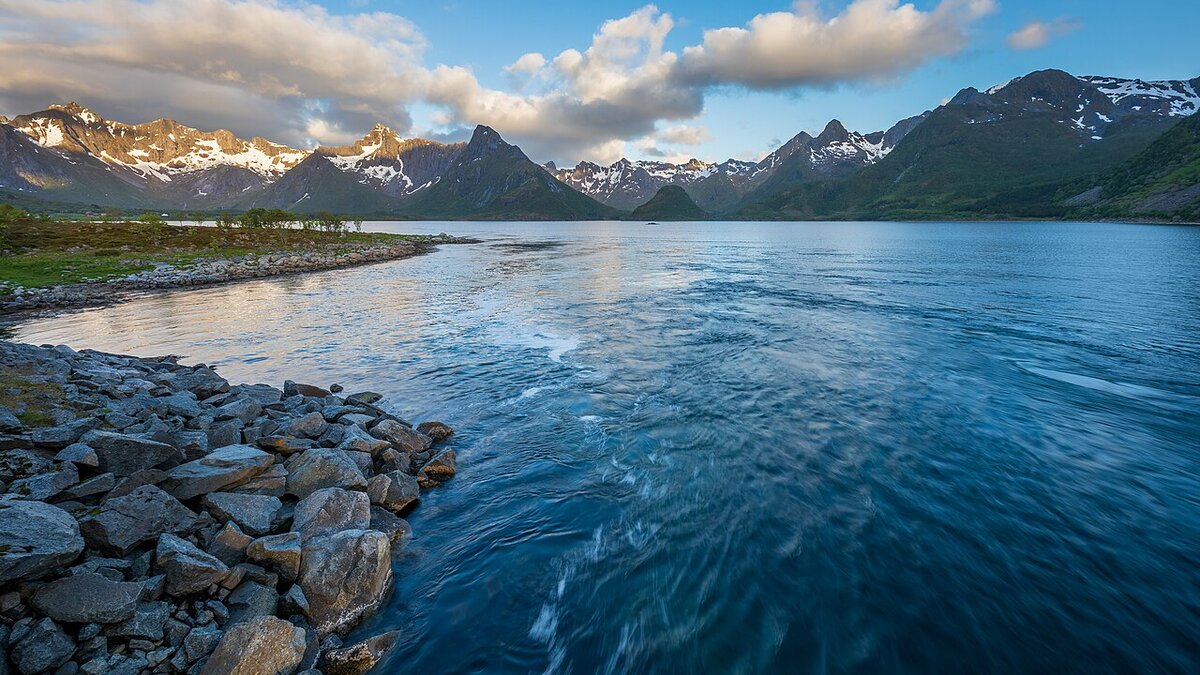
Cover image: Norwegian fjord flanked by steep green mountains under bright summer skies — photo by Ximonic (Simo Räsänen), CC BY-SA 4.0, via Wikimedia Commons.
Travel to Scandinavia is forecast to grow by as much as 35% in 2026, according to analysis by mobility group Sixt reported by Euronews Travel — the clearest signal yet that the "coolcation" has moved from marketing buzzword to structural shift in European summer demand. The pull factor is brutal arithmetic: the 2026 European heatwaves, which began in late May and were still running into early August, have pushed thermometers to 46.5C at Noto in Sicily (22 July), 44.3C in south-west France and 43.5C in Greece, with even Denmark hitting 37.0C. Figures compiled from national health agencies put cumulative heat-related deaths above 32,000, including roughly 10,000 in France and 3,000 in Spain.
Against that backdrop, the Nordics — along with the Alps, Ireland, Alaska and Canada — are absorbing displaced summer volume. Luxury network Virtuoso reported a 44% rise in bookings to cool-climate destinations including Norway, Iceland and Canada, according to Forbes, while the European Travel Commission found 28% of European travellers now actively seek cooler climates to avoid extreme heat.
Why are travellers booking coolcations in 2026?
Heat is no longer an abstraction for trip planners. This summer the Tour de France shortened part of a route — a first in the race's history — and the Louvre and Eiffel Tower again curtailed opening hours, per the running tally on Wikipedia's 2026 European heatwaves page. For families locked into July and August school holidays, a 15C fjord afternoon starts to look like a premium product rather than a compromise.
Airline data shows the displacement is south-to-north and measurable. SAS figures reported by Forbes show arrivals into Stavanger from Spain, Italy and France up 38%, Kristiansand up 52% and bookings from France up 22% — southern Europeans, notably, fleeing their own summer. "For many, Scandinavia's cool climate is no longer a disadvantage," SAS chief analyst Thomas Thessen said. The trend also intersects with the regulatory squeeze on Mediterranean hotspots: our guide to the new tourist rules, fees and bans across Europe this August shows how Venice, Athens and the Spanish islands are actively metering demand just as the Nordics court it.
How big is the Scandinavia booking surge really?
The headline 35% figure is a forecast for the full year, and operator-level evidence broadly supports the direction of travel. Intrepid Travel, which already carries more than 40,000 people a year in Iceland, sees strong demand for the same product across Scandinavia, CEO James Thornton told Euronews. Walking specialist Inghams reported searches for Nuuk in Greenland up 48.4% year on year. And Visit Finland counted 7.2 million international hotel overnight stays in 2025, up 12% — an all-time high — while Tromsø set fresh visitor records the same year, per Life in Norway.
Is Norway actually full — and what is happening to hotel prices?
Here the trade narrative needs nuance. Statistics Norway data analysed by NordiskPost on 29 July shows national hotel occupancy for 18 June–17 July 2026 actually slipped 1% against the same period in 2025 — but 2025 was a record base, with June 2025 logging an all-time-high 4.8 million guest nights. "We are comparing with a record summer," hotel consultant Peter Wiederstrøm cautioned. The mix matters more: May's foreign guest nights rose 6.7% while domestic fell 5.9%, and average room rates climbed another 3%.
In other words, international coolcation demand is real, but it is landing unevenly — Oslo (+2%) and Lillehammer (+7%) up, Lofoten (-4%), Tromsø (-6%) and Haugesund (-23%) off their record peaks. For buyers, rate pressure concentrates in the photogenic bottlenecks: fjord-village properties run roughly NOK 2,200–3,800 a night in July, Lofoten's best addresses NOK 3,000–6,000, with peak markups of 30–60% over shoulder months, according to pricing site Norway Explained — a strong argument for the shoulder-season plays we profiled earlier this year.
How are Nordic destinations managing the coolcation influx?
Deliberately coolly. Rather than pouring fuel on peak-season demand, Norway has moved first on demand management: from summer 2026, municipalities can apply to levy a 3% visitor's contribution on overnight stays and cruise passengers, according to Forbes. The tax is not nationwide by default — councils must demonstrate strain on public resources — and Lofoten's mayors, who lobbied hardest for the measure, expect the islands to be among the first adopters. Camper vans, recreational boats and tents are exempt.
DMO messaging across the region leans on spreading demand — forest, lake and coastal itineraries outside the icon sites, and longer seasons rather than bigger peaks. Neither Bergen nor Reykjavík was built for Barcelona-scale volume, and this summer's Norwegian occupancy data suggests dispersal is already happening organically.
Where should coolcation clients go — and when?
The smartest bookings in 2026 avoid the July squeeze entirely. June and late August deliver near-identical daylight and scenery at materially lower rates, and September extends the season — see our autumn 2026 destination picks. Cooler-water coastlines are also feeding the parallel rise of expedition-style beach travel, from Norway's Jæren beaches to the Baltic islands.
| Destination | Best window | Trade notes |
|---|---|---|
| Norwegian fjords / Lofoten | June, late Aug–Sept | Lofoten peak rates NOK 3,000–6,000; 3% visitor levy expected first here |
| Finnish Lakeland | June–August | Capacity still available in peak; 12% overnight growth per Visit Finland |
| Iceland | May–June, September | Tightest supply; book self-drive and lodges 6–9 months out |
| Swedish High Coast / Gotland | Mid-June–August | Overlooked alternative to Norway's bottleneck fjord sites |
| Alps, Ireland, Alaska, Canada | June–September | Virtuoso's cool-climate set up 44%; strong long-haul upsell |
Frequently asked questions
What is a coolcation?
A coolcation is a summer holiday deliberately taken in a cooler-climate destination — typically the Nordics, the Alps, the British Isles, Canada or Alaska — to avoid extreme heat, a booking pattern now firmly established as southern European heatwaves intensify.
Are Scandinavia bookings really up 35% in 2026?
The 35% figure is Sixt's forecast for growth in travel to Scandinavia across 2026, as reported by Euronews. Operator and airline data point the same way — Virtuoso's cool-climate bookings are up 44% and SAS reports double-digit growth from southern Europe — though Norwegian peak-July hotel occupancy was roughly flat against a record 2025.
Is a coolcation more expensive than a Mediterranean holiday?
Often, yes. Norway's average hotel rates rose another 3% this summer per Statistics Norway, fjord villages run NOK 2,200–3,800 a night in July and Lofoten's best hotels NOK 3,000–6,000. Booking June or September, or swapping in Finland or Sweden, closes much of the gap.
Will Norway's new tourist tax affect 2026 trips?
Only where municipalities win approval. From summer 2026, councils that can show strain on public resources may add a 3% visitor's contribution to overnight stays and cruise calls, with Lofoten expected to move first. Camper vans, boats and tents are exempt; the sums are small relative to Norwegian room rates.
Sources
- Euronews Travel — Coolcations: why more people are flocking to destinations in Norway, Finland and Iceland
- Forbes — The Coolcation Trend Is Heating Up, And The Numbers Prove It
- Wikipedia — 2026 European heatwaves
- NordiskPost — Norway's summer tourism is slowing outside Oslo
- Forbes — Norway Confirms Phased Introduction Of Tourist Tax In 2026
- Life in Norway — Scandinavia's Coolcation Boom Is Real
- Norway Explained — How Much Does a Hotel Cost in Norway?