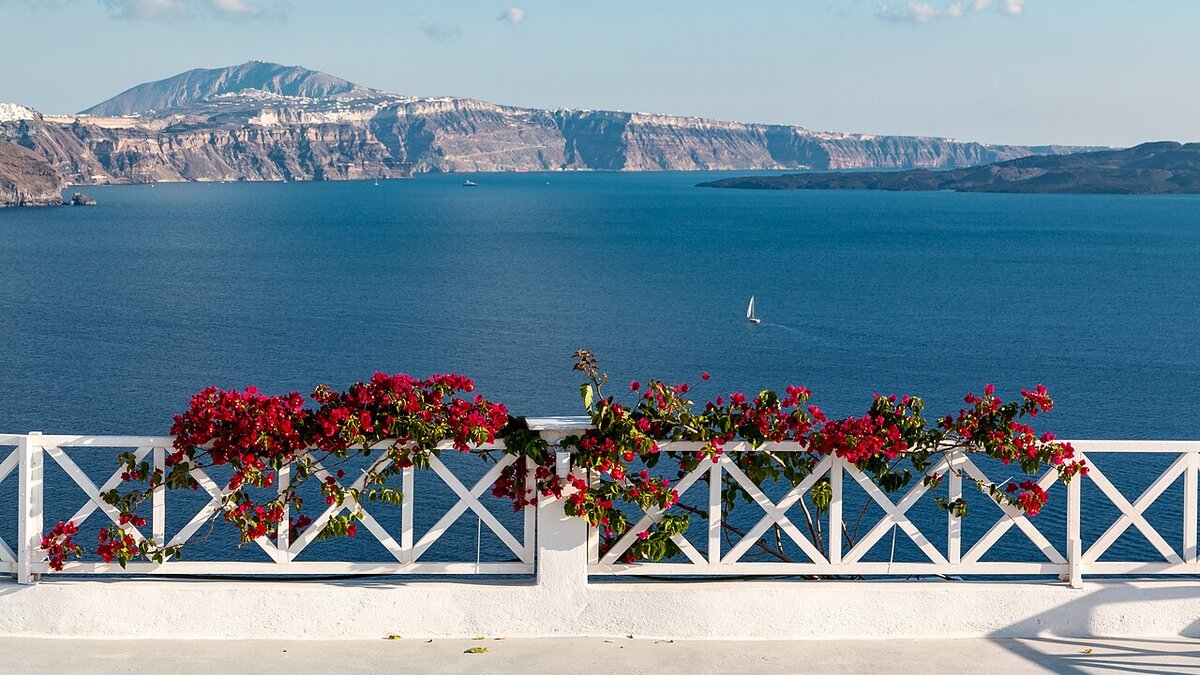
Travelling in May–June or September–October instead of July–August can cut airfares by a quarter or more and hotel bills by up to half. Here are the shoulder-season sweet spots for the Mediterranean, Japan, Southeast Asia and the Caribbean.
Cover image: quiet mediterranean coastal town in the off-season — photo by Dietmar Rabich, CC BY-SA 4.0, via Wikimedia Commons.
The best-value windows on the travel calendar are no secret to the trade: May to mid-June and September to October, the so-called shoulder seasons, consistently undercut peak summer on both price and crowds. Fare-tracking site Thrifty Traveler puts typical shoulder-season flight savings at roughly 20 to 37 per cent versus peak dates, while hotel rates in major leisure markets routinely fall 20 to 50 per cent once the July–August surge ends. The crowd dividend is just as concrete: Greece charges cruise passengers calling at Santorini or Mykonos €20 in peak season (1 June–30 September) but only €12 in April–May and October, per Euronews' round-up of 2026 tourist taxes. With global arrivals heading for a record 1.58 billion in 2026 and overtourism protests hardening across southern Europe, shifting a trip by six to eight weeks is now the single most effective lever a traveller has. The destination-by-destination sweet spots follow below.
How much cheaper is shoulder season travel really?
The discount is structural, not anecdotal. Airlines and hotels price to demand, and demand collapses the moment school holidays end. Thrifty Traveler's shoulder-season analysis finds transatlantic and intra-European fares dropping by a quarter or more between late August and mid-September, while hotel-rate data compiled by Kayak shows city and resort rates sliding through the autumn booking window.
Costs are also being pushed up at the peak by policy. Barcelona raised its combined tourist levies from April 2026, with holiday rentals now carrying €12.50 per night in city taxes and hotels €10 to €15 depending on category, per Euronews. Venice charges day-trippers €5 with advance booking, or €10 without, on roughly 60 designated peak days between April and July. Add in the fact that jet-fuel costs are keeping 2026 airfares elevated, and buying in the off-peak trough matters more than it has in years.
When is the Mediterranean's shoulder-season sweet spot?
For Spain, Greece, Italy and the Adriatic, the windows are mid-May to late June and mid-September to late October. Sea temperatures in the eastern Mediterranean actually peak in September, so autumn buys warmer swimming than June, alongside emptier beaches and old towns.
The autumn window is arguably stronger in 2026 because it is the one destinations are actively rewarding. Greece's seasonal cruise-fee ladder drops from €20 to €12 at its most crowded islands in October, and to €3 at all other ports. Barcelona concentrates its enforcement and pricing on the summer crush, so travellers who move to September sidestep both the fees and the friction of Europe's spreading overtourism backlash.
- Greek islands: late September–October; warm sea, ferries still running full schedules until end-October.
- Spain and Portugal: May–June for the interior and cities; October for Andalusia and the Algarve.
- Italy: May and October for Rome, Florence and the Amalfi Coast; avoid the 60 Venice access-fee days if day-tripping.
- Turkey and Croatia: June and September; July–August coastal pricing can be double the June rate.
What are the best shoulder months for Japan and Southeast Asia?
Japan's calendar pivots on domestic holidays rather than Western school terms. The 2026 Golden Week holiday cluster ran 29 April to 6 May, and the fortnight immediately after it, mid-May to early June, is one of the quietest, best-priced windows of the year, with settled weather before the June rains. Early June itself brings the rainy season but also markedly lower hotel rates in Tokyo and Kyoto. In autumn, late October to mid-November delivers foliage with fewer tour groups than the spring cherry-blossom crush, though October arrivals have been setting records.
Southeast Asia inverts the logic: its "green season" overlaps the northern summer, so the value windows sit at the monsoon's edges. Bali's sweet spots are May, June and September, when five-star resorts that command US$400 a night in August commonly discount by 30 to 50 per cent. Thailand's second shoulder runs September to October, just before the November–February high season, and pairs well with the kingdom's tightened 30-day visa-free entry rules. Green-season rain typically means a heavy afternoon downpour of one to three hours, not washed-out days.
Is the Caribbean worth booking in shoulder season?
May and early June are the Caribbean's classic value window: high-season pricing ends after Easter, and resort rates can fall 40 to 60 per cent before the Atlantic hurricane season builds. The season formally runs 1 June to 30 November, but the statistical risk in June is a fraction of the September peak.
The 2026 outlook strengthens the case. US forecaster NOAA predicts a 55 per cent chance of a below-normal season, with 8 to 14 named storms and 3 to 6 hurricanes, helped by El Niño-driven wind shear that suppresses storm formation. NOAA stresses the outlook is not a landfall forecast, so flexible tickets and storm-cover insurance remain sensible for anything booked from August onward.
| Region | Sweet spot | Typical saving vs peak | Watch out for |
|---|---|---|---|
| Mediterranean | Mid-May–June; mid-Sept–Oct | 20–40% on rooms; lower visitor fees | Venice access-fee days (Apr–Jul) |
| Japan | Mid-May–early June; late Oct–Nov | Notably lower city hotel rates in June | Golden Week (29 Apr–6 May) and Obon |
| Southeast Asia | May–June; September–October | 30–50% on resorts | Afternoon monsoon downpours |
| Caribbean | May–June | 40–60% on resorts | Hurricane season from 1 June (below-normal 2026 outlook) |
Why shoulder season matters more in 2026
With international arrivals on course for a record 1.58 billion in 2026, peak-summer capacity in marquee destinations is effectively rationed by price, taxes and caps. Destinations are formalising the incentive to spread demand: seasonal fee tiers in Greece, capped cruise calls in Barcelona, timed entry in Venice. For agents and operators, selling the shoulder is no longer a discount pitch; it is increasingly the better product.
Frequently asked questions
What months count as shoulder season?
For most northern-hemisphere leisure destinations, shoulder season means roughly May to mid-June and September to October, the buffer between peak summer and the winter low. Exact edges vary: Japan pivots on its domestic holiday weeks, while Southeast Asia's shoulder tracks the monsoon rather than the calendar.
Is September warm enough to swim in the Mediterranean?
Yes. The sea absorbs heat all summer, so Mediterranean water temperatures peak in late August and September and remain comfortable well into October in Greece, southern Italy and southern Spain.
Is it risky to visit the Caribbean in June?
June is the lowest-risk month within the official hurricane season, and NOAA forecasts a 55 per cent chance of a below-normal 2026 season with 8 to 14 named storms. No forecast rules out an individual storm, so book flexible fares and take travel insurance with weather cover, especially for trips from August onward.