A six-night European ski week runs roughly EUR 700-1,000 per person in Bulgaria or Andorra, EUR 1,200-1,800 in most Alpine resorts and EUR 2,500+ in Switzerland. Here is the full 2026-27 breakdown, line by line, with verified lift-pass prices.
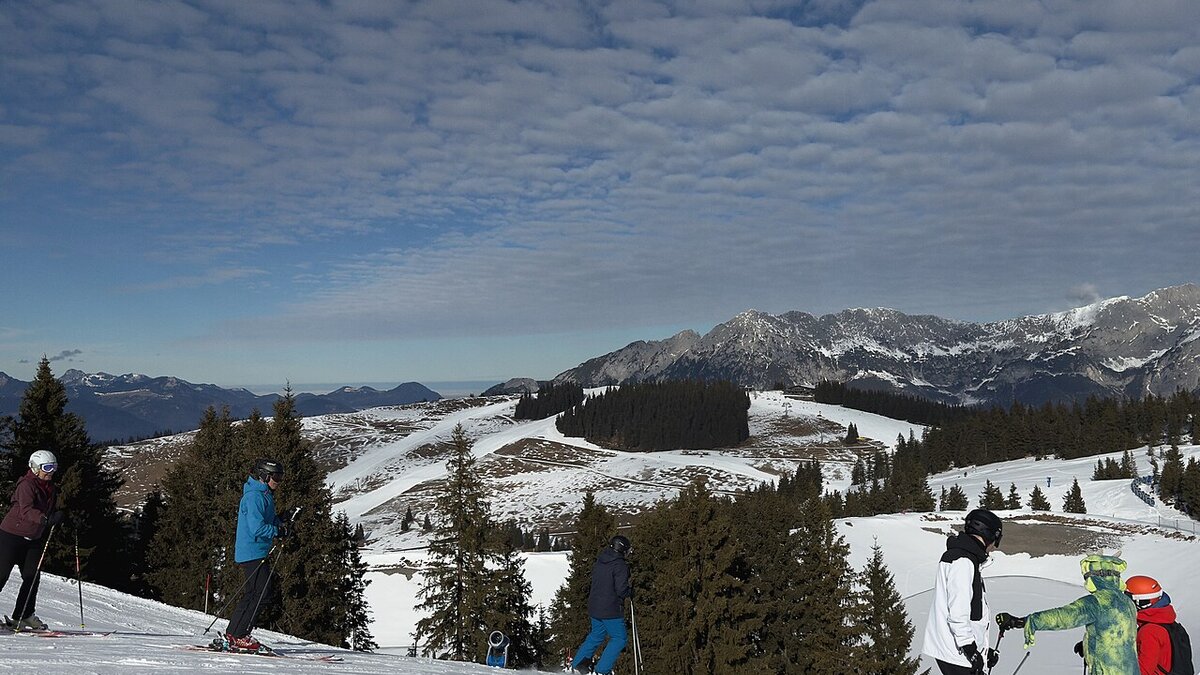
Cover image: Skiers descending a sunny Alpine piste against a snow-covered mountain panorama — photo by Mike is Michi, CC BY-SA 4.0, via Wikimedia Commons.
A classic six-night, five-or-six-day ski week in Europe costs roughly €700–1,000 per person in budget destinations such as Bansko in Bulgaria or Andorra, €1,200–1,800 in most mid-range French, Austrian and Italian resorts, and €2,500 or more in Switzerland and marquee French names. Those figures cover the lift pass, equipment hire, accommodation, food and airport transfers; flights and lessons come on top.
The numbers below are built from published 2025-26 and early 2026-27 prices. With the 2026-27 season opening in late November and the booking peak running through September and October, this is the window in which the gap between a cheap week and an expensive one is decided.
How much is a ski pass in Europe?
The 6-day adult pass is the anchor cost, and the spread across Europe is wide. Verified published prices:
| Resort | Country | 6-day adult pass | Season / notes |
|---|---|---|---|
| Bansko | Bulgaria | €341 | 2025-26; promotional pass sales run 1 October–13 December |
| Zillertal | Austria | €399 | 2026-27, fixed pricing |
| Val d'Isère–Tignes | France | €450 | 2025-26, up €5 on the prior year |
| Ischgl | Austria | €451 | 2026-27, fixed pricing |
| Chamonix (Mont Blanc Unlimited) | France | €480 high season / €360 low season | 2025-26; cheaper windows 5 Jan–6 Feb and 9 Mar–5 Apr |
| Zermatt | Switzerland | Dynamic, from CHF 88 per day | 2026-27; price fixes only when you pick dates, early bookers pay less |
Note the two pricing models. Austrian and most French areas publish fixed rates; Swiss resorts including Zermatt and LAAX now price dynamically, so a sunny half-term Saturday costs materially more than a mid-January Tuesday, and booking early locks the lower "from" rate. Smaller French valleys undercut the giants sharply: Montgenèvre charges €217–301 for six days in 2026-27 and Pralognan-la-Vanoise €217.
What do ski hire, lessons and food add?
Equipment hire: budget €100–210 for the week. Intersport Rent quotes €110–150 for skis plus €50–60 for boots at last season's rates, and booking online in advance at chains such as Intersport and Skiset can cut up to 50%, which is how Maison Sport's "from about $100 a week" figure is achievable.
Group lessons: adult group courses at ESF, France's national ski school, run about €230–414 for a week at La Rosière's published rates; equipment, pass and insurance are extra, and Austrian school pricing sits in a similar band.
Food and drink: Maison Sport puts European resort dining at $38–76 (roughly €35–70) per person per day. A mountain lunch with a drink typically lands mid-range in that band; self-caterers who pack lunches save meaningfully.
What does a full ski week cost per person?
Putting it together for a six-night week, per person sharing, excluding flights and lessons:
| Cost line (per person) | Budget week | Mid-range week | Premium week |
|---|---|---|---|
| 6-day lift pass | €300–350 | €400–480 | €480–550 |
| Ski and boot hire | €100–130 | €140–180 | €180–210 |
| Accommodation (6 nights, shared) | €200–300 | €450–700 | €1,200–1,800 |
| Food and drink | €120–180 | €200–300 | €400–600 |
| Airport transfers | €20–40 | €40–80 | €80–150 |
| Total | €740–1,000 | €1,230–1,740 | €2,340–3,300 |
Accommodation is the biggest swing factor. A self-catered apartment shared four ways anchors the budget tier; a catered chalet or three-star half-board hotel defines mid-range (Maison Sport cites around $190 per person per night for a reputable resort three-star in January); four-star ski-in ski-out properties in Switzerland push the premium tier past €2,500 all-in. Flights are on top of everything above — fares to Geneva, Innsbruck and Sofia move with school holidays, so check our guide to when to book holiday flights for 2026 before locking dates.
What is the cheapest way to ski in Europe?
Pick January or mid-March. The quantified example: Chamonix's Mont Blanc Unlimited pass drops from €480 to €360 — 25% — in its 5 January–6 February and 9 March–5 April windows. New Year and February half-term are the price peaks everywhere; if you only have December dates, a Christmas markets city break plus a January ski week often costs less than one peak-week trip.
Go east or go small. Bansko's €341 pass is paired with Bulgarian accommodation and restaurant prices far below Alpine norms, and smaller French and Italian valleys sell six days for €217–301 against €450-plus at the giants.
Buy passes early. Bansko discounts passes bought between 1 October and 13 December; Zermatt's dynamic system consistently rewards early bookers. Package operators can also beat DIY pricing in peak weeks because they hold committed beds — get a quote for both before assuming self-booking wins. For other winter budgets, see our Lapland trip cost guide and northern lights trip budget.
Is skiing cheaper in Europe or the US?
Comfortably cheaper in Europe. Maison Sport's comparison puts the average US daily lift ticket at $198 last season, exceeding $300 at major resorts, against generally under $100 a day in Europe, where 6-day passes span about $243–537. Its all-in estimate is roughly $2,500 for a European ski week versus $3,500 in the US — a gap of upwards of $1,000 that can cover much or all of a well-timed transatlantic fare.
Frequently asked questions
How much does a week of skiing cost in Europe?
Budget roughly €700–1,000 per person for a six-night week in Bulgaria, Andorra or smaller valleys, €1,200–1,800 in most French, Austrian and Italian resorts, and €2,500 or more in Switzerland. That covers pass, hire, accommodation, food and transfers; add flights and around €230–414 if you want a week of group lessons.
What is the cheapest ski country in Europe?
Bulgaria is the standout: Bansko's 6-day pass costs €341 for 2025-26 and in-resort prices for food and lodging sit well below Alpine levels. Andorra and smaller French and Italian valleys come next — Montgenèvre and Pralognan-la-Vanoise sell six-day passes from €217, roughly half the price of the marquee French areas.
When is the cheapest time to ski in Europe?
January after New Year and mid-to-late March. Resorts price these weeks lowest — Chamonix's Mont Blanc Unlimited pass is 25% cheaper in its January and March windows than in high season — and accommodation follows the same curve. Avoid Christmas, New Year and February half-term, which are the most expensive weeks of the season everywhere.
Is skiing cheaper in Europe or the US?
Europe, clearly. Average US daily lift tickets ran $198 last season and top $300 at major resorts, while European skiing generally costs under $100 a day. Comparison estimates put a full European ski week near $2,500 against $3,500 in the US, so the saving can offset a transatlantic flight booked at the right time.
Sources
- Snowthere — European Lift Pass Prices 2026/27 for Families
- Chamonix Ski Passes — Winter 2025/26 Ski Passes and Prices
- Val d'Isère — Skipass prices Tignes | Val d'Isère
- BanskoBlog — Ski Lift Pass Prices 2025/26
- La Rosière / ESF — Adult Ski Group Lessons
- Intersport Rent — Ski rental: costs & tips from the pros
- Maison Sport — Cost Breakdown: Is it Cheaper to Ski in Europe or the U.S.?