airBaltic filed Chapter 11 in New York on Sept 14 with €350M in financing. Flights continue; the Iran war fuel shock and GTF engine woes drove the filing.
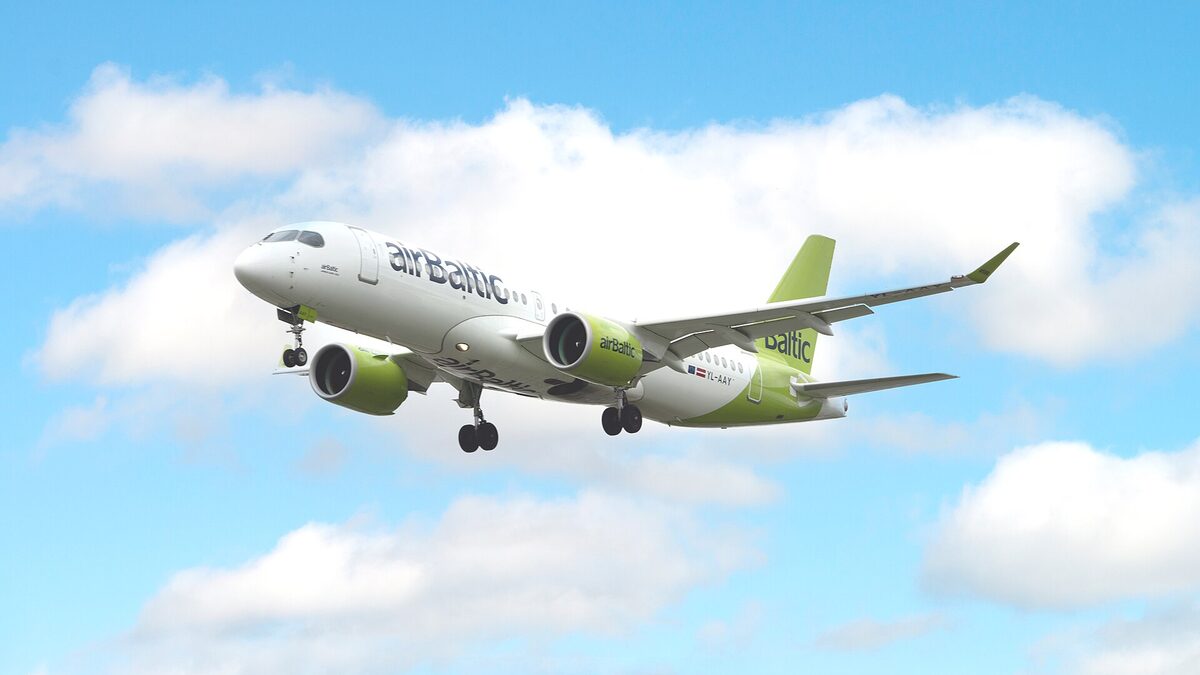
Cover image: an airBaltic Airbus A220-300 in full livery climbing after take-off — photo by Robert Cutter, CC BY-SA 4.0, via Wikimedia Commons.
Latvia's flag carrier airBaltic filed for Chapter 11 bankruptcy protection in New York on September 14, 2026, lining up €350 million (about $406 million) in debtor-in-possession financing to keep flying while it restructures. The airline expects the court-supervised reorganisation to conclude around June 2027, and says all flights are operating as normal with tickets remaining valid.
The filing, lodged with the bankruptcy court for the Southern District of New York, covers airBaltic plus two subsidiaries: AirBaltic Training and the Baltic Cargo Center. Chief executive Erno Hildén told passengers that "operations continue as normal" while the airline implements its new business plan. A US court has since granted initial approval for the carrier to tap the financing, according to industry reporting.
Why did airBaltic file for bankruptcy?
The airline points to financial strain built up during rapid growth of its all-Airbus A220-300 fleet, compounded by the Pratt & Whitney powder-metal defect that has affected GTF engines worldwide. Aviation Week reports the carrier had already been in interim financing talks with bondholders, and in August announced plans to trim the A220 fleet and concentrate operations on its Riga base. Reuters reports the filing came as fuel costs driven up by the Iran war bit into the balance sheet, and in an exclusive interview Hildén blamed the Iran war for the collapse while confirming lay-off talks with unions are under way.
The case is a warning for the industry's most exposed carriers. Airlines with dollar-denominated leases and debt but euro-denominated revenue have been squeezed from both sides this year: jet fuel spiked after the United States clashed with Iran, a shock also rippling through Asian carriers, while US sanctions pressure on Iranian aviation has kept regional airspace and fuel markets volatile.
How big is airBaltic's fleet and who owns the aircraft?
airBaltic operates 56 Airbus A220s, with 54 active and two parked, but owns only 15 of them. The rest sit on dry leases, which is exactly why a US Chapter 11 process fits: the airline says it chose the venue because its obligations have a cross-border character, and restructuring lets it renegotiate lease terms across jurisdictions at once.
The lessor roster reads like a who's who of global aviation finance. Dubai Aerospace Enterprise and German Operating Aircraft Leasing hold seven aircraft each, with Azorra holding six. The outcome of lease renegotiations in Riga will be watched closely by lessors with exposure across Asia-Pacific, where sale-and-leaseback structures dominate airline fleets. Engine makers are under parallel scrutiny after a bruising year for the supply chain, as recent multi-billion-dollar engine deals show.
| airBaltic restructuring at a glance | Detail |
|---|---|
| Filing date | September 14, 2026 |
| Court | US Bankruptcy Court, Southern District of New York |
| DIP financing | €350 million (about $406 million), around 12% interest |
| Target exit | Around June 2027 |
| Fleet | 56 Airbus A220s (54 active, 2 parked); 15 owned |
| Flights | Continuing as normal, tickets valid |
What happens to passengers and tickets?
For now, nothing changes. The airline says flights are unaffected, existing management and supervisory boards stay in place, and chairman Andrejs Martinovs has framed the goal as keeping Latvia's air links intact while obligations are "substantially" reduced. The carrier flies around 4,000 UK passengers a week, the Metro reports, and rebooking protection under the restructuring means booked travellers should fly as scheduled.
The longer question is the network. The August plan to shrink the A220 fleet and refocus on Riga suggests thinner schedules on marginal routes through winter. Passengers booked on secondary routes should watch for schedule changes, keep travel insurance current, and pay by credit card where possible for chargeback protection. The pattern mirrors other airline rescues in India, where fresh Tata funding injections rather than court processes have been the tool of choice.
What does the airBaltic case mean for aviation in Asia?
Three lessons travel straight across regions. First, single-type fleets cut costs in good years and concentrate risk in bad ones; the GTF powder-metal saga has punished A220 and A320neo-family operators on every continent. Second, dollar leases against local-currency revenue are a standing vulnerability for emerging-market carriers from Riga to Mumbai. Third, courts in New York remain the venue of choice for cross-border airline restructurings, a precedent Asian lessors price into every lease.
Frequently asked questions
Is airBaltic still flying after the Chapter 11 filing?
Yes. The airline says all flights operate as normal, tickets remain valid, and the €350 million in debtor-in-possession financing is specifically meant to fund operations through the restructuring, which is expected to run until about June 2027.
Why did airBaltic go bankrupt?
A mix of rapid fleet growth funded with leases, the Pratt & Whitney GTF engine defect grounding aircraft, and a fuel-cost spike linked to the Iran war. Chief executive Erno Hildén directly blamed the Iran war in a Reuters interview and confirmed lay-off talks with unions.
What is Chapter 11 bankruptcy for an airline?
Chapter 11 is a US court-supervised reorganisation, not a liquidation. The company keeps operating under existing management while renegotiating debts and leases with creditor protection. Airlines use it to cut obligations and emerge leaner, which is airBaltic's stated plan.
Should I still book airBaltic tickets?
Booked travel should operate normally, but expect possible schedule trims on marginal routes as the fleet shrinks toward the Riga core. Book with a credit card, keep insurance current, and monitor schedule-change emails through winter 2026-27.