Air India is nearing a $1.1 billion (about Rs 10,000 crore) infusion from Tata Sons and Singapore Airlines, released in performance-linked installments after a FY2026 loss over Rs 22,000 crore.
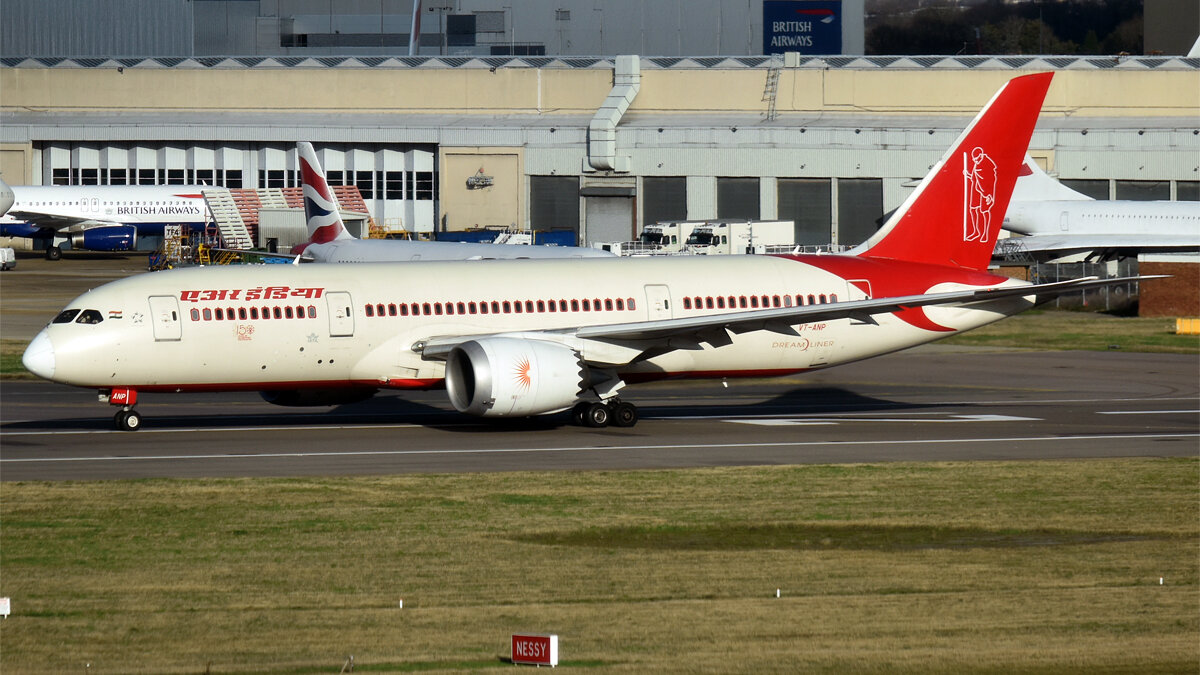
Cover image: an Air India Boeing 787 at an airport — photo by Anna Zvereva from Tallinn, Estonia, CC BY-SA 2.0, via Wikimedia Commons.
Air India is closing in on a $1.1 billion lifeline. The Tata Sons and Singapore Airlines-owned carrier is nearing about Rs 10,000 crore ($1.1 billion) in financial support from its owners, to be released in performance-linked installments, after a loss of more than Rs 22,000 crore for the year ended 31 March 2026.
The support, reported by Business Today on 3 September 2026, will come proportionate to shareholdings: Tata Sons 74.9% and Singapore Airlines the remainder. The funding is linked to performance milestones and released in installments, not as a lump sum, and the airline had earlier sought at least the same Rs 10,000 crore amount to stabilise operations.
The need for fresh capital caps a bruising year. A fatal Boeing 787 Dreamliner crash, the closure of Pakistani airspace to Indian carriers, and the West Asia conflict's impact on travel demand and fuel costs have combined to widen losses. The backing of both shareholders, including Temasek, the majority owner of Singapore Airlines, remains explicit, but with tighter conditions.
How the $1.1 billion support is structured
Ownership sets the split. Tata Sons, which bought Air India in 2022, holds 74.9%, Singapore Airlines holds the rest. The new support will follow that ratio, so Tata covers roughly $824 million and Singapore Airlines about $276 million at the headline $1.1 billion.
The structure matters more than the headline. Business Today says the funding will be linked to performance milestones and released in installments. That ties cash to operational delivery, not promises. Tranches typically track metrics such as on-time performance, technical dispatch reliability, cargo yields and unit costs, the areas where Air India has been under pressure since the recent operational disruptions seen across Indian aviation.
For a carrier that has already absorbed more than Rs 22,000 crore in losses in one financial year, staged funding gives the board leverage. Each release becomes a governance checkpoint where management must show that the next rupees will move the airline closer to a sustainable cost base.
Why losses widened in FY2026
Three shocks hit at once. The fatal 787 crash triggered fleet checks, insurance spikes and reputational drag on forward bookings. The closure of Pakistani airspace to Indian carriers forced longer routings to the Gulf and Europe, adding fuel and crew hours on sectors that were already thin margin. The West Asia conflict lifted fuel benchmarks and dampened inbound tourism, squeezing yields on long-haul services that Air India had been rebuilding.
That last point links directly to regional cost pressures around fuel and levies that have pushed up operating costs across Asian carriers. For Air India, which is mid-way through a multi-year transformation that includes cabin retrofits and a unified loyalty programme, the cash call comes as heavy capital spending collides with softer revenue.
At board meetings, Noel Tata, chair of Tata Trusts which controls Tata Sons, raised concerns about the scale of losses, Reuters reported last month. Tata Sons and Temasek separately said they will continue to back the carrier, but the staged structure signals that patience is conditional on execution.
What the funding buys next
Incoming chief executive Tewolde Gebremariam, the Ethiopian Airlines veteran due to join later in September, is expected to prioritise two levers. The first is cargo. Business Today says he plans to grow cargo operations, a natural hedge when passenger yields wobble and a business where Air India has belly and freighter upside if it can tighten handling and interconnects.
The second is maintenance. Fixing technical reliability reduces cancellations, reaccommodation costs and compensation, and the fastest way to stabilise a balance sheet without adding a single aircraft. That is where performance milestones bite: fewer airframe-on-ground events and higher dispatch reliability unlock the next tranche.
For passengers, the funding does not yet translate into new routes. The carrier's focus is on reliability on existing networks, including the long-haul aspirations that other Indian carriers are chasing and the daily India-Vietnam expansion underway at rivals. Watch for retrofit pace on widebodies and for cargo schedules more than new passenger dots on the map in the next two quarters.
How this compares to Air India's ownership logic
The deal reiterates the joint-venture logic. Singapore Airlines, which kept a stake after the 2022 privatisation, is not being diluted. By funding in proportion to shareholdings, both owners keep skin in the game and avoid a disorderly capital structure. For Tata Sons, the $1.1 billion sits alongside continued commitments from Tata Trusts; for Singapore Airlines, backing Air India preserves a foothold in a market where regional airports are being upgraded for growth.
That equivalence is no accident. If India's aviation growth thesis is intact, funding a hub carrier and funding a regional feeder are two sides of the same bet. The difference is that the hub carrier must fix costs before it can grow, while the regional carrier is buying growth now.
Frequently asked questions
How much money is Air India getting and from whom?
Air India is closing in on about $1.1 billion, or roughly Rs 10,000 crore, from its owners Tata Sons and Singapore Airlines. Support is proportionate to shareholdings: Tata Sons 74.9% and Singapore Airlines the remainder.
Is the funding a lump sum?
No. Business Today says the funding will be linked to performance milestones and released in installments. Tranches are tied to operational and financial targets rather than a single transfer.
Why does Air India need fresh capital now?
The airline posted a loss of more than Rs 22,000 crore for the year ended 31 March 2026, wider than expected, as it absorbed costs from a fatal Boeing 787 Dreamliner crash, the closure of Pakistani airspace to Indian carriers, and West Asia conflict impacts on fuel and routings.
Who will lead Air India through the next phase?
Ethiopian Airlines veteran Tewolde Gebremariam is due to join as chief executive later in September 2026, with a mandate to grow cargo and fix maintenance issues. Tata Trusts chair Noel Tata has pressed the board on the scale of losses.