Air India and India's Ministry of Tourism signed an MoU on 27 July 2026 covering joint Incredible India marketing, trade famtrips and — most notably — stopover programmes designed to turn Delhi and Mumbai into transit-tourism hubs in the mould of Dubai, Singapore and Istanbul.
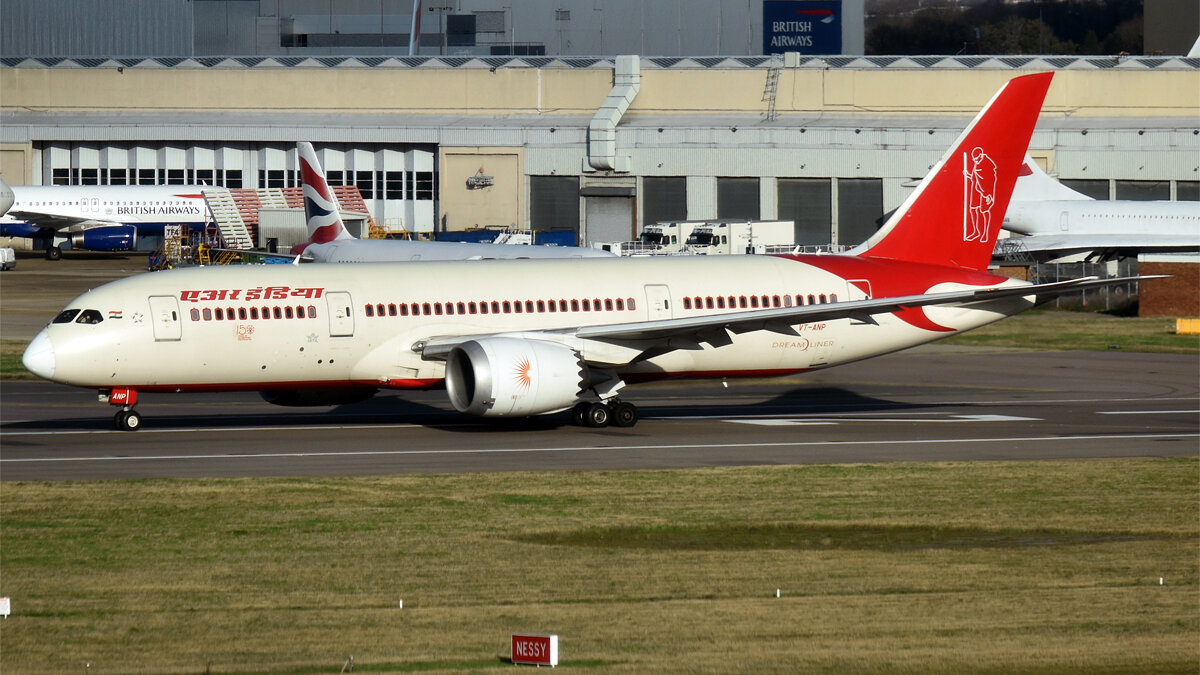
Cover image: Air India Boeing 787 Dreamliner taxiing on an airport apron — photo by Anna Zvereva from Tallinn, Estonia, CC BY-SA 2.0, via Wikimedia Commons.
Air India and India's Ministry of Tourism signed a memorandum of understanding in New Delhi on 27 July 2026 to jointly market India as a global tourism destination — and, more significantly for the trade, to build stopover programmes aimed at converting transit passengers at Delhi and Mumbai into short-stay visitors. The MoU, announced on 28 July, was signed in the presence of Union Tourism and Culture Minister Gajendra Singh Shekhawat, with Air India represented by chief commercial officer Nipun Aggarwal and P. Balaji, the carrier's group head of governance, risk, compliance and corporate affairs.
The agreement covers co-branded Incredible India campaigns across digital, social and inflight channels, trade fairs and roadshows, famtrips for international tour operators, Maharaja Club loyalty tie-ins and a possible co-branded "Visit India Pass". A joint working group will monitor implementation. The stopover ambition is the headline: India wants the transit-tourism economics that Dubai, Singapore, Doha and Istanbul have spent decades perfecting — and it wants them at a moment when inbound arrivals are still running below the 2019 peak of 10.93 million.
What did Air India and the tourism ministry actually agree?
The MoU establishes a framework rather than a funded programme — the government's own announcement describes it as non-commercial, non-binding and involving no financial commitment from either side. Its pillars: joint destination marketing under the Incredible India brand, travel-trade engagement, collaboration with state tourism boards, and stopover product development as Air India builds out its Delhi and Mumbai hubs.
"As the airline that proudly carries India in its name, Air India has a unique responsibility to showcase the country to the world," Aggarwal said. The ministry will also facilitate special offers for Air India customers at cultural attractions, heritage sites and museums — the raw material of any 24-to-48-hour stopover itinerary.
Air India brings genuine network scale to the table: the carrier serves 40 international destinations across five continents, with 25 codeshare and more than 120 interline partnerships reaching over 1,000 destinations, according to Air India. (See our explainer on how codeshare flights actually work.)
Why does India want a stopover programme now?
Because inbound tourism is going the wrong way. India recorded roughly 9 million foreign tourist arrivals in 2025, down 9.4% year on year, according to Ministry of Tourism data reported by CAPA — Centre for Aviation. The 2024 figure of 9.7 million was itself only an 88.4% recovery of 2019 volumes. Stopover traffic is a proven way to manufacture arrivals from passengers who are already flying over — or through — your country.
It also dovetails with Air India's Vihaan.AI transformation. The carrier has 570 aircraft on order — the landmark 470-jet Airbus and Boeing order placed in 2023 plus 100 additional Airbus aircraft added in December 2024 — and that fleet only pays for itself if Delhi and Mumbai become genuine sixth-freedom connecting hubs, funnelling Europe–Asia and North America–Asia flows the way Gulf hubs do today. Our guide to how hub airports concentrate connecting traffic explains the model India is chasing — one that new entrants such as Riyadh Air are also pursuing aggressively.
How do successful stopover programmes work elsewhere?
The template is well established. Icelandair has offered stopovers of up to seven nights at no extra airfare since the 1960s — a scheme widely credited with building Iceland's tourism boom. Turkish Airlines puts long-connection passengers up in a free four- or five-star Istanbul hotel for one to three nights depending on cabin and origin market, per AwardWallet, while Changi and Qatar Airways bundle free tours and cheap or free hotels into qualifying connections.
| Programme | Hub | Core offer | Qualifying window |
|---|---|---|---|
| Icelandair Stopover | Reykjavik | Stopover at no extra airfare | Up to 7 nights |
| Turkish Airlines Stopover | Istanbul | Free 4/5-star hotel (1–3 nights) | 20+ hour connection |
| Touristanbul | Istanbul | Free guided city tours | 6–24 hours |
| Free Singapore Tour | Changi | Free city/Sentosa tours, all airlines | 5.5–24 hours |
| Qatar Stopover | Doha | Hotels from US$14/night + free transit stays | 12–96 hours |
The common threads: the offer is bookable at the point of ticket purchase, the visa is frictionless or free, and airline, airport and tourism board act as one seller. India currently has none of those three fully in place.
What does India need to fix for stopovers to work?
The biggest obstacle is visa friction. Under India's immigration rules, a passenger transiting without a visa must stay within the airport precincts and depart within 24 hours; leaving the terminal requires a transit visa, and stays beyond three days require a different visa category altogether. India has moved the transit visa online — the e-Transit visa permits two entries, carries a 30-day validity from the date the electronic travel authorisation is issued, and quotes processing of 24 to 78 hours, according to immigration firm Fragomen — but that still compares poorly with the visa-free or on-arrival access Dubai, Doha and Singapore extend to most stopover nationalities.
- Visa-on-arrival or visa-free stopover access for key source markets, matched to the ticket rather than a separate application.
- Bundled product: hotel, transfers and a curated Delhi or Mumbai itinerary sold in the Air India booking flow — the mooted Visit India Pass could be that wrapper.
- Airport experience: fast, predictable immigration for re-entering stopover passengers, and minimum connection reliability at Delhi and Mumbai.
Can Delhi and Mumbai handle the extra traffic?
Capacity, at least, is arriving on cue. Delhi's expanded Terminal 1 became fully operational on 15 April 2025, lifting its capacity to 40 million passengers a year and the airport's total past 100 million across three terminals. In Mumbai, the new Navi Mumbai International Airport — inaugurated in October 2025, with domestic flights from 25 December 2025 and its first international service, an Air India Express flight to Abu Dhabi, on 15 July 2026 — adds roughly 20 million seats in Phase 1 and is planned to reach about 90 million at full build-out.
The MoU lands alongside a broader push by the ministry across culture, culinary and niche tourism — covered in our companion piece on India's 2026 tourism strategy. For the trade, the near-term watch items are the joint working group's first deliverables and whether a stopover product with a visa fix attached appears in Air India's booking path before the winter 2026–27 season.
Frequently asked questions
When was the Air India–Ministry of Tourism MoU signed?
The MoU was signed in New Delhi on 27 July 2026 and announced publicly on 28 July, with Air India represented by Nipun Aggarwal and P. Balaji and tourism minister Gajendra Singh Shekhawat present.
What is the stopover programme in the MoU?
The agreement commits both sides to develop stopover and transit-tourism initiatives that encourage passengers connecting through Delhi and Mumbai to leave the airport for a short India visit. The MoU is non-binding; pricing and launch dates have not been announced, and a joint working group will define the product.
Do transit passengers in India currently need a visa?
No visa is needed if you remain airside and depart within 24 hours, per Bureau of Immigration rules. Leaving the airport requires a transit visa — now available online as an e-Transit visa with two entries and 24-to-78-hour processing — still more friction than rival hubs such as Doha, Dubai or Singapore impose.
How far below pre-pandemic levels is Indian inbound tourism?
India recorded about 9 million foreign tourist arrivals in 2025, down 9.4% year on year, per Ministry of Tourism figures. That compares with the 2019 peak of 10.93 million, meaning arrivals are still roughly 18% below pre-COVID levels.
Sources
- Akashvani News — Tourism Ministry signs MoU with Air India to promote India under Incredible India brand
- SMEStreet — Air India and Ministry of Tourism enter MoU to jointly promote India as a global tourism destination
- Devdiscourse — Tourism Ministry and Air India join hands to promote Incredible India
- CAPA – Centre for Aviation — India records 9m foreign tourist arrivals in 2025, down 9%
- Business Standard (PTI) — Foreign tourist arrivals fell from 10.93 million in 2019 to 2.74 million in 2020
- AwardWallet — Turkish Airlines Stopover: free hotel and tour in Istanbul
- Changi Airport — Free Singapore Tour for transit passengers
- Wego — Qatar Airways Stopover programme: Doha hotels from USD 14 per night
- Epic Layover — Icelandair Stopover programme: up to seven nights at no extra airfare
- Embassy of India, Paris — Transit visa rules for India
- Fragomen — India expands electronic travel visa categories to include transit