The 12 August 2026 total solar eclipse crosses Greenland, western Iceland and northern Spain. City-by-city totality times, cloud-cover odds, last-minute booking strategy and safety rules for the first totality over Western Europe in decades.
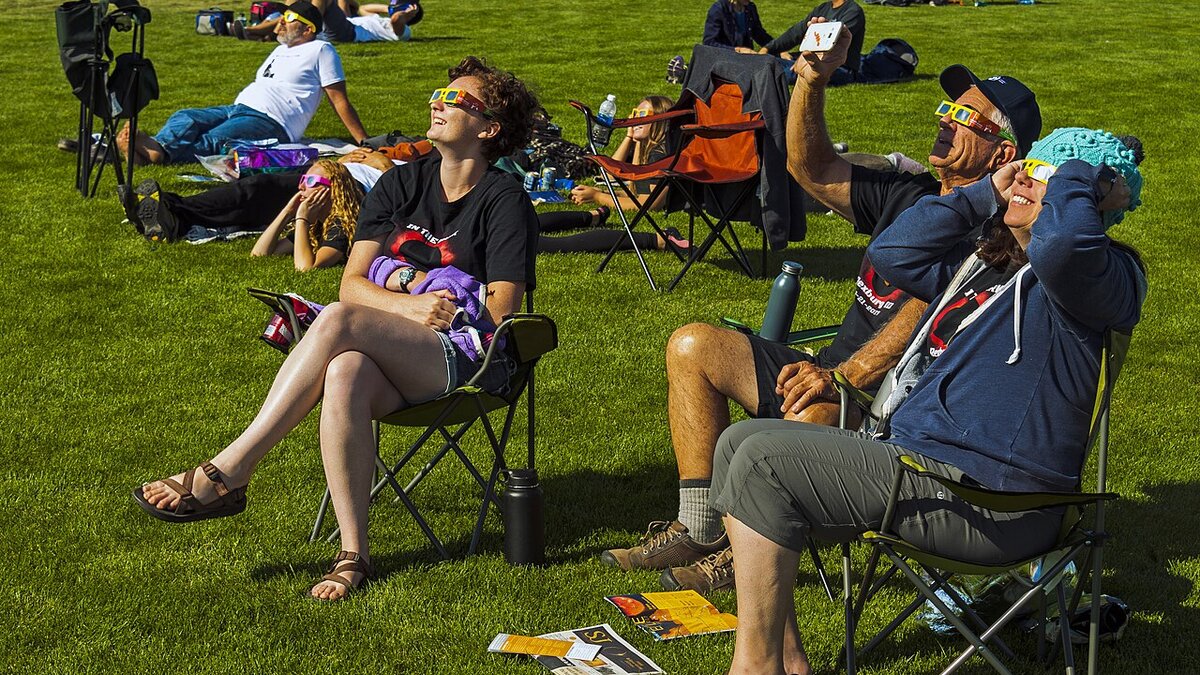
Cover image: Spectators wearing protective eclipse glasses watch a total solar eclipse darken the sky — photo by Daniel Case, CC BY-SA 4.0, via Wikimedia Commons.
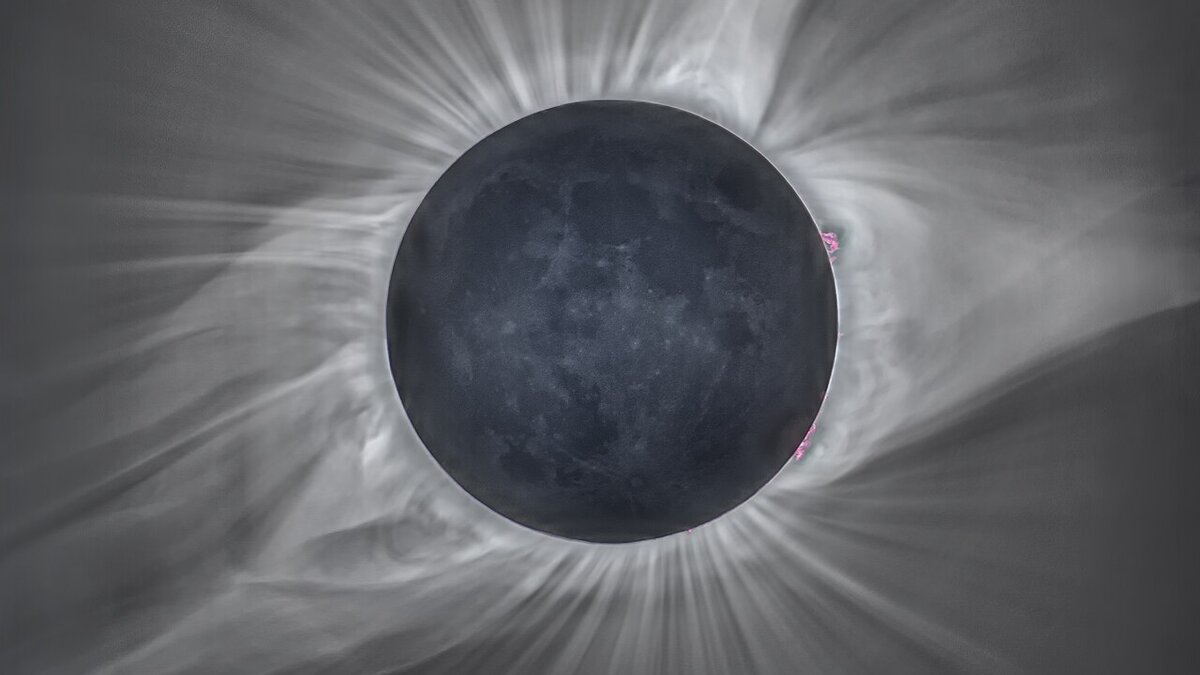
The total solar eclipse of Wednesday 12 August 2026 — the first totality visible from Western Europe in a generation — will sweep across eastern Greenland, western Iceland and northern Spain in about an hour. Totality reaches Reykjavik at 17:48 local time, where the Moon will blot out the Sun for about 59 seconds, before the shadow crosses the North Atlantic and arrives over Galicia and Asturias between 20:26 and 20:33 CEST, per NationalEclipse.com city data. The maximum duration anywhere on the track is 2 minutes 18 seconds, reached over the sea off Iceland's west coast; on land, the best figures are 2 minutes 13 seconds at Iceland's Látrabjarg cliffs and about 1 minute 48 seconds in Oviedo, Spain.
The path of totality is up to 294 kilometres wide and cuts diagonally across northern Spain — but it slips between Madrid and Barcelona, leaving both major gateways with a deep partial eclipse only. And Spain comes with a catch: the Sun will sit just 4 to 10 degrees above the western horizon at totality, so an unobstructed west-facing view is as important as a cloud-free sky.
Which cities are in the path of totality on 12 August 2026?
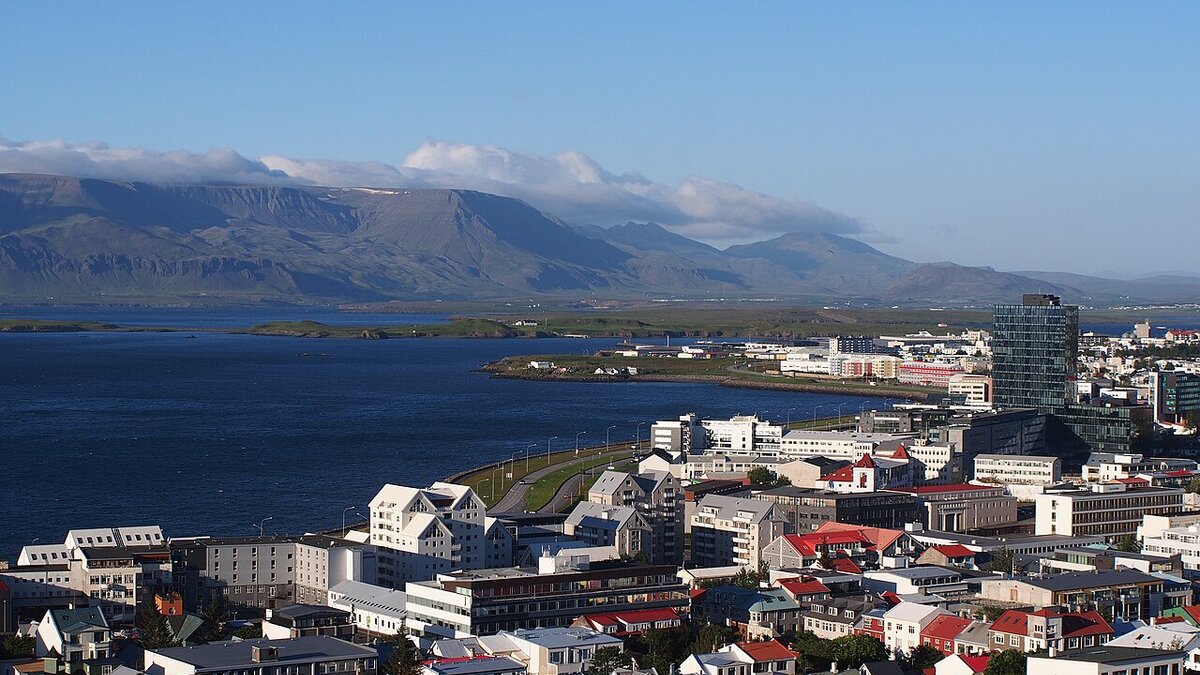
In Iceland, the shadow crosses the Westfjords, the Snæfellsnes peninsula and Reykjavik — the capital's first totality in 593 years and the country's first since 1954, according to Icelandic tourism authorities. Reykjavik sits near the southern edge of the path, so driving north-west towards Snæfellsnes or the Westfjords roughly doubles the duration.
In Spain, totality runs from A Coruña to Valencia and Palma de Mallorca. Times and durations for the principal cities, per NationalEclipse.com:
| City | Totality begins (local) | Duration |
|---|---|---|
| Reykjavik (Iceland) | 17:48 | 0 min 59 s |
| Ísafjörður (Iceland) | 17:44 | 1 min 30 s |
| A Coruña | 20:27 | 1 min 16 s |
| Oviedo | 20:27 | 1 min 48 s |
| Gijón | 20:26 | 1 min 45 s |
| Santander | 20:26 | 1 min 03 s |
| Bilbao | 20:27 | 0 min 29 s |
| Burgos | 20:28 | 1 min 43 s |
| Zaragoza | 20:29 | 1 min 24 s |
| Palma de Mallorca | 20:31 | 1 min 36 s |
| Valencia | 20:32 | 1 min 00 s |
Durations shift sharply with distance from the centreline — Bilbao's 29 seconds reflects its edge-of-path position — and in several eastern Spanish cities the eclipse ends after sunset.
Is Madrid in the path of totality?
No. Madrid sits just outside the southern limit and will see a 99.9 per cent partial eclipse shortly after 20:30 CEST, according to Time and Date. That sliver of exposed Sun washes out the corona entirely — 99.9 per cent is not totality. Barcelona is likewise excluded. Madrilenians need only drive roughly an hour north beyond the Sierra de Guadarrama to enter the path; from Barcelona, Zaragoza is about 90 minutes by AVE — both are viable same-day bases, as we detail in our report on the eclipse travel surge across Spain and Iceland.
Iceland or Spain: where are the clearer skies?
Climatology strongly favours Spain. Eclipse meteorologist Jay Anderson's Eclipsophile analysis puts average August cloud cover across Iceland at 70–80 per cent, with Reykjavik sunny in just 32 per cent of August daylight hours; per Time and Date, 12 August has been cloudy 76 per cent of the time in Reykjavik since 2000.
In Spain, the Ebro Valley around Zaragoza and Huesca offers the best odds: Eclipsophile's 21-year satellite survey found a Zaragoza site would have had an easy view of the eclipse in 18 of 21 years. The central Meseta (Burgos, León, Palencia) is close behind at 17 of 21 years, with August sunshine of 68–78 per cent of daylight hours. The Bay of Biscay coast — Gijón, Santander, Bilbao — is the weak spot at close to 60 per cent cloud, the poorest on the track. The western Balearics score around a 75 per cent chance of success, but with the Sun only about 2.5 degrees above the horizon.
- Best statistical bet: Ebro Valley (Zaragoza, Huesca) with a clear north-western horizon.
- Best duration: Asturias (Oviedo, Gijón) — but budget for Biscay cloud risk.
- Best drama: Mallorca's west coast, where totality arrives over the sea near sunset.
Can you still book somewhere to stay for the eclipse?
Nine days out: barely, and not cheaply. Amadeus data reported by Hospitality Net shows hotel booking growth versus 2025 of 366 per cent in Bilbao and 292 per cent in Asturias, with flight bookings to eclipse-path airports for 7–12 August arrivals up 25 per cent year on year. Rooms in centreline towns such as Palencia have been listed at €1,095 a night — roughly ten times the normal August rate, per Travelers Today. Our full breakdown of eclipse hotel pricing in Spain and Iceland tracks where rates have moved most.
The workable late strategies: base yourself in Madrid or Barcelona and day-trip into the path; target secondary interior towns (Lugo, Ponferrada, Huesca) rather than headline cities; or watch from the water — eclipse cruises positioned in the North Atlantic and Mediterranean can steer towards gaps in the cloud. Non-EU travellers should also check Schengen entry requirements before booking a last-minute dash.
How do you watch the eclipse safely?
Use eclipse glasses certified to ISO 12312-2 for every partial phase — ordinary sunglasses, smoked glass and phone filters are not safe. Only during the seconds of totality itself may filters come off. Spain's low Sun dims the glare but not the damaging radiation, so the temptation to stare during deep partial phases is a trap. Scout your site in advance: at 4–10 degrees of altitude, a single ridge, treeline or apartment block to your west can hide the whole event.
Frequently asked questions
What time is the 2026 solar eclipse in Spain?
Totality crosses Spain between roughly 20:26 and 20:33 CEST on 12 August 2026 — Gijón at 20:26, Zaragoza at 20:29, Valencia at 20:32, per NationalEclipse.com. The partial phases begin about an hour earlier.
Can I see the total eclipse from Madrid or Barcelona?
No. Both cities see a very deep partial eclipse — about 99.9 per cent in Madrid — but no totality, no corona and no darkness. You must enter the path — a short drive north of Madrid, or the roughly 90-minute AVE from Barcelona to Zaragoza.
Which country has better weather odds, Iceland or Spain?
Spain, decisively. Interior Spain records August sunshine in around 68–78 per cent of daylight hours against 70–80 per cent average cloud cover for Iceland, according to Eclipsophile. Iceland compensates with longer land durations of up to 2 minutes 13 seconds at Látrabjarg.
When is the next total solar eclipse after 2026?
On 2 August 2027, totality crosses southern Spain, Gibraltar, North Africa and the Middle East. It peaks at 6 minutes 23 seconds near Luxor, Egypt — the longest total solar eclipse visible from land since 1991 and until 2114.
Sources
- NationalEclipse.com — 2026 eclipse city times, Iceland and Spain
- Eclipsophile — Total Solar Eclipse 2026 August 12 climatology
- Time and Date — August 12, 2026 Total Solar Eclipse in Iceland
- Space.com — Spain's 2026 eclipse comes with a catch
- Hospitality Net — Eclipse drives booking surge in Spain and Iceland (Amadeus)
- Wikipedia — Solar eclipse of August 12, 2026