Philippine Airlines has finalised an order for 15 Boeing 787-10s plus five purchase rights, days after firming nine more A350-1000s, while carrying a US$159m nine-month loss.
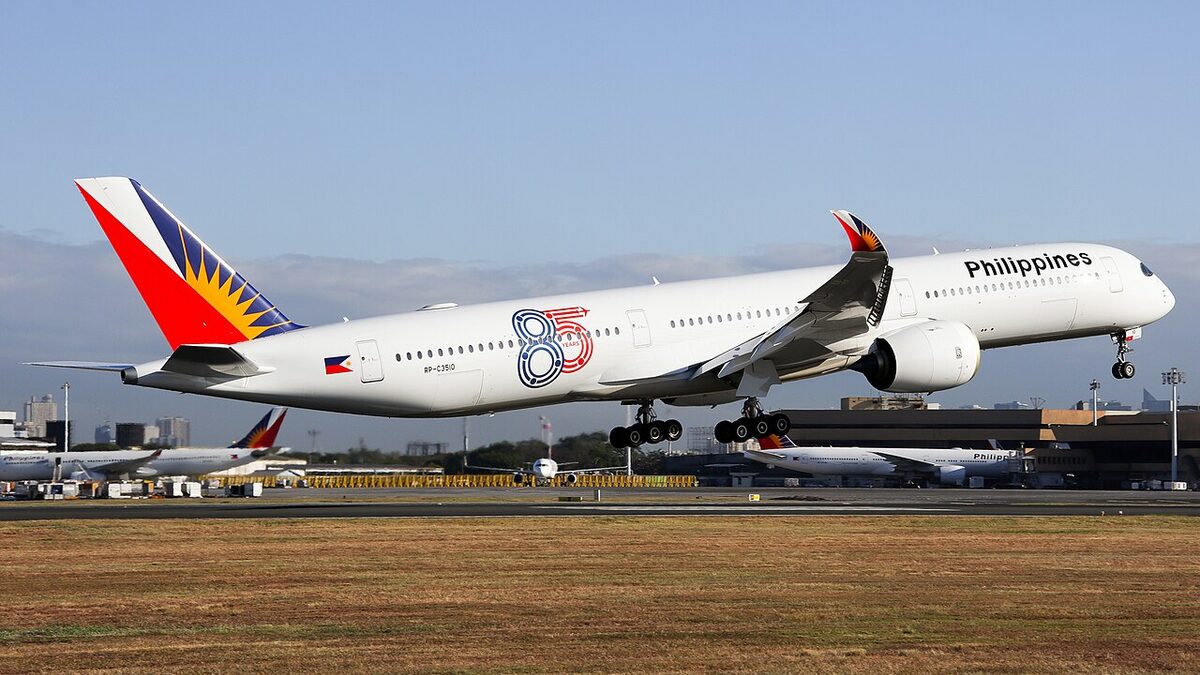
Cover image: A Philippine Airlines Airbus A350-1000 (file photo) — photo by John Andrei Policarpio, CC BY-SA 4.0, via Wikimedia Commons.
Philippine Airlines has turned both widebody commitments it made at the Farnborough Airshow in July into firm orders, five days apart, while losing money on fuel. It signed definitive agreements with Boeing and GE Aerospace on 10 November for 15 Boeing 787-10s, plus purchase rights for five more, ch-aviation and FlightGlobal reported. Boeing announced the finalised Philippine Airlines 787-10 order on 15 November and called it the airline's largest ever widebody purchase.
On 5 November PAL had firmed nine more Airbus A350-1000s, also with five purchase rights. The 787-10s are due between 2031 and 2034, the extra A350-1000s between 2034 and 2036. PAL also reported a US$159.0 million nine-month net loss on 4 November, against a US$158.7 million profit a year earlier.
What is in the Philippine Airlines 787-10 order?
Fifteen firm aircraft and the right to buy five more. Boeing calls the five an "opportunity to purchase"; they are not orders until PAL exercises them.
GE Aerospace signed alongside Boeing; PAL says it chose GE's GEnx-1B engine at Farnborough. Boeing gave no price. In July, aviation consultancy IBA Group estimated all 20 aircraft at about US$3.4 billion after customary discounts, Gulf News reported: an outside estimate, not a contract value.
What did PAL sign with Airbus five days earlier?
Nine more A350-1000s, firmed in Manila on 5 November with Airbus and Rolls-Royce, which supplies the Trent XWB-97 engines and TotalCare support, ch-aviation reported. "This firm order will bring our total A350-1000 fleet to 18 aircraft," said Lucio Tan III, president and chief operating officer of PAL Holdings, according to Insider PH.
The 18 firm aircraft are nine from a 2023 order and nine new. Four of the 2023 jets are in service, ch-aviation data shows, and PAL said in July that the rest of that order was due by 2028.
| Deal | Signed | Firm aircraft | Purchase rights | Engines | Deliveries | Price |
|---|---|---|---|---|---|---|
| Boeing 787-10 | 10 November (MoU in July) | 15 | 5 | GE Aerospace GEnx-1B | 2031–2034 | Not disclosed; IBA estimated about US$3.4bn for all 20 (July) |
| Airbus A350-1000 (additional) | 5 November (MoU in July) | 9 | 5 | Rolls-Royce Trent XWB-97, with TotalCare | 2034–2036 | Not disclosed |
| Total new commitments | 5–10 November | 24 | 10 | GE Aerospace, Rolls-Royce | 2031–2036 | Not disclosed |
Totals are our calculation from Boeing, ch-aviation and PAL figures.
Why is Philippine Airlines ordering jets while it loses money?
The jets are years away, and the loss is mostly fuel. PAL's nine-month release, filed with the Philippine Stock Exchange, shows revenue up 4.0 per cent to US$2.50 billion while fuel cost rose 49.8 per cent to US$1.02 billion. The average jet fuel price climbed 52.7 per cent to US$152.72 a barrel, which PAL tied to the conflict in the Middle East, and operating costs of US$2.57 billion outran revenue.
PAL cut flights on some routes and adjusted fares and fuel surcharges. Passengers fell 6 per cent to 11.6 million.
Cash and short-term investments reached US$879.0 million at 30 September, more than double the US$431.0 million at the end of 2025, helped by US$350 million of five-year notes.
Gulf News put the 2031 start down to "the lengthy production queues facing aircraft manufacturers". Others are booking as far out: on 11 November the Cathay Group exercised rights for 11 more Airbus A330-900s due between 2031 and 2035. Our Airbus and Boeing orders and deliveries tracker follows that backlog.
Where will PAL fly the 787-10s, and what changes before 2031?
Boeing says the 787-10 will add capacity to PAL's "medium- and long-haul network". In July PAL president Richard Nuttall called the jets "long-term replacements for our medium-haul fleet" that "also give us opportunities for expansion", Gulf News reported. Nuttall also said most will replace roughly equal numbers of 777-300ERs and A330-300s, CAPA reported. Its widebody fleet is four A350-1000s, two A350-900s, ten A330-300s and ten Boeing 777-300ERs, according to ch-aviation.
The A350-1000 stays the long-haul flagship. Tan cited its range on routes to New York, Toronto, San Francisco and Los Angeles.
For agents, corporate buyers and rival carriers, the new orders change nothing before 2031; the extra widebody seats due sooner are the five A350-1000s still owed from 2023. Meanwhile, PAL is expected to become oneworld's 16th member, its results release says, and with Malaysia Airlines it has asked Malaysia's regulator to approve a revenue-sharing joint business on Malaysia–Philippines flights.
Frequently asked questions
How many Boeing 787-10s has Philippine Airlines ordered?
Fifteen firm aircraft, plus purchase rights for five more. PAL signed definitive agreements with Boeing and GE Aerospace on 10 November 2026, finalising a July memorandum of understanding, and Boeing announced the order on 15 November. Exercising all five rights would give PAL 20 787-10s.
When will Philippine Airlines receive its new 787-10s and A350-1000s?
The 787-10s are due between 2031 and 2034. The nine additional A350-1000s firmed on 5 November are due between 2034 and 2036. Five A350-1000s from PAL's 2023 order of nine are still to come, by our count from ch-aviation data; PAL said in July that the rest of that order was due by 2028.
How much is the Philippine Airlines 787-10 order worth?
Boeing did not disclose a price. In July, aviation consultancy IBA Group estimated the deal at about US$3.4 billion after customary discounts if all 20 aircraft are bought, Gulf News reported. That is an outside estimate, not a contract value.
Why did Philippine Airlines lose money in 2026?
Mainly fuel. PAL reported a US$159.0 million net loss for January to September 2026, against a US$158.7 million profit a year earlier, after its fuel costs rose US$339.4 million to US$1.02 billion.
Sources
- Boeing, order for up to 20 787 Dreamliners finalised
- ch-aviation, PAL firms up order for 15 B787-10s
- FlightGlobal, Philippine firms order for 15 787-10s
- ch-aviation, PAL firms nine more A350-1000s
- Insider PH, PAL follows through on Airbus jet deal
- PAL Holdings (PSE Edge), nine-month 2026 results release
- PAL Holdings (PSE Edge), A350-1000 MoU release (July)
- CAPA, PAL MoU for up to 20 787-10s (July)
- Gulf News, PAL orders up to 20 Boeing 787s (July)