Australian visitor visas, ETAs and eVisitors applied for from 28 November carry No Further Stay, and the 2027 working holiday rewrite sets 25,000 third-year places.
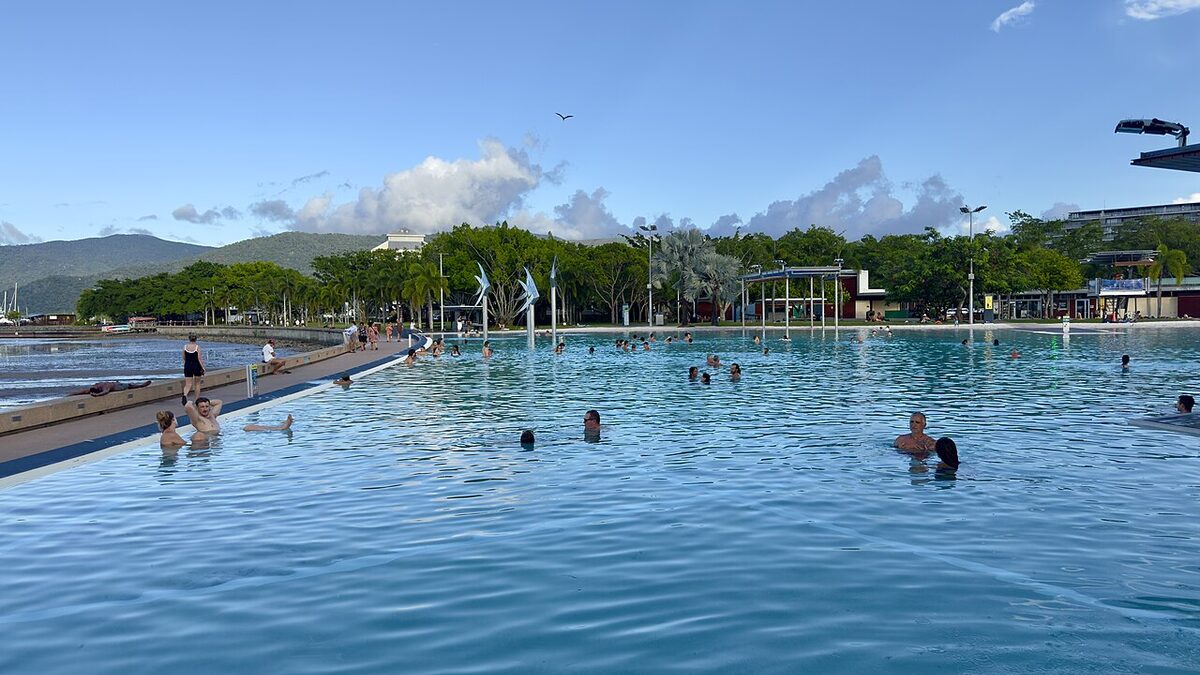
Cover image: The Esplanade Lagoon in Cairns, Queensland (file photo) — photo by Chris Olszewski, CC BY-SA 4.0, via Wikimedia Commons.
Australia will make a "No Further Stay" condition mandatory on visitor visas, ETAs and eVisitors applied for from 28 November 2026, and on 17 November Home Affairs Minister Tony Burke confirmed the Australia working holiday visa changes for 2027.
Under the Migration Amendment (Preventing Further Stay for Visitor Visas) Regulations 2026 (F2026L01503), condition 8503 must be imposed on every Visitor (subclass 600) visa, Electronic Travel Authority (subclass 601) and eVisitor (subclass 651) granted on an application made on or after 28 November 2026. The working holiday package sets 25,000 third-year and 45,000 second-year places for 2026–27, with a register-and-invite "Next Year Regional Work Guarantee" from 1 March 2027.
What does condition 8503 mean for visitors to Australia?
The holder "will not, after entering Australia, be entitled to be granted a substantive visa, other than a protection visa, while the holder remains in Australia", the Explanatory Statement says. Law firm Hannan Tew spells out the effect: no onshore grant of most partner, parent, skilled, employer-sponsored or student visas, and no "further Visitor visa" either.
The stay itself does not get shorter, the firm notes.
Until now 8503 was mandatory only in some Visitor streams, such as Sponsored Family, and could not be imposed on ETAs or eVisitors, the Statement says. It is not retrospective.
Who is affected by the No Further Stay rule from 28 November?
Not the ordinary holidaymaker, on the government's reading. The Statement says non-government stakeholders were not consulted partly because the change is "not expected to have a material impact on genuine tourists". A round-trip tourist comparing the cheapest way to fly to Australia, or a delegate who flies in for the Australian Tourism Exchange and then leaves, should notice no practical difference.
The rule bites when a visitor wants to switch visas without leaving. For most couples whose overseas partner is not already in Australia on another visa, the practical pathway will now be an offshore Partner (subclass 309/100) application, Hannan Tew says. Employers sponsoring an ETA or eVisitor arrival should plan for the work visa to be granted offshore, the firm adds.
Holders of other temporary visas without the condition, such as Student or Working Holiday visas, can still apply onshore, the firm says.
What are the Australia working holiday visa changes for 2027?
The ABC called the package a backflip after months of pressure from agriculture, tourism and hospitality. Burke's September plan would have capped third-year visas at 5,000.
Current Working Holiday Makers have until 28 February 2027 to finish specified work and lodge under the existing process. From 1 March 2027, anyone seeking a second or third visa, except UK citizens, needs the Guarantee, obtained by registering from 1 December and being invited. Specified work for a second visa rises from three months to four.
| Setting | Before | After |
|---|---|---|
| Condition 8503 on ETA and eVisitor | Could not be imposed | Mandatory (applications from 28 Nov) |
| Condition 8503 on Visitor visa (Tourist, Business Visitor) | Discretionary for most applicants | Mandatory (applications from 28 Nov) |
| Third-year working holiday places | About 31,000 now (ABC); 5,000 cap proposed in September | 25,000 in 2026–27 |
| Specified work for a second visa | Three months (ABC: 88 days) | Four months (ABC: 120 days) from 1 Mar 2027 |
Grants have slowed since a processing go-slow began in July: 44,469 approvals since, against a record 323,077 last financial year, the ABC reported. Burke said working holiday makers make "an important contribution to our economy, especially in agriculture, tourism and hospitality".
Why is Australia making these changes, and how has industry reacted?
Home Affairs says the measures are designed to deliver the Budget's Net Overseas Migration forecasts of 245,000 this financial year and 225,000 in 2027/28.
The National Farmers' Federation welcomed the changes but wants more detail, the ABC said; its Horticulture Council wants caps and ballots scrapped. "Our numbers suggest instead the program will deliver nearly 700,000 fewer days of specified work in regional Australia compared to what was needed last year," said Paul Burke, who chairs the council. Opposition Leader Angus Taylor called the proposal "complete nonsense", the ABC reported.
In a 10 September joint release on the processing go-slow, before Burke's plan, Tourism & Transport Forum chief executive Margy Osmond said working holiday makers spent "$4.4 billion" in Australia last year: "Please turn the tap back on."
Frequently asked questions
Does the No Further Stay condition affect visitors already in Australia?
No. It applies only to applications made on or after 28 November 2026, not to visas already held. Hannan Tew says one lodged before then follows the current rules even if granted later. Some existing visitor visas already carry 8503, so check the grant notice or VEVO.
Does condition 8503 shorten how long a tourist can stay in Australia?
No. Hannan Tew says it does not shorten the stay granted on a visitor visa, ETA or eVisitor. It bars onshore applications for most other substantive visas. A protection visa can still be sought onshore, and any visa from outside the country.
Can the No Further Stay condition be waived?
Yes, narrowly. The Minister can waive it under regulation 2.05 where compelling and compassionate circumstances beyond the person's control develop after the grant and cause a major change; the Explanatory Statement says requests are free and unlimited. Hannan Tew says a refusal is not reviewable by the Administrative Review Tribunal.
When can backpackers register for the Next Year Regional Work Guarantee?
From 1 December 2026, with the first monthly invitation round expected in mid-January 2027, Tony Burke's release says. Registrations stay valid until 30 June 2027; an invitation lasts 12 months. The Guarantee is needed from 1 March 2027 for a second or third visa; UK citizens are exempt.
Sources
- Federal Register of Legislation, Explanatory Statement to F2026L01503
- Home Affairs, Migration policy changes
- Tony Burke, A fairer Working Holiday Maker program
- ABC News, Government backflips on backpacker policy
- Hannan Tew, Mandatory condition 8503 on visitor visas
- NFF Horticulture Council, More confusion, not workers
- TTF, NFF and others, Industry unites over WHM restrictions