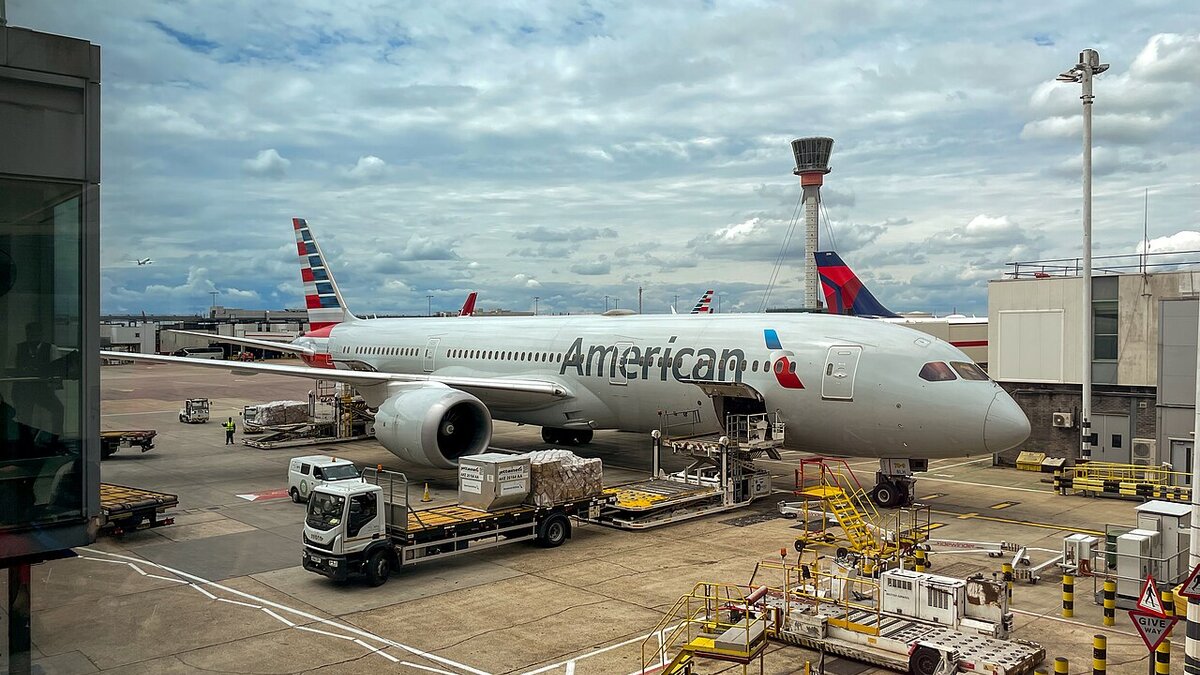
Golf Villa Rentals is the latest UK operator to cease trading in a wave of 2026 travel company failures. Here is exactly how to get your money back when a travel firm collapses.
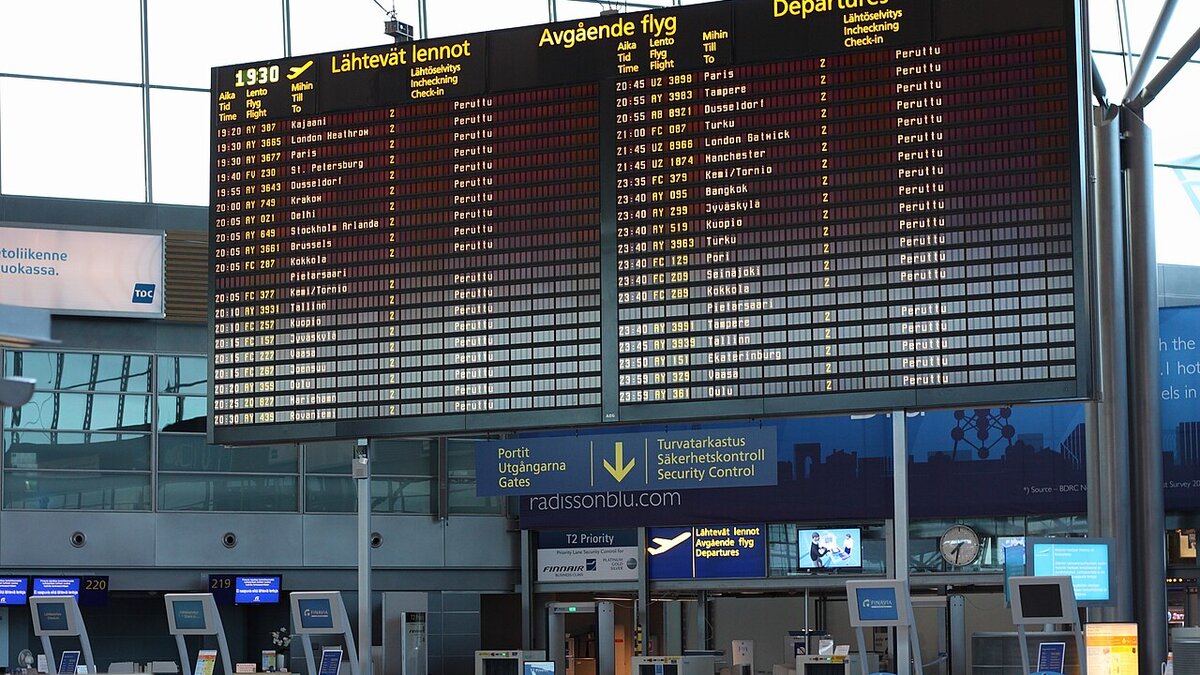
Cover image: airport departures board showing rows of cancelled flights — photo by MattiPaavola, CC BY-SA 3.0, via Wikimedia Commons.
When a travel company goes bust, your refund depends almost entirely on how you booked and paid — and another failure has just put that question in front of British golfers. Golf Villa Rentals (trading as Golf Rental Villas Ltd), based in Seaford, East Sussex, ceased trading with effect from 18 August 2026, cancelling all forward bookings, Travel Weekly reported. The ABTA member sold flight-exclusive golf packages to Spain, Portugal, Cyprus, France, Bulgaria and the US, and its holidays were financially protected by financial failure insurance: customers are being directed to Evolution Insurance Company Ltd to make a claim. The one-line answer for anyone caught in a collapse: claim first through the protection scheme attached to your booking — ATOL for UK packages with flights, financial failure insurance or ABTA bonding for non-flight packages — and if there is none, go to your card provider. Golf Villa Rentals is at least the tenth small or mid-size travel firm to fail in 2026.
What happens to my booking if a travel company goes bust?
Legally, your contract is with a business that can no longer perform it. Trips are cancelled, phones go unanswered, and any refund is paid not by the defunct company but by whatever protection scheme, insurer or card issuer sits behind the booking.
In the Golf Villa Rentals case the packages excluded flights, so ATOL does not apply — the protection is a financial failure insurance policy, which is why claims route through Evolution Insurance rather than the Civil Aviation Authority. Check what kind of trip you bought before deciding where to claim.
Do not keep paying instalments to a failed firm, and do not accept vouchers until you know your cash-refund rights. If a third-party seller was involved, it helps to understand how online travel agencies sit between you and the supplier — the entity that failed determines the entity you claim against.
How do I get a refund after a travel company collapse?
UK travellers have the strongest safety net in the world, but only if they use the right door, in the right order.
| Protection | Covers | How to claim |
|---|---|---|
| ATOL | UK-sold packages that include a flight; refund if not yet travelled, repatriation if abroad | Via the CAA at caa.co.uk with your ATOL certificate |
| ABTA bonding / financial failure insurance | Non-flight packages (coach, rail, cruise, accommodation-based) | ABTA claims process, or the named insurer — Evolution Insurance for Golf Villa Rentals |
| Section 75, Consumer Credit Act (UK) | Credit card purchases of £100 to £30,000 — even if you only paid a deposit by card | Written claim to your credit card issuer |
| Chargeback | Debit card (and some credit card) payments for services not delivered | Ask your bank, typically within 120 days of the failure |
| US credit card dispute (Fair Credit Billing Act) | Charges for services never provided | Dispute with your card issuer, generally within 60 days of the statement |
| Travel insurance with supplier default cover | Operator or airline insolvency — only if the option was bought before the failure was known | Claim direct with your travel insurer |
Order matters: use the statutory or bonded scheme first (ATOL, ABTA, the failure insurer), because card issuers will ask whether you have exhausted it. Section 75 is powerful because the card company is jointly liable for the full booking, not just the amount paid on the card.
Insolvency protection is also a different product from ordinary trip cover — a distinction we unpack in our guide to travel insurance versus flight insurance. Standard policies pay for cancellations and medical bills; they only pay for a collapsed operator if supplier financial default or scheduled airline failure cover is included, and it must have been bought before insolvency news broke.
What if I am a US traveller?
The United States has no ATOL equivalent — no federal bond stands behind a failed tour operator. American customers rely on two routes: a credit card dispute under the Fair Credit Billing Act for services not rendered, and travel insurance, but only where the policy includes financial default cover bought in advance from a third-party insurer. That gap is why US consumer advisers repeat the same rule after every collapse: always pay for travel with a credit card, never by bank transfer.
Why are so many travel companies failing in 2026?
Golf Villa Rentals joins a long 2026 casualty list. Reporting by TheStreet and Yahoo Finance names Trav Expert, Groupia, Salamander Voyages, Travel Bespoke, Set Sail Cruises, Yourtravelshop.com, Ski Yodel and TS Travels Group among UK failures this year, alongside Melbourne-based AVG Travels, whose May 2026 collapse affected more than 200 travellers. Somerset group-trip specialist Groupia entered administration on 16 June; Norwich ski agency Ski Yodel went into voluntary liquidation on 22 July.
Three pressures recur across the failures, per that reporting: rising labour and operating costs, direct online booking eroding agency margins, and softer consumer spending in an uncertain economy. Small specialists carry thin margins and heavy client deposits, so a slow season can turn into a cash-flow failure quickly — the same squeeze visible when disruption refunds fall due.
The takeaway is not to avoid small firms but to check the protection before paying: an ATOL number on flight-inclusive packages, ABTA membership or named failure insurance on the rest, and at least £100 of every booking on a credit card.
Frequently asked questions
I booked with Golf Villa Rentals — how do I get my money back?
The company ceased trading on 18 August 2026 and its packages were protected by financial failure insurance. Customers with cancelled bookings should claim through Evolution Insurance Company Ltd, the named insurer, following the guidance published on ABTA's website. If any part of the booking was paid by credit card, a Section 75 claim to your card issuer is a parallel backstop.
Does travel insurance cover a travel company going bust?
Only sometimes. Standard travel insurance covers cancellation, medical costs and baggage — not insolvency. You need a policy that specifically includes supplier financial default or end-supplier failure cover, and it only pays if you bought it before the company's difficulties became public. Check the policy wording for the exact term rather than assuming any cancellation clause applies.
Am I protected if I paid by debit card?
Possibly, through chargeback. This is a voluntary card-scheme process, not a legal right, under which your bank reverses a payment for services never delivered. Contact your bank promptly — most schemes require the dispute within 120 days of the failed service date — and supply evidence such as the cancellation notice and booking confirmation. Credit card payments over £100 get stronger Section 75 rights in the UK.
How do I check a company is protected before booking?
For any UK package including a flight, verify the ATOL number using the CAA's online checker and insist on an ATOL certificate at payment. For non-flight packages, look for ABTA membership or a named financial failure insurance policy. Be wary of firms asking for bank transfers, and split payment so at least £100 goes on a credit card to trigger Section 75.
Sources
- Travel Weekly — East Sussex-based Golf Villa Rentals ceases trading
- Yahoo Finance / TheStreet — Another travel company shuts down and cancels all trips
- TheStreet — Travel company shuts down and cancels all trips, no refunds
- UK Civil Aviation Authority — ATOL protection
- ABTA — Customer support and claims