Most Western passport holders can enter Japan visa-free for 90 days, while travellers from India, China and Vietnam still need a visa, and for most nationalities the fee rose fivefold in July 2026. Here is the full breakdown by passport, plus what Visit Japan Web and JESTA actually are.
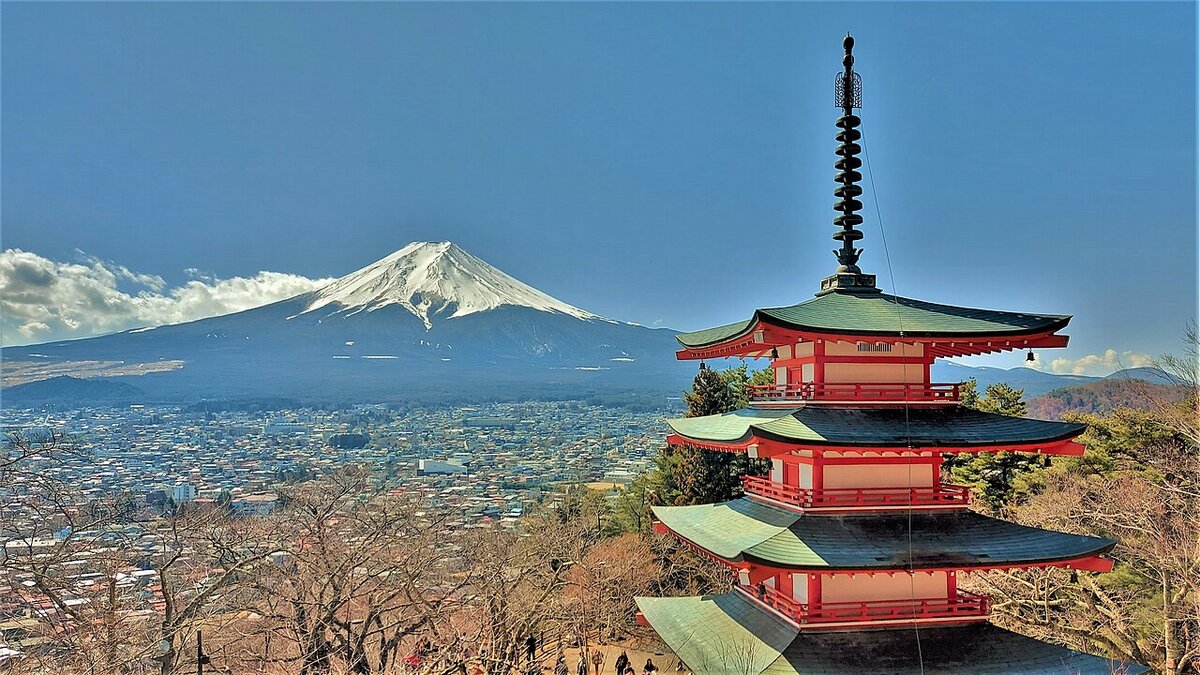
Cover image: The five-storey Chureito Pagoda overlooking snow-capped Mount Fuji in Fujiyoshida, Japan. — photo by Stjepko Krehula, CC BY 4.0, via Wikimedia Commons.
For most travellers the short answer is no, you do not need a visa for Japan. Holders of passports from 74 countries and territories, including the United States, the United Kingdom, every EU member state, Canada, Australia, New Zealand, Singapore and South Korea, can enter Japan visa-free, in most cases for up to 90 days, for tourism or business meetings. There is no fee, no advance application and, as of 20 November 2026, no electronic travel authorisation either: Japan's JESTA system is law but not yet running.
If you hold a passport from India, China, Vietnam, the Philippines or most of Africa and South Asia, you do need a visa before you fly, and for most of these nationalities it became sharply more expensive when Japan's visa fees roughly quintupled on 1 July 2026. Arrivals remain close to record levels: after a record July, Japan received an estimated 3.91 million visitors in October 2026, its highest month on record, according to the Japan National Tourism Organization (JNTO), although January–October arrivals were 2.5% below the same months of 2025. Whichever category you fall into, sorting paperwork early is wise.
Last checked: 20 November 2026.
Which passports can enter Japan without a visa?
Japan's Ministry of Foreign Affairs (MOFA) maintains reciprocal visa-exemption arrangements with 74 countries and regions. The standard permitted stay is 90 days, granted as a "Temporary Visitor" stamp on arrival. A handful of countries get shorter windows: Thailand and Indonesia are limited to 15 days, while Brunei and Qatar get 30 days.
The exempt list covers, among others:
- 90 days: US, UK, all EU states, Canada, Australia, New Zealand, South Korea, Singapore, Malaysia, Hong Kong, Macao, Taiwan, Mexico, Brazil, Argentina, Chile, Israel, Türkiye and the UAE
- 30 days: Brunei, Qatar
- 15 days: Thailand, Indonesia
Some exemptions carry passport conditions. MOFA's list says Thailand, the UAE, Brazil, Serbia and several other countries are covered only for ICAO-standard ePassports, and Indonesian and Qatari nationals must first register their ePassport with a Japanese embassy or consulate (the registration lasts three years or until the passport expires). Check MOFA's list for your nationality before booking.
| Passport group | Visa-free stay | What you need in 2026 |
|---|---|---|
| US, UK, EU, Canada, Australia, NZ, Singapore, South Korea + most of the 74-country list | 90 days | Valid passport only; Visit Japan Web optional |
| Brunei, Qatar | 30 days | Valid passport; Qatari nationals must first register an ePassport with a Japanese mission |
| Thailand, Indonesia | 15 days | ICAO ePassport; Indonesian nationals must first register it with a Japanese mission |
| India, China, Vietnam, Philippines, most of Africa and South Asia | None: visa required | Visa or eVISA before travel: about 15,000 yen single-entry, 30,000 yen multiple-entry (lower for some nationalities, including India) |
What are the conditions of visa-free entry?
Visa-free entry is for tourism, visiting friends and family, and unpaid business activities such as meetings, conferences and contract negotiations. You cannot take paid work, enrol in long-term study or apply for residency on a Temporary Visitor stamp.
Japan's passport rule is unusually lenient: your passport must simply be valid for the duration of your stay; Japan has no six-month passport-validity rule. Airlines and immigration officers may still ask for evidence of an onward or return ticket and sufficient funds, so carry both.
What if my country is not visa-exempt?
Travellers from more than 100 countries, including India, China, Vietnam and the Philippines, must obtain a visa from a Japanese embassy or consulate (or an outsourced visa centre) before travelling. The standard single-entry tourist visa is typically issued for stays of up to 90 days.
Some can apply online. MOFA's JAPAN eVISA, a single-entry tourist visa for up to 90 days, can be requested on the eVISA website by visa-required residents of Australia, Brazil, Cambodia, Canada, Saudi Arabia, South Africa, Taiwan, the UK and the US, and through accredited agencies by residents of Hong Kong, India, Indonesia, Macau, Mongolia, South Korea, Singapore and the UAE. Chinese nationals in China, and Vietnamese and Filipino nationals on designated package tours, also apply through agencies and get shorter stays. At the airport you must show the visa issuance notice online; screenshots and printouts are not accepted.
Costs jumped on 1 July 2026, the first increase since 1978: for applications accepted from that date, MOFA puts the fee at about 15,000 yen for a single-entry visa (about US$94 at the European Central Bank's 19 November 2026 rate, up from 3,000 yen) and about 30,000 yen for a multiple-entry visa (about US$188, up from 6,000 yen), generally paid in local currency. MOFA adds that the fee may be waived or differ by nationality and purpose (the Embassy of Japan in India, for example, still charges Indian nationals ₹500) and that approved agencies charge their own handling fee. Processing routes, documents and timelines vary by nationality; Chinese nationals, for instance, generally apply through designated travel agencies. If you are comparing regional trips, our Vietnam visa guide covers a very different, and far cheaper, e-visa system.
What is Visit Japan Web, and is it a visa?
Visit Japan Web is not a visa and it is not mandatory. It is a free online service run by Japan's Digital Agency that lets you pre-register your passport details, immigration disembarkation card and customs declaration before you fly, generating QR codes to scan on arrival at major airports.
Registration is optional: you can still complete paper forms on the plane, but the QR codes speed up immigration and customs. Since 1 November 2026 it can also replace the kiosk for the departure customs check on tax-free purchases at seven major airports. The Digital Agency says it never charges users, so ignore sites that do. It confers no right of entry and does not replace a visa for nationalities that need one.
When will Japan's JESTA launch?
JESTA, the Japan Electronic System for Travel Authorization, is a pre-travel screening for visa-exempt nationals, similar to the system in our US ESTA guide. It is now law: the Diet passed it on 29 May 2026 (Act No. 32 of 2026, promulgated on 5 June), and it starts on a date to be set by Cabinet Order no later than 31 March 2029, according to the Immigration Services Agency (ISA). The Justice Ministry told a House of Representatives committee on 17 April 2026 that its target is fiscal 2028 (1 April 2028 to 31 March 2029), brought forward from 2030. As of 20 November 2026 no start date or fee had been set; our JESTA explainer has the detail.
To be clear: JESTA is not in force in 2026. No visa-exempt traveller needs any pre-authorisation to enter Japan today. Ignore third-party sites selling "JESTA applications": nothing exists to apply for yet.
If you hold an Indian passport
India is not on Japan's visa-exemption list, and there is no visa on arrival: you must hold a visa before you fly, and airlines will not board you without one. The Embassy of Japan in India says applications are submitted through VFS Global, with no appointment needed; the Embassy itself takes only diplomatic and official visas and cases needing special humanitarian attention. Most applications are on paper; a single-entry tourist visa of up to 90 days can also be applied for online as a JAPAN eVISA through an accredited agency.
| Visa type | Standard fee, other nationalities | Fee for Indian nationals | Stay |
|---|---|---|---|
| Single-entry tourist | 15,000 yen | ₹500 | Up to 90 days |
| Multiple-entry | 30,000 yen | ₹500 | Up to 90 days per visit |
Japan raised visa fees fivefold for most nationalities on 1 July 2026, but Indian nationals kept the concessional fee of ₹500. VFS adds a service charge of ₹800, so a typical application costs about ₹1,300 in total (plus ₹550 if you choose courier return).
Documents and timing
- Application form and a recent photograph
- Your latest Income Tax Return (if you do not have one, a bank statement for the last six months)
- A document showing your flight or cruise schedule to and from Japan
- An itinerary in Japan, including hotel details and a contact while you are there
Processing takes a minimum of five working days after the Embassy receives the file, and longer in busy periods, so apply well ahead of cherry-blossom and autumn travel.
Layovers
An airside connection on a single ticket at Narita or Haneda needs no visa. If you must leave the airport, recheck bags between airports (such as Narita to Haneda) or stay overnight landside, you need a visa in advance. The Embassy of Japan in India says the separate transit visa was abolished from 1 July 2026, so that means a short-term visa. Confirm with your airline that the connection is airside.
Frequently asked questions
Do US, UK or EU citizens need a visa for Japan?
No. All are on Japan's 74-country visa-exemption list and receive 90 days on arrival as Temporary Visitors, for tourism or unpaid business activities. No fee, form or pre-authorisation is required in 2026.
How long can I stay in Japan without a visa?
Most exempt nationalities get 90 days. Brunei and Qatar passport holders get 30 days, and Thai and Indonesian passport holders get 15 days.
Does my passport need six months' validity for Japan?
No. Japan only requires your passport to be valid for the duration of your stay; there is no six-month rule.
Is Visit Japan Web mandatory?
No. It is an optional pre-registration service for immigration and customs QR codes. It is not a visa and paper arrival forms remain available.
How much does a Japan tourist visa cost in 2026?
For applications lodged from 1 July 2026, a single-entry visa costs about 15,000 yen (about US$94) and a multiple-entry visa about 30,000 yen (about US$188), generally paid in local currency. Some nationalities pay less: Indian nationals pay ₹500.
Sources
- Ministry of Foreign Affairs of Japan, Exemption of Visa (Short-Term Stay)
- JNTO, Japan Visa Requirements and Travel Visa Information
- Euronews, Japan to increase visa fees by more than five times starting on 1 July
- CNBC, Japan is raising visa fees by up to 400% for the first time in nearly 50 years
- Fragomen, Japan: Visa Issuance Fees to Increase Effective July 2026
- Ministry of Foreign Affairs of Japan, Visa Fees
- Ministry of Foreign Affairs of Japan, The JAPAN eVISA system
- Embassy of Japan in India, Visa (fees from 1 July 2026)
- VFS Global, Japan visa application centre India: service charges
- Immigration Services Agency, 2026 Immigration Control Act amendment (Japanese)
- House of Representatives, Judicial Affairs Committee, 17 April 2026 (Japanese)
- Digital Agency, Visit Japan Web tax refund procedure notice
- JNTO, visitor arrivals for October 2026 (Japanese, PDF)
- European Central Bank, euro foreign exchange reference rates