From 1 November 2026, visitors to Japan pay tax-inclusive prices and claim the consumption tax back after a customs check on departure, within 90 days.
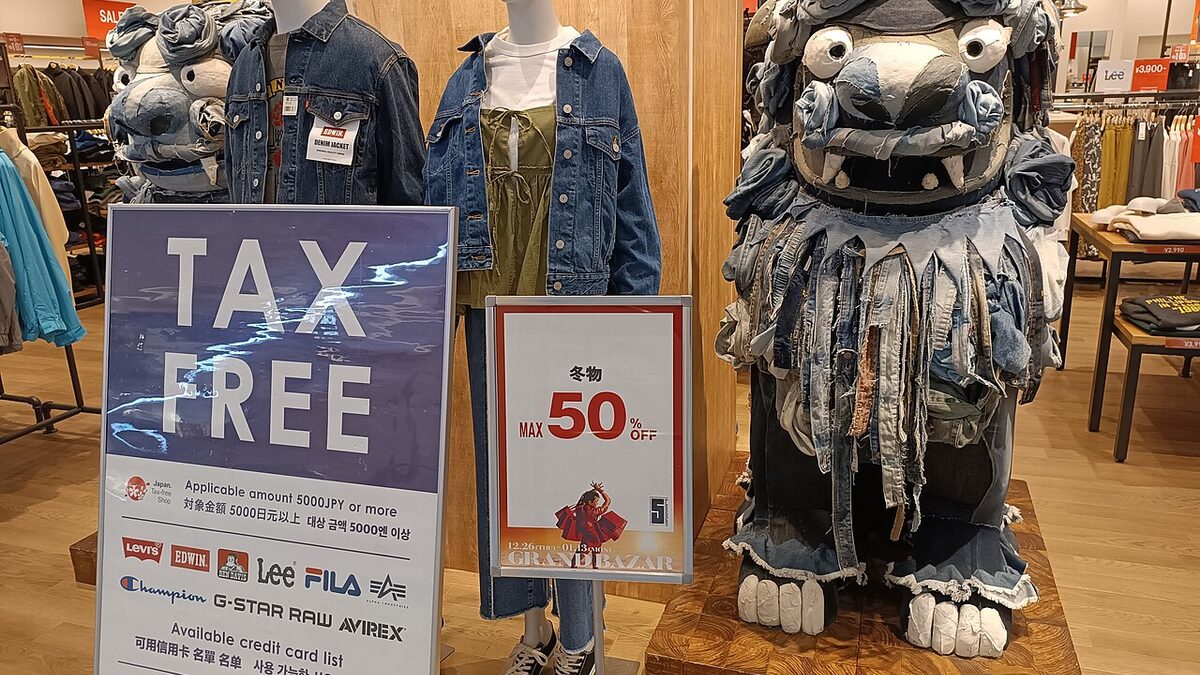
Cover image: A 'Tax Free' sign at a clothing shop in Japan (file photo) — photo by Naha Mama Pavilionz, CC0, via Wikimedia Commons.
From 1 November 2026, Japan stops removing consumption tax at the till for overseas visitors. Under the new "refund method", you pay the full tax-inclusive price in a tax-free shop and get the tax back after a customs check at the airport or seaport as you leave Japan, within 90 days of the purchase, according to the Japan Tourism Agency (JTA). Purchases made up to 31 October 2026 stay under the current system, in which the tax is taken off at the point of sale.
The sum involved is the consumption tax: 10 per cent of the pre-tax price on most goods and 8 per cent on food and non-alcoholic drinks. On a ¥33,000 jacket, that is ¥3,000 (about US$18.96).
Last checked: 19 October 2026.
What changes for tax-free shopping in Japan on 1 November 2026?
A detailed Q&A from the National Tax Agency (NTA), published in July 2026, confirms the 1 November 2026 start. The JTA ties the switch to the date of purchase, not the date you fly, and its "Changes to Tax-Free Goods" sheet scraps several old restrictions.
| Rule | Purchases up to 31 Oct 2026 | Purchases from 1 Nov 2026 |
|---|---|---|
| Price at the till | Tax-exclusive | Tax-inclusive; tax refunded after the customs check |
| Minimum spend | ¥5,000 or more | ¥5,000 or more before tax, per shop per day (unchanged) |
| Consumables | Separate category, ¥500,000 cap, sealed packaging | All three abolished; consumables used in Japan lose the refund |
| Business-use check | Required | Replaced by a limit to what you can personally carry out |
| Excluded goods | Business or resale purchases, gold or platinum bullion, tax-exempt items | Gold and platinum bullion and coins, tax-exempt items |
| Departure step | Customs confirms the goods are leaving | Passport scan at a terminal within 90 days, before bag check-in |
| One item missing | Tax collected on goods not confirmed | Nothing on that receipt is refunded |
| Separate shipment | Abolished on 31 March 2025 | Not available; some shops ship overseas |
Table sources: Japan Tourism Agency; Osaka Customs.
Bought before 1 November but flying later? Those receipts were issued under the old system, which Osaka Customs describes as a tax-free purchase followed by customs confirmation at departure, with the tax collected if the goods are not confirmed.
No official page we read explains how the new kiosks will handle pre-November receipts. Allow extra time.
How do you claim the tax refund at the airport or seaport?
From the JTA's guidance, in four steps:
- At the shop, pay the tax-inclusive price. The shop explains how to register a refund method.
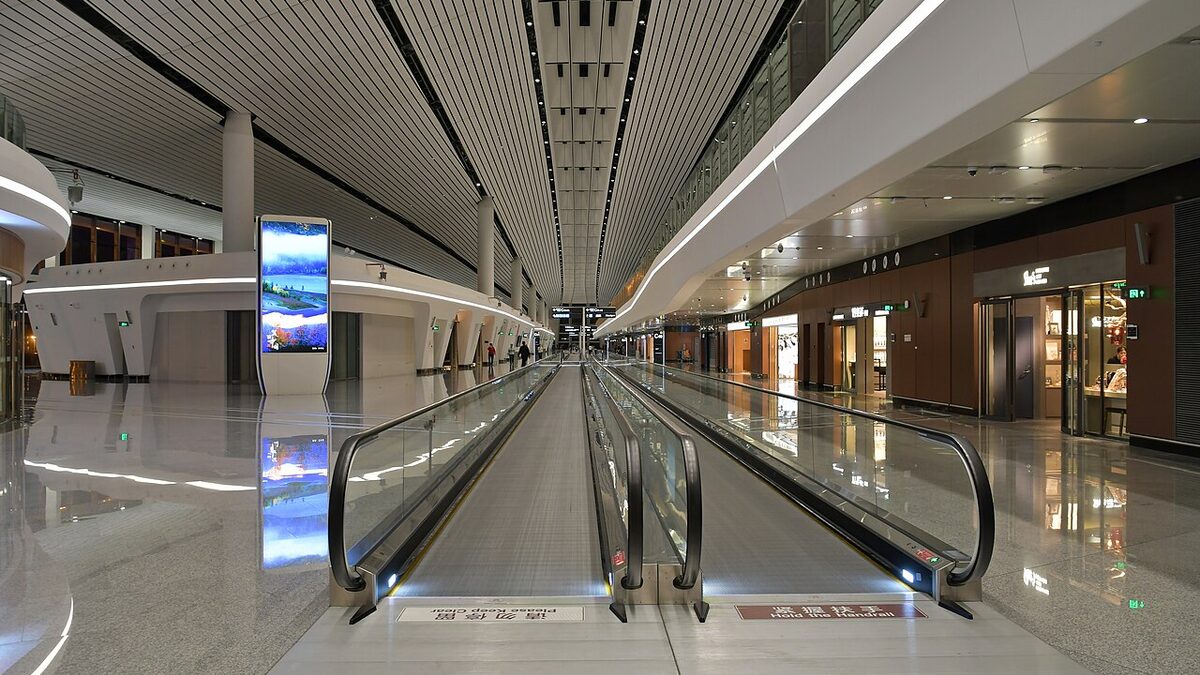
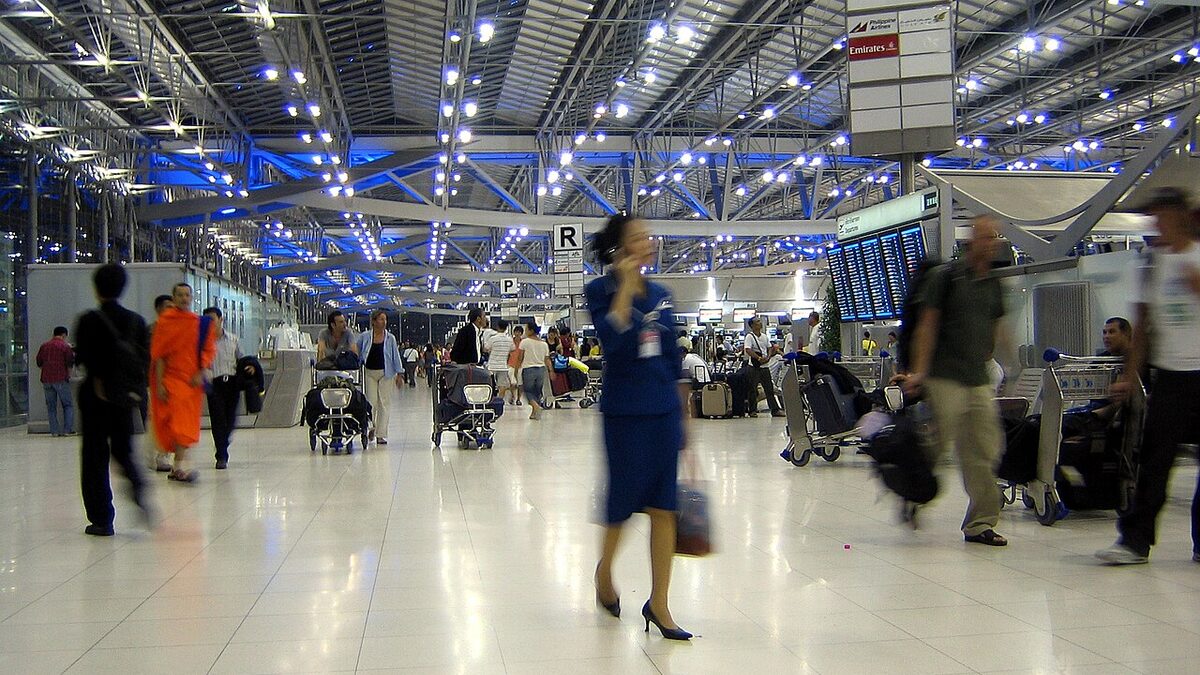
- When you leave, take every tax-free item to a tax-free procedure terminal (kiosk or electronic terminal) in the international departure lobby, before baggage check-in.
- Scan your passport, which the JTA says "takes only a few seconds". Green means you are done; Red means taking the goods to the customs inspection area.
- Finish any inspection before boarding procedures. A check abandoned for lack of time counts as not completed, and neither the airline nor Customs pays compensation for a missed departure.
At seven airports (Narita, Haneda, Kansai, Chubu, Fukuoka, New Chitose and Naha) you can complete the step through Visit Japan Web instead, but only on dedicated Wi-Fi in designated areas of the international departure lobby, up to the security checkpoint. At Kansai, Osaka Customs says the kiosks "might be congested" and recommends the Wi-Fi route; its floor plans show 12 kiosks in Terminal 1 and four in Terminal 2.
On a domestic connection, say New Chitose to Haneda, do the check at the airport where you leave Japan. On a "fly & cruise" trip (a cruise from Japan that calls abroad and returns, then a flight out), it happens once, at the departure airport. Cruises that start and end outside Japan are processed at the final Japanese port, on the electronic terminal, before baggage check-in.
How much will you get back, and how is it paid?
Japan's consumption tax is 10 per cent, or 8 per cent for "food and drink excluding alcoholic drink and dining out", according to the NTA. Because the tax is inside the price, the tax portion is 1/11 of what you pay for standard-rate goods (about 9.1 per cent) and 2/27 for food and soft drinks (about 7.4 per cent).
The ¥5,000 minimum is measured before tax, per shop per day: ¥5,500 at the till for standard-rate goods, ¥5,400 for food. A lone ¥5,400 cosmetics purchase falls short, at ¥4,909 before tax.
Worked examples (tax portion only; US dollars approximate, at ¥158.24 per US$1, the European Central Bank cross rate of 19 October 2026):
- ¥5,500 bottle of sake (alcohol is standard-rate): ¥500, about US$3.16
- ¥5,400 of packaged snacks: ¥400, about US$2.53
- ¥33,000 jacket: ¥3,000, about US$18.96
- ¥110,000 camera: ¥10,000, about US$63.20
- One receipt with ¥22,000 of cosmetics and ¥5,400 of snacks: ¥2,400, about US$15.17
The JTA says the refund comes from the shop or a refund service provider it appoints, generally after customs confirmation. Methods include bank transfer, credit card, app and cash at the departure port, and vary by shop. No official page we read gives a processing time or a fee, so ask at the till whether anything is deducted.
The NTA's Q&A adds that consumption-tax law sets no rules on how refunds are paid. A shop may refund before the customs check at its own risk, since the sale becomes taxable for the shop if you skip the check. Some shops may therefore refund early; ask before you pay.
The refund covers consumption tax only, not Japan's departure, hotel and Mount Fuji charges, and it is a different system from airport duty-free shopping.
What can cost you the refund?
These failure points come from the JTA and NTA.
- A missing item. Customs checks each receipt as a unit. If one item from it is not with you, nothing on that receipt is refunded.
- Used consumables. If you have consumed any tax-free food, drink or cosmetics, even partly, skip the terminal and report it to a customs officer at the counter. Other goods you have used still qualify if you take them out.
- Checked bags. A checked suitcase cannot be retrieved for the procedure, even after a Red result.
- The 90 days. The NTA counts from the day after purchase: buy on 1 November 2026, count from 2 November, deadline Saturday 30 January 2027. The clock runs from each purchase, not from your departure.
- Keeping goods in Japan. Goods that pass the check must be exported without delay, or the tax is collected and penalties apply.
Given the per-receipt rule, snacks or cosmetics you might open are safer on a separate receipt.
For any item of ¥1 million or more before tax (about US$6,320), customs may ask for certificates of authenticity or warranties.
Who qualifies, and can a shop ship purchases home instead?
The JTA's list of eligible purchasers covers non-resident foreign nationals who can show they entered Japan less than six months ago, including Temporary Visitors and holders of landing permits for transit, a port of call, cruise-ship tourism or crew. Cruise passengers and crew show their landing permit with their passport. Our Japan visa guide covers entry rules by passport.
Japanese nationals living abroad qualify if they have been back less than six months and can prove two or more years of continuous residence outside Japan.
The old "separate shipment" route, in which you posted your own tax-free goods, ended on 31 March 2025; the JTA says overseas shipping is now up to each shop.
The NTA's Q&A describes an alternative: if a shop acts as agent for a licensed international freight forwarder and ships the goods abroad from the store, it can sell at the tax-exclusive price, and you normally need no departure customs check for those items. Not every shop offers this.
Frequently asked questions
When does Japan's new tax-free refund system start?
It applies to purchases made on or after 1 November 2026: you pay the tax-inclusive price and claim the consumption tax back after a customs check when you leave Japan. Purchases up to 31 October 2026 follow the current system, with the tax removed at the till, even if you fly home in November.
How long do I have to claim the tax refund in Japan?
You have 90 days from each purchase. The National Tax Agency counts from the day after purchase, so an item bought on 1 November 2026 must clear the departure customs step by 30 January 2027. Each purchase runs on its own clock, so early purchases on a long trip expire first.
Can I get the tax refund after checking in my suitcase?
No. The terminal and any customs inspection come before baggage check-in, and the Japan Tourism Agency says checked bags cannot be retrieved for the procedure, even after a Red result. Keep every tax-free item with you until it is finished, and arrive early enough for an inspection.
What percentage of the price do I get back?
The tax portion is 10 per cent of the pre-tax price, or 8 per cent for food and non-alcoholic drinks, which equals 1/11 or 2/27 of the price you pay. The shop or its refund provider decides whether it is paid by card, bank transfer, app or cash; ask whether any fee is deducted.
Sources
- Japan Tourism Agency, What is the Refund Method?
- Japan Tourism Agency, traveller FAQ on the Refund Method
- Japan Tourism Agency, Changes to Tax-Free Goods
- Japan Tourism Agency, Eligible Tax-Free Goods Purchasers
- National Tax Agency, Refund Method Q&A (Japanese, July 2026)
- Osaka Customs, Kansai Airport tax refund guide
- National Tax Agency, Consumption tax rates