MICE tourism is travel for meetings, incentives, conferences and exhibitions. How UN Tourism and ICCA define it, how the supply chain works and why destinations fund bids.
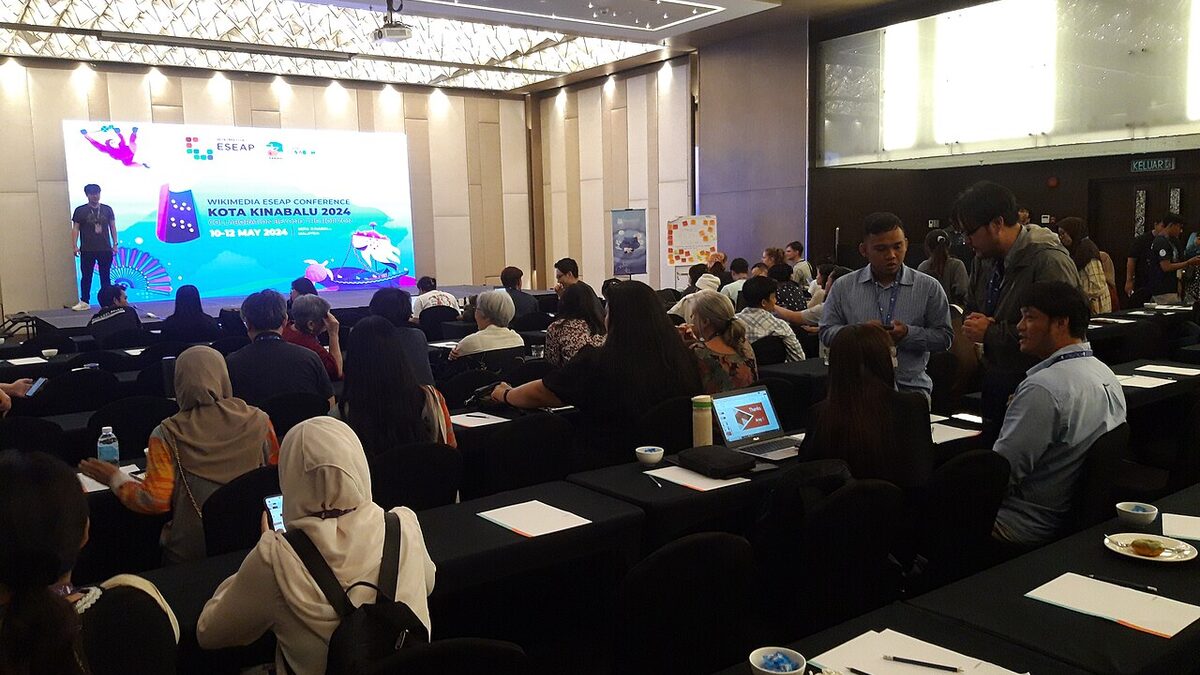
Cover image: Delegates at a conference session (2024 file photo) — photo by Eugene Alvin Villar (seav), CC BY-SA 4.0, via Wikimedia Commons.
What is MICE tourism? It is travel to attend business events: meetings, incentive trips, conferences (some bodies say conventions) and exhibitions. UN Tourism files it under business tourism; trade bodies tend to say "meetings industry" or "business events". The buyer is usually an employer, an association or a show organiser rather than the traveller, which changes how the business is sold and won.
It is also a big, high-yield segment. A study by the Events Industry Council (EIC) and Oxford Economics found that business events drew 1.65 billion participants and generated US$1.3 trillion in direct spending in 2025. The Singapore Tourism Board (STB) says MICE visitors to Singapore spend almost twice as much as leisure visitors, and governments from Australia to Singapore help fund bids for them.
Last checked: 1 November 2026.
What is MICE tourism, and how do UN Tourism and ICCA define it?
Each letter is a different trip with a different buyer, as VisitBritain's segment guide describes them:
- Meetings: corporate gatherings such as staff conferences, board meetings, training and product launches.
- Incentives: all-expenses-paid trips that companies give high-performing staff or clients as a reward.
- Conferences (also conventions or congresses): mostly association events that rotate between countries.
- Exhibitions: trade shows, which VisitBritain describes as not peripatetic: they do not rotate between cities.
UN Tourism's glossary defines business tourism as travel "for a specific professional and/or business purpose" to attend "a meeting, an activity or an event", and names meetings, incentives, conventions and exhibitions as its key components. Its entry for MICE simply says "see meetings industry". That term, it notes, is preferred by the International Congress and Convention Association (ICCA) and Meeting Professionals International because MICE "does not recognize the industrial nature of such activities".
Counting rules differ. ICCA counts only association meetings that rotate between at least three countries or territories, attract at least 50 people face to face and recur regularly; corporate meetings and stand-alone trade shows are excluded. The EIC study counts any gathering of 10 or more participants lasting at least four hours in a contracted venue.
Before comparing two "MICE market" figures, check which definition each one uses.
How big is the MICE market?
The EIC study, released in full on 4 August 2026 and based on UN Tourism guidance, counted 1.65 billion participants across more than 180 countries in 2025. Including supply-chain and wage effects, the sector supported US$3.1 trillion in business sales, US$1.8 trillion of global GDP and 24.2 million jobs.
North America led with US$487.7 billion of direct spending (37.8 per cent of the total). Asia, at US$352.8 billion, overtook Western Europe at US$328 billion. Oxford Economics forecasts direct spending of US$1.6 trillion in 2028.
Association meetings are a smaller, closely watched slice. ICCA tracked 12,438 of them in 2025, generating US$13.57 billion in direct expenditure, Skift reported. Lisbon ranked first, ahead of Paris and Barcelona, and Europe hosted 53 per cent of tracked meetings.
| Segment | Typical buyer | How the destination is chosen | Global direct spending, 2025 (EIC) | Average spend per trip, international visitors to the UK (VisitBritain) |
|---|---|---|---|---|
| Meetings (corporate and business events) | Companies | Near staff and customers; short lead times | US$566 billion | £856 (3.5 nights) |
| Incentives | Companies rewarding staff or clients | Exclusive experiences, often through a specialist agency or DMC | US$86.6 billion | £1,893 (4 nights) |
| Conferences (conventions, conferences and congresses) | Associations and societies | Formal bids and rotation; hosts confirmed 3 to 5 years ahead | US$383.2 billion | £1,021 (3.5 nights) |
| Exhibitions (trade shows) | Show organisers and exhibitors | Usually a fixed home city | US$178.5 billion | Not disclosed |
EIC's four segment figures add up to about US$1.21 trillion, short of its US$1.3 trillion headline; the release does not explain the gap. VisitBritain figures come from its Delegate Spend and Trip Extension Report, cited in its segment guide (file dated 2022).
How does the MICE supply chain work?
Money flows from whoever owns the event, through specialists, to suppliers in the destination.
- Corporate planners: in-house event managers who run meetings and incentives, often through agencies, hotel groups or DMCs they already trust, according to VisitBritain's buyer profiles.
- Associations and PCOs: associations own congresses and may hire a professional congress organiser (PCO) or an association management company to run them.
- Incentive houses: agencies that design reward trips. VisitBritain notes that incentive buyers' complex requirements mean they may need DMCs and agencies to find destinations and deliver programmes.
- DMCs: destination management companies that handle ground services. VisitBritain advises destinations to use them as "an extension of your salesforce".
- Venues and hotels: exhibition and convention centres such as Messe Frankfurt, Fira Barcelona Gran Via and the Melbourne Convention and Exhibition Centre, plus the hotels that supply room blocks.
- Convention bureaus: city or national bodies, such as the Singapore Exhibition & Convention Bureau, that market the destination, prepare bids and administer financial support.
Bureaus can even own the marketplace: AIME, the Asia-Pacific Incentives and Meetings Event, is owned by Melbourne Convention Bureau, its website says.
How is MICE different from leisure travel?
The traveller rarely picks the destination; a company, an association committee or a show organiser does. Lead times vary widely. VisitBritain says international associations confirm host destinations 3 to 5 years in advance, while corporate meetings run on short lead times. Tourism Australia's bid fund supports bids decided by 30 June 2027 for events held as late as 31 December 2032.
Spending per head is higher. STB's Tourism 2040 factsheet says MICE visitors to Singapore spend almost twice as much as leisure visitors, and the board aims to triple MICE tourism receipts by 2040. ICCA put average delegate spend at US$2,708 per association meeting in 2025, for meetings lasting 3.7 days with an average registration fee of US$596, Skift reported.
Worked example: at ICCA's 2025 average, a 1,000-delegate congress implies about US$2.7 million in delegate expenditure (1,000 × US$2,708 = US$2,708,000); a 500-delegate meeting about US$1.35 million. ICCA describes meetings of 500 to 1,000 participants as offering the "best attainability and return".
How do destinations compete for MICE business?
VisitBritain says associations want to be invited by local experts, known as ambassadors, who work with the convention bureau on the bid. Its list of association decision factors includes ease of access, venue suitability, overall value for money and "subvention or financial support".
Tourism Australia calls its Business Events Bid Fund Program a subvention fund. As of 1 November 2026, it is open until 30 June 2027 to bids where Australia is competing with other countries. Association events and exhibitions must attract at least 400 international visitors, and incentives 700 international visitors or more than A$3 million in economic value. Requests start at A$50,000 (excluding GST), and the applicant must match Tourism Australia's contribution. The money goes on event costs such as accommodation, venue hire and transport, not the administrative, logistics or marketing costs of bidding.
Singapore takes a different route. Its Business Events in Singapore (BEiS) scheme supports qualifying third-party costs for professional services, content development, marketing and bidding, paid on a reimbursement basis once costs and agreed deliverables are verified.
Which trade shows matter for MICE buyers and sellers?
The trade buys and sells at its own shows, many of which fly in qualified "hosted buyers". IMEX, for example, offers free flights and accommodation to hosted buyers who meet its criteria, including having three events confirmed or planned in the next three years.
Dates are as published by organisers on 1 November 2026; our travel trade shows calendar tracks the full list.
- IBTM World: 17 to 19 November 2026, Fira Barcelona Gran Via. The organiser lists 2,500 exhibiting destinations, hotels and suppliers from 150+ countries.
- AIME: 15 to 17 February 2027, Melbourne Convention and Exhibition Centre, where the organiser expects 800+ exhibitors and 1,600+ vetted buyers.
- IMEX Frankfurt: 11 to 13 May 2027, Messe Frankfurt. The 2026 show recorded 13,515 participants, 4,739 buyers and 73,000 meetings booked.
- BLTM: 1 to 3 September 2027, Yashobhoomi, New Delhi. Its ninth edition drew more than 450 hosted buyers, the organiser says.
- IT&CMA and CTW Asia-Pacific: 14 to 16 September 2027, Bangkok, the event's 35th year.
- IMEX America: 28 to 30 September 2027, Mandalay Bay, Las Vegas; the 2026 show recorded 18,200 participants.
Frequently asked questions
What is the difference between MICE and business travel?
Business travel covers any trip made for work, including a single sales call. MICE is the group-event part: meetings, incentive trips, conferences and exhibitions, usually bought by an employer, association or show organiser rather than the traveller. UN Tourism lists meetings, incentives, conventions and exhibitions as the key components of business tourism.
What is subvention in MICE tourism?
Subvention is financial support a destination offers to win an event. Tourism Australia's Business Events Bid Fund Program pays towards costs such as accommodation, venue hire and transport when Australia competes with other countries, with a minimum request of A$50,000 that the applicant must match. Singapore's BEiS scheme instead supports qualifying third-party costs on a reimbursement basis.
What is the difference between a PCO and a DMC?
A professional congress organiser (PCO) is hired by an event's owner, usually an association, to organise the congress itself. A destination management company (DMC) is a local specialist that delivers ground services, from transfers to incentive programmes. VisitBritain lists both, with agencies and association management companies, as third parties MICE buyers use.
Why do some organisations avoid the term MICE?
UN Tourism's glossary notes that ICCA and Meeting Professionals International prefer "meetings industry" because the acronym MICE does not recognise the industrial nature of the activity. The Events Industry Council uses "business events". All describe the same trade, and Singapore's tourism board still uses MICE in official documents and grant schemes.
Sources
- Events Industry Council, 2026 Global Economic Significance of Business Events Study
- UN Tourism, Glossary of tourism terms (archived copy)
- ICCA, Meeting Submission Guidelines, July 2025 (via Poland Convention Bureau)
- Skift Meetings, Lisbon tops ICCA's association meeting rankings
- Singapore Tourism Board, Tourism 2040 factsheet
- Singapore Tourism Board, Business Events in Singapore (BEiS)
- VisitBritain, Business Events Target Segments
- Tourism Australia, Business Events Bid Fund Program