DHS suspended EVS-TAP, the visa-free route for Chinese visitors to the Northern Mariana Islands, from 30 October and revoked existing approvals. China was the top market in September.
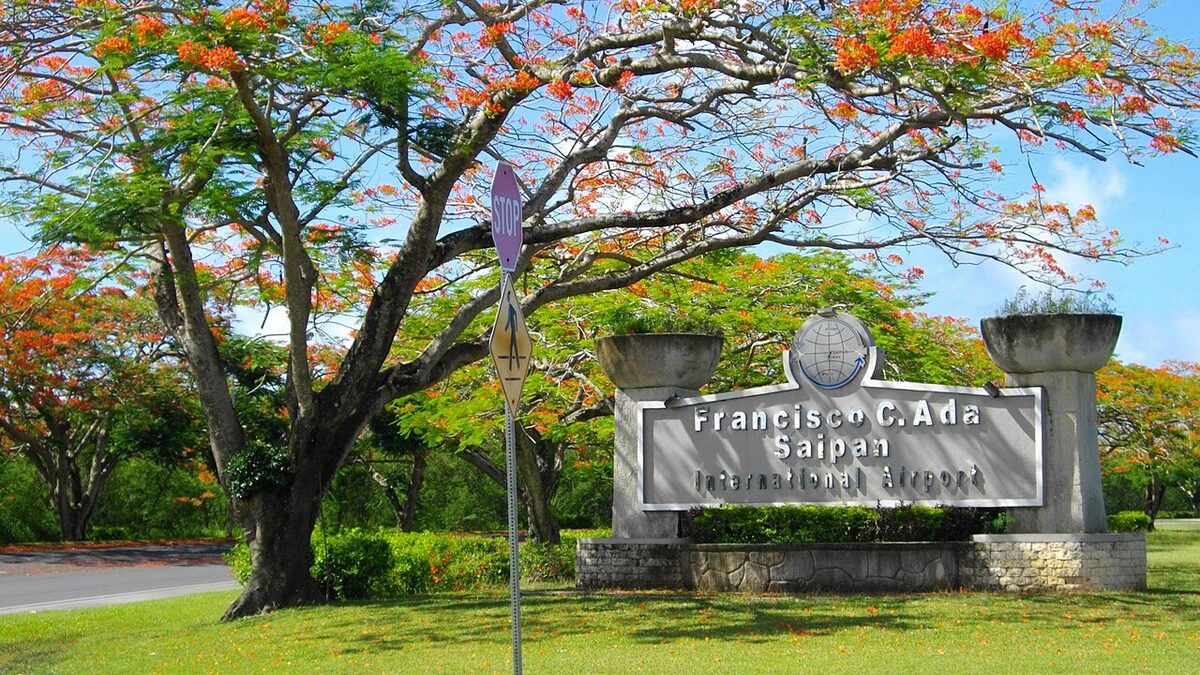
Cover image: The entrance to Saipan International Airport (file photo) — photo by Abasaa, Public domain, via Wikimedia Commons.
The United States suspended visa-free entry for Chinese visitors to Saipan and the rest of the Northern Mariana Islands (CNMI) at 14:00 EDT on Friday 30 October 2026 (04:00 Saturday in Saipan). A Department of Homeland Security (DHS) notice published on 27 October (91 FR 67595) halted the Economic Vitality & Security Travel Authorization Program (EVS-TAP). Existing approvals were revoked too, so Chinese nationals now need a full US visitor visa.
China was the CNMI's largest source market in September, with 1,328 arrivals, up 95 per cent year on year, according to the Marianas Visitors Authority (MVA). Total arrivals in the fiscal year to September fell 38 per cent to 99,476, which MVA put down to April's Super Typhoon Sinlaku, fewer airline seats, exchange rates and fuel costs.
What does the EVS-TAP suspension change?
EVS-TAP, in force since 20 February 2025, let prescreened Chinese nationals visit the CNMI without a visa on a one-year approval. Stays were generally capped at 14 days, with no onward travel to Guam or the US mainland.
The suspension covers new applicants and existing approvals. Visitors already in the CNMI under the scheme may finish their stay but need a visa next time. The notice says it "does not reinstate the prior parole policy", leaving the standard visa process, with fingerprints and, usually, a consular interview.
DHS set no end date.
CNMI delegate to Congress Kimberlyn King-Hinds stressed that EVS-TAP was "suspended, not terminated". She said Homeland Security Secretary Markwayne Mullin had assured her DHS would work directly with the CNMI, Isla Public Media reported.
Why did DHS suspend visa-free entry for Chinese visitors to Saipan?
The notice, signed by Mullin, finds "good cause". It says "evolving and sophisticated threats", combined with a significant number of Chinese nationals entering, create "a significant risk" to US security and law enforcement interests. More than 3,000 Chinese nationals used the scheme in fiscal 2025, vetted by US Customs and Border Protection rather than a consular officer. "DHS judges that PRC nationals are almost certainly exploiting EVS-TAP," it says.
The stated concerns are espionage against defence sites, including the Tinian Air Base the notice says the Department of War is restoring; smuggling of Chinese nationals from the CNMI to Guam; birth tourism; and money laundering and labour abuses linked to a temporary Saipan casino opened by a Chinese company. DHS said the risks "outweigh any countervailing personal or economic interests".
MVA countered that some of the concerns "predate EVS-TAP". Births to tourist mothers fell from a peak of 581 to 582 in 2018 to roughly 47 in 2025, the South China Morning Post (SCMP) reported, citing Commonwealth Healthcare Corporation data and King-Hinds.
How big is the China market for the Northern Mariana Islands?
MVA acting board chair Vicky Benavente said Chinese visitors made up "more than 20 percent" of fiscal 2026 arrivals. But our tally of MVA's monthly releases gives 12,927 Chinese arrivals: about 13 per cent of the total, and 20 per cent more than fiscal 2025's 10,764, when China's share was about 7 per cent.
In 2019, 185,526 of 487,008 visitors, about 38 per cent, came from China, Radio Free Asia reported.
| Measure | Figure | Source |
|---|---|---|
| All arrivals, fiscal 2026 (to September) | 99,476 (160,640 in fiscal 2025) | MVA |
| China, September 2026 | 1,328 (680 a year earlier) | MVA |
| South Korea, September 2026 | 1,137 (4,065 a year earlier) | MVA |
| China, fiscal 2026 | 12,927, about 13% of arrivals | MVA monthly releases |
What does it mean for airlines, hotels and agents?
About 30 per cent of Chinese visitors reach the Marianas through Seoul, Benavente said, so the suspension "could affect passenger demand on both Hong Kong Airlines and our existing flights from South Korea." Jeju Air flies Seoul to Saipan four times a week, with service scheduled through March 2027, MVA said on 28 October.
Ivan Quichocho, chairman of the Hotel Association of the Northern Mariana Islands, called the suspension "devastating", Isla Public Media reported.
Agents selling the islands in mainland China now need clients to hold US visas. Rivals are moving the other way: Vietnam has waived visas for Chinese tour groups flying into Khanh Hoa until the end of 2027. Mainland outbound crossings rose 9.3 per cent during China's 2026 Golden Week.
Frequently asked questions
Can Chinese citizens still visit Saipan after the EVS-TAP suspension?
Yes, with a visa. Since 14:00 EDT on 30 October 2026, Chinese nationals need an appropriate US nonimmigrant visa to visit the Northern Mariana Islands unless another lawful exception applies. DHS says bona fide visitors can still obtain one. The old parole policy has not been revived.
What happens to Chinese visitors already in the CNMI under EVS-TAP?
Those admitted under EVS-TAP and lawfully in the CNMI on 30 October may stay for the rest of their authorised period, generally up to 14 days. Their authorisations are revoked, so any later trip to Saipan, Tinian or Rota needs a US visa, the notice says.
Is the EVS-TAP suspension permanent?
DHS calls it a suspension while it evaluates the programme with the State and Interior departments, and sets no end date. Delegate Kimberlyn King-Hinds says EVS-TAP is "suspended, not terminated" and is pressing for its resumption. As of 1 November 2026, no review timeline had been published.
Does the suspension affect other nationalities travelling to Saipan or Guam?
The notice suspends only EVS-TAP, the restricted sub-programme for Chinese nationals within the Guam-CNMI Visa Waiver Program. It does not change that wider programme or the US Visa Waiver Program. Indirect effects are possible if airlines trim Hong Kong or Seoul flights that rely partly on Chinese passengers.
Sources
- Federal Register, Suspension of the CNMI EVS-TAP (91 FR 67595)
- Marianas Visitors Authority, September 2026 arrivals
- Marianas Visitors Authority, monthly arrival releases
- Marianas Visitors Authority, chair's statement on EVS-TAP
- Isla Public Media, Tourism groups press for reinstatement
- Isla Public Media, Delegate urges path forward
- The Korea Times (SCMP), US ends visa waiver for Chinese
- Radio Free Asia, Ending visa-free travel may hurt tourism