Budget travellers get by on ¥5,000–13,000 a day; a comfortable mid-range two-week trip costs ¥182,000–392,000 including accommodation. The full breakdown, plus the tax-free rule change.
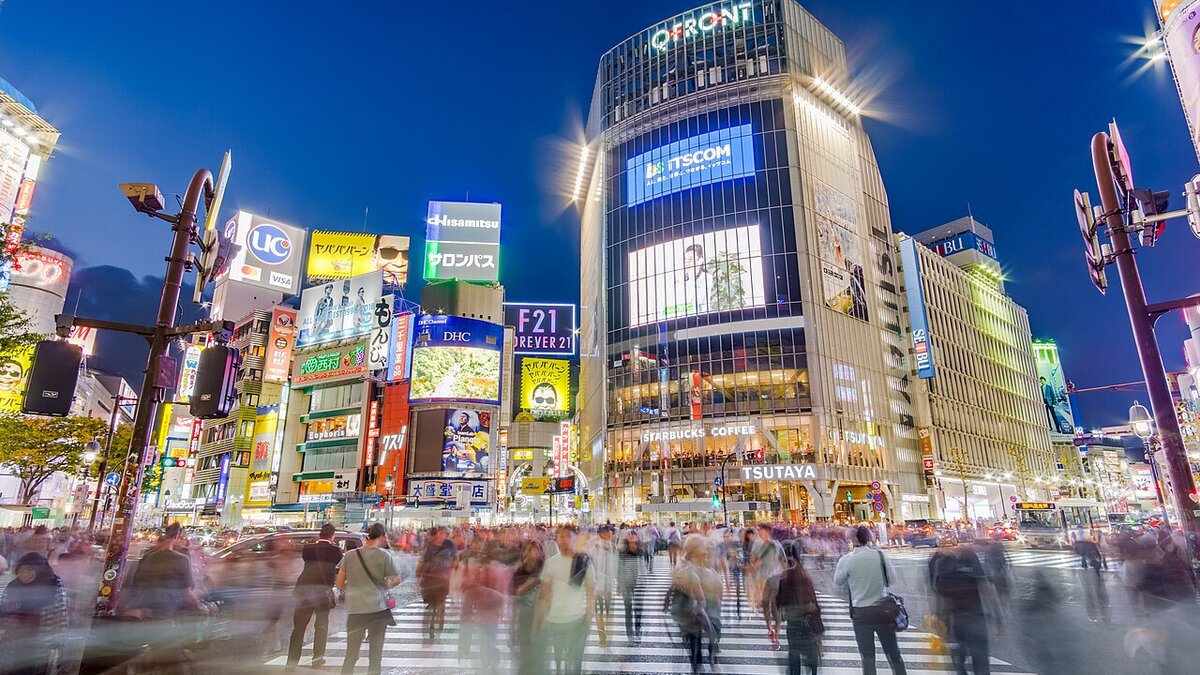
Cover image: Shibuya crossing in Tokyo at dusk, crowds streaming over the scramble — photo by Benh LIEU SONG (Flickr), CC BY-SA 2.0, via Wikimedia Commons.
For a two-week Japan trip, plan on ¥5,000–13,000 per person per day travelling on a budget, ¥13,000–28,000 mid-range, and ¥28,000+ for comfort — figures that include accommodation. Over 14 days that is a realistic pot of ¥182,000–392,000 for a mid-range traveller, which at late-August 2026 exchange rates works out at roughly £840–£1,810 or $1,150–$2,470 (the yen trades near ¥186 per euro). International flights are extra. Those bands come from long-running cost research by Japan Guide and match what independent budget trackers report; the honest headline is that Japan's weak yen has made a famously "expensive" country one of the better-value long-haul trips of 2026.
Daily budget bands for Japan at a glance
| Style | Per day, per person | 14-day total | ≈ GBP / USD |
|---|---|---|---|
| Budget (hostel, konbini meals, buses) | ¥5,000–13,000 | ¥70,000–182,000 | £320–£840 / $440–$1,150 |
| Mid-range (business hotel, restaurants) | ¥13,000–28,000 | ¥182,000–392,000 | £840–£1,810 / $1,150–$2,470 |
| Luxury (ryokan, kaiseki, first-class rail) | ¥28,000+ | ¥392,000+ | £1,810+ / $2,470+ |
Where the money goes: accommodation
Accommodation is the biggest swing factor between the bands. Current Japanese price ranges run from hostel dorms below ¥5,000 a night, through budget single rooms at ¥3,000–10,000 and mid-range singles at ¥10,000–20,000, to a ryokan with two meals at ¥15,000–40,000 per person and five-star city hotels around ¥80,000 a night. Business hotels (Toyoko Inn, Dormy Inn, APA) are the mid-range workhorse: small rooms, reliable Wi-Fi, and rates that stay sane outside cherry-blossom and autumn-foliage peaks.
Food, transport and the JR Pass question
Food is where Japan quietly rewards every budget level: convenience-store meals from a few hundred yen, noodle-shop lunches around ¥800–1,200, and department-store basement food halls for picnic-grade sushi. Transport splits two ways. Within cities, metro and JR urban lines cost a few hundred yen a ride, best smoothed with a rechargeable IC card (Suica or Pasmo on your phone). Between cities, the maths changes fast: the Japan Rail Pass now costs ¥50,000 for 7 days, ¥80,000 for 14 days and ¥100,000 for 21 days in ordinary class. A pass earns its keep on itineraries like Tokyo–Kyoto–Hiroshima–Osaka with long shinkansen legs; if you are based mostly in one or two cities, point-to-point tickets or highway buses (the cheapest intercity option) will beat it.
Cash or card in Japan?
Japan is far more card-friendly than its reputation, but cash still matters. The reliable pattern: 7-Eleven, Lawson and Japan Post ATMs accept foreign cards, while many bank ATMs do not, so use convenience-store machines and decline any offer to be charged in your home currency. Cards and phone wallets work in department stores, chains and most restaurants, yet small ramen shops, family-run izakaya, shrines and rural guesthouses remain cash-only. Carrying ¥10,000–20,000 in notes covers the gaps without leaving you exposed if your card fails.
The tax-free change every 2026 shopper should know
Japan's tax-free shopping system changes on November 1, 2026. Until then, eligible visitors show a passport at the till and pay the tax-free price on purchases over ¥5,000. From that date, the flow reverses: you pay the full tax-inclusive price — including the 10% consumption tax — and claim a refund at departure, with purchases made no more than 90 days before you fly out. The consumables category (food, cosmetics, medicine) is being phased out as a separate track, and the practical advice is to keep every receipt and allow extra airport time, because if a purchased item is missing at inspection the tax-free status of the whole purchase can be invalidated. Card refunds can take one to two weeks and bank transfers two to four. For context on the wider cost picture, see our guide to Japan's tourist taxes.
Small costs that surprise first-timers
- No tipping: Japan does not do it — attempting to tip causes genuine confusion. Our guide to tipping in Japan explains the etiquette.
- Entry paperwork: most nationalities need no visa for short tourist stays, but check the rules before booking — see whether you need a visa for Japan.
- Coins pile up fast: ¥1–500 coins accumulate from vending machines and shrine offerings; a coin purse earns its space in your daypack.
Frequently asked questions
How much is a meal in Japan?
Convenience-store meals run a few hundred yen; a ramen or udon bowl is typically ¥800–1,200; a casual izakaya dinner with drinks lands around ¥3,000–5,000 per person; kaiseki dinners at ryokan are usually bundled into the room price.
Should I exchange yen before travelling?
Exchange a small amount for arrival day, then use 7-Eleven or Japan Post ATMs in Japan — their rates beat most airport and home-country exchange counters.
Is the Japan Rail Pass worth it for a two-week trip?
Only for itineraries with several long-distance shinkansen legs. Two weeks based in Tokyo and Kyoto with a side trip is usually cheaper bought point-to-point; a Tokyo–Kyoto–Hiroshima–Osaka loop justifies the ¥50,000 7-day pass.
How much extra should I budget beyond daily spending?
Set aside a buffer for one-off costs: airport transfers, theme parks or onsen entry fees, and any festival or sports tickets. A ¥20,000–40,000 contingency covers most two-week surprises.