Duty-free removes duty and VAT at the till, but your destination's allowance still applies. Official limits for the US, EU, UK, Australia, Singapore, Japan, India and UAE.
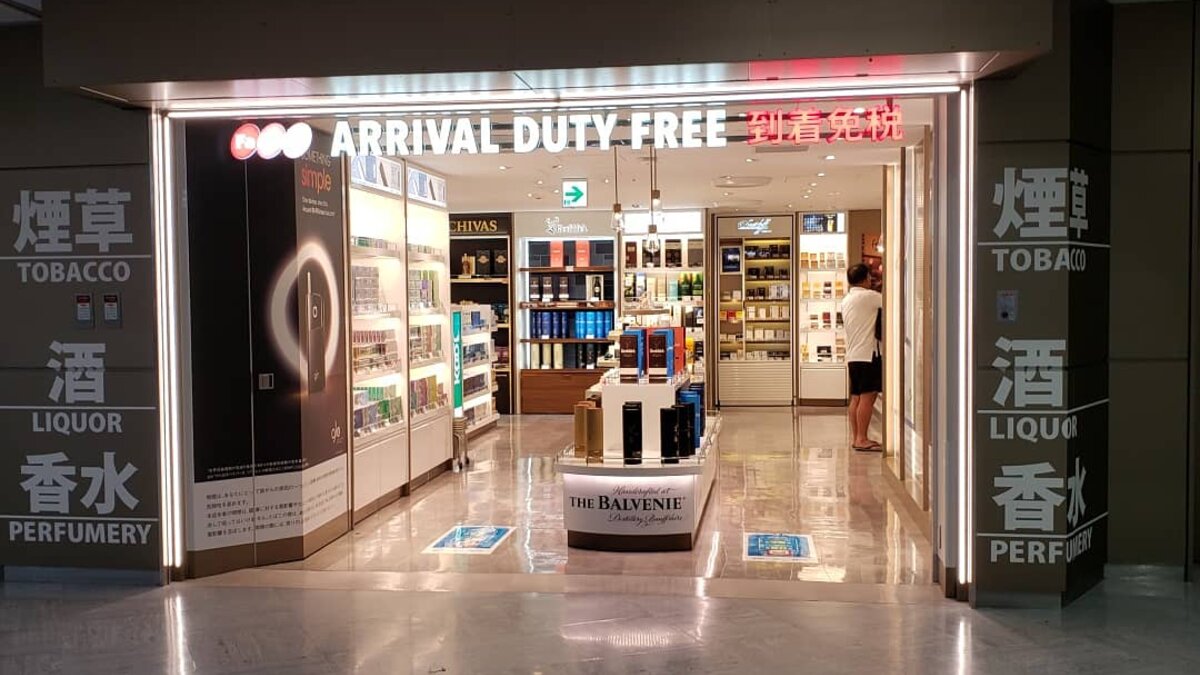
Cover image: duty-free shop inside an airport terminal — photo by 特急東海, CC0, via Wikimedia Commons.
Duty-free shopping lets a traveller who is leaving a country buy goods without that country's customs duty, excise duty and VAT or sales tax, because the goods are being exported rather than consumed there. The tax break stops at your destination's border, where anything above the personal allowance is taxed again, duty-free bottles included.
US Customs and Border Protection (CBP) puts it plainly: goods from a duty-free shop are "free only for the country in which that shop is located". The allowances that decide what you pay on arrival include US$800 and 1 litre of alcohol for returning US residents, €430 (by air or sea) and 1 litre of spirits for travellers entering the EU from outside it, £390 and 4 litres of spirits for Great Britain, and AUD900 and 2.25 litres of alcohol for Australia, according to each customs authority. India's new Baggage Rules, in force since 2 February 2026, set ₹75,000 for residents and ₹25,000 for foreign tourists.
Last checked: 25 October 2026.
What is duty-free, and what is duty-free liquor?
Three taxes can sit inside a normal shop price. Customs duty is charged on imported goods, excise duty is a levy on alcohol and tobacco charged mainly by quantity, and VAT, GST or sales tax is added to the final price. A duty-free shop sells to passengers who are exporting the goods, so it can leave them out. Duty-free liquor is simply wine, beer or spirits sold on that basis.
In the UK, HMRC approves airport "export shops" to sell alcohol and tobacco in duty suspension to passengers holding a transport document for a destination outside the UK, and says they are usually in the departure lounge after security. Airlines, ships and trains bound for a destination outside the UK can also sell duty-free on board with HMRC authorisation.
Alcohol shows why the shelves are full of bottles. Since 1 February 2026, HMRC's duty on spirits stronger than 22 per cent has been £33.99 per litre of pure alcohol. A 70cl bottle of 40 per cent gin holds 0.28 litres of pure alcohol, so £9.52 of its price is duty before VAT is added: almost half of a £20 bottle. A litre bottle at the same strength carries £13.60, so Great Britain's full 4-litre spirits allowance, at 40 per cent, holds about £54 of duty.
Inside the EU, the rule runs the other way. Your Europe says tax-free shops are for travellers heading outside the EU (or to areas such as the Canary Islands). Between EU countries you pay VAT and excise where you buy, and nothing more is due elsewhere for goods for your own use. Each member state may set guide levels to test "own use", which cannot be lower than 800 cigarettes, 10 litres of spirits, 90 litres of wine or 110 litres of beer.
How is duty-free different from tax-free shopping?
Duty-free takes the tax off at the till, in a shop at the border. Tax-free shopping happens in ordinary shops away from the border: an overseas visitor is spared, or refunded, the local VAT or consumption tax on goods that are shown to leave the country, usually through a customs check on departure.
From 1 November 2026, Japan's version works as a refund. Under the Japan Tourism Agency's "refund method", purchases made on or after that date are charged at the tax-inclusive price, and the consumption tax is refunded once a customs inspection at the departure airport or seaport, completed within 90 days of purchase, confirms the goods are leaving Japan. Purchases made up to 31 October 2026 stay under the earlier system, with the tax taken off at the till. Our guide to Japan's new tax-free refund explains the kiosks and refund options.
Neither system touches ticket taxes, such as Thailand's proposed 1,000-baht departure tax, which would be collected with the airfare.
What are the duty-free allowances by country?
The table gives the standard allowance for an adult arriving by air in eight major markets, taken from each authority's own page. Alcohol and tobacco allowances carry age limits: 21 in the US, 17 in the EU and Great Britain, and 18 in Australia, Singapore and the UAE.
| Arriving in | Alcohol | Tobacco | Other goods | Source |
|---|---|---|---|---|
| United States (returning residents) | 1 litre | 200 cigarettes and 100 cigars | US$800 every 31 days, after 48 hours abroad | CBP, last modified 30 Dec 2025 |
| European Union (from outside the EU) | 4 litres still wine and 16 litres beer, plus 1 litre of spirits over 22% or 2 litres fortified or sparkling wine | 200 cigarettes, 100 cigarillos, 50 cigars or 250g (40 cigarettes in Estonia and Romania) | €430 by air or sea (about US$481) | Your Europe, last checked 21 Sep 2026 |
| Great Britain | 42 litres beer and cider, 18 litres wine, plus 4 litres of spirits or 9 litres of other drinks up to 22% | 200 cigarettes, 100 cigarillos, 50 cigars, 250g or 200 heated-tobacco sticks | £390 (about US$521) | GOV.UK, checked 25 Oct 2026 |
| Australia | 2.25 litres | One unopened packet of up to 25 cigarettes or 25g, plus one open packet* | AUD900 (about US$632) | Australian Border Force, updated 5 Jun 2026 |
| Singapore | 2 litres in set combinations, no more than 1 litre of spirits | None: all tobacco is taxed | GST relief on S$500 after 48 hours abroad (about US$391) | Singapore Customs, updated 25 Mar 2026 |
| Japan | 3 bottles of about 760ml | 200 cigarettes, 50 cigars or 250g | ¥200,000 (about US$1,275) | Japan Customs, checked 25 Oct 2026 |
| India | 2 litres | 100 cigarettes, 25 cigars or 125g | ₹75,000 (about US$790); foreign tourists ₹25,000 (about US$263) | CBIC Baggage Rules 2026, in force 2 Feb 2026 |
| United Arab Emirates | 4 litres, or two 24-can cartons of beer (Dubai Customs) | 200 cigarettes (federal guidance, 2021); Dubai Customs lists 400 | AED 3,000 of gifts (about US$817) | ICP (FCA release, 28 Mar 2021) and Dubai Customs, checked 25 Oct 2026 |
US dollar figures are approximate, at European Central Bank reference rates of 23 October 2026 and the dirham's fixed peg of 3.6725. *The ABF's duty-free page gives no tobacco quantity; the figure is from its tobacco import page, updated 23 September 2026.
The conditions matter as much as the numbers. Singapore's liquor concession needs 48 hours outside Singapore and does not apply to arrivals from Malaysia. India's allowance applies to air and sea arrivals and cannot be pooled with another passenger's. Japan leaves items worth under ¥10,000 out of its total, Great Britain cuts the goods limit to £270 for arrivals by private plane or boat, and the UAE's federal customs guidance of 2021 lists alcohol among goods that need approval, so the 4-litre figure is Dubai's.
Do you have to pay tax on duty-free items?
Only above the allowance, but the way excess is taxed varies, and it catches travellers who are only slightly over.
- United States: alcohol beyond 1 litre is dutiable even if your total is under US$800. CBP's example is a traveller returning from Europe with US$200 of purchases including two litres of liquor: one litre is free and the other pays 3 per cent duty plus any Internal Revenue Tax due. States can set lower limits, and CBP enforces them.
- Great Britain: exceed a category and you pay on all of it. In GOV.UK's example, 19 litres of wine attracts tax and duty on all 19 litres, and going over £390 of other goods means paying on the full value.
- Australia: the ABF charges duty and tax on all items of that type once you exceed the limit. Families on the same flight can pool, so two adults and two children share AUD2,700.
- Singapore: there is no concession for cigarettes, and since 1 July 2020 packs without Singapore's standardised packaging are refused and disposed of at the checkpoint. More than 10 litres of liquor needs a customs permit.
Declare anything over the limit. The ABF warns that undeclared excess can bring penalties, prosecution or visa cancellation.
How do sealed duty-free bags work on connecting flights?
The US Transportation Security Administration (TSA) limits carry-on liquids to containers of 3.4oz (100ml), so a litre of whisky bought airside clears a second US checkpoint only inside a security tamper-evident bag, or STEB.
The TSA's conditions for passengers connecting in the US from abroad are specific: the liquids were bought internationally, the retailer packed them in a transparent, secure, tamper-evident bag that shows no sign of tampering, the original receipt is present, and the purchase was made within 48 hours. Each item is still screened, and anything that alarms is refused. The agency itself recommends putting such liquids in checked baggage.
Australia applies the same logic inbound. The ABF says duty-free items carried on a direct flight to Australia must meet its carry-on rules or be surrendered at screening, and it recommends checked baggage where possible. If you move bottles into a suitcase during a layover, check your airline's checked-baggage weight and piece limits first; our explainer on taking alcohol on a plane covers the strength limits for checked bags.
Is duty-free actually cheaper, and can you buy it on arrival?
A duty-free shop's built-in advantage over a high-street price is the tax it leaves out, so the case is strongest for heavily taxed alcohol and tobacco. On goods that carry only VAT or sales tax the room is smaller, and the shop's own pricing decides whether you see any saving.
Some countries let you shop after landing. The ABF suggests buying alcohol at an airport duty-free shop on arrival in Australia rather than carrying it through security, and Singapore Customs grants its liquor concession on bottles bought at duty-free shops in Singapore as well as overseas. Arrivals purchases still count towards the allowance.
A five-point check before you pay:
- Find your destination's allowance in the table, including the age limit.
- Add what you already carry: Australia counts all alcohol in your baggage, wherever it was bought.
- Check the route: a connection with fresh screening needs a sealed STEB with the receipt inside.
- Check the product: Singapore taxes every cigarette and refuses packs without its standardised packaging.
- Compare the price with a retailer at home before you hand over your card.
Frequently asked questions
What is duty-free liquor?
Duty-free liquor is wine, beer or spirits sold without the excise duty and VAT or sales tax that the country of sale would normally charge, because the buyer is taking it abroad. It is sold in departure areas and on board international flights and ships. The saving can be large: at UK rates in force since 1 February 2026, duty alone is £9.52 on a 70cl bottle of 40 per cent gin.
Is there a limit on duty-free purchases?
The limit that matters is your destination's allowance, not the shop's. Returning US residents get US$800 and 1 litre of alcohol, travellers entering the EU from outside get €430 by air and 1 litre of spirits, and Great Britain allows £390 and 4 litres of spirits. Above those levels you pay duty and tax on arrival, in Great Britain and Australia on the whole category.
Do you have to pay tax on duty-free items?
Not in the country where you bought them, but possibly in the one you fly to. US Customs and Border Protection says duty-free goods are "free only for the country in which that shop is located". Within your destination's allowance you pay nothing; above it, you declare the goods and pay what is due. Singapore taxes all cigarettes and tobacco, including duty-free packs.
Can you buy duty-free on a flight within the EU?
No. Your Europe, the EU's official guidance site, says tax-free shops at airports and ports are for travellers heading outside the EU, or to territories such as the Canary Islands. On trips between EU countries you pay VAT and excise at the till, and no further tax is due in the country you travel to for goods carried for your own use.
Can I open my duty-free bag during a layover?
Not if another security check lies ahead. The TSA accepts duty-free liquids over 100ml on US connections only if the retailer's tamper-evident bag shows no sign of tampering, the original receipt is present and the purchase was made within 48 hours. Liquids over 100ml outside such a bag must go in checked baggage, so keep it sealed until your final airport.
Sources
- U.S. Customs and Border Protection, Customs Duty Information
- Your Europe, Alcohol, tobacco and excise duties
- GOV.UK, Bringing goods into Great Britain
- Australian Border Force, Duty free
- Australian Border Force, Prohibited goods: Tobacco
- Singapore Customs, Duty-Free Concession and GST Import Relief
- Japan Customs, Procedures of Passenger Clearance
- CBIC, Baggage Rules 2026 (Notification 14/2026-Customs (N.T.))
- ICP, "FCA" to Issue Visual Guide to Travelers to UAE (28 March 2021)
- Dubai Customs, Permitted Customs-Exempted Items
- TSA, Liquids, aerosols and gels rule
- HMRC, Alcohol Duty rates
- HMRC, Selling duty-free or duty paid alcohol and tobacco products
- Japan Tourism Agency, What is the Refund Method?