US citizens can legally board many round-trip cruises with just a birth certificate and photo ID — but the exceptions are extensive, and every major line tells passengers to bring a passport anyway. Here is how the closed-loop rule actually works.
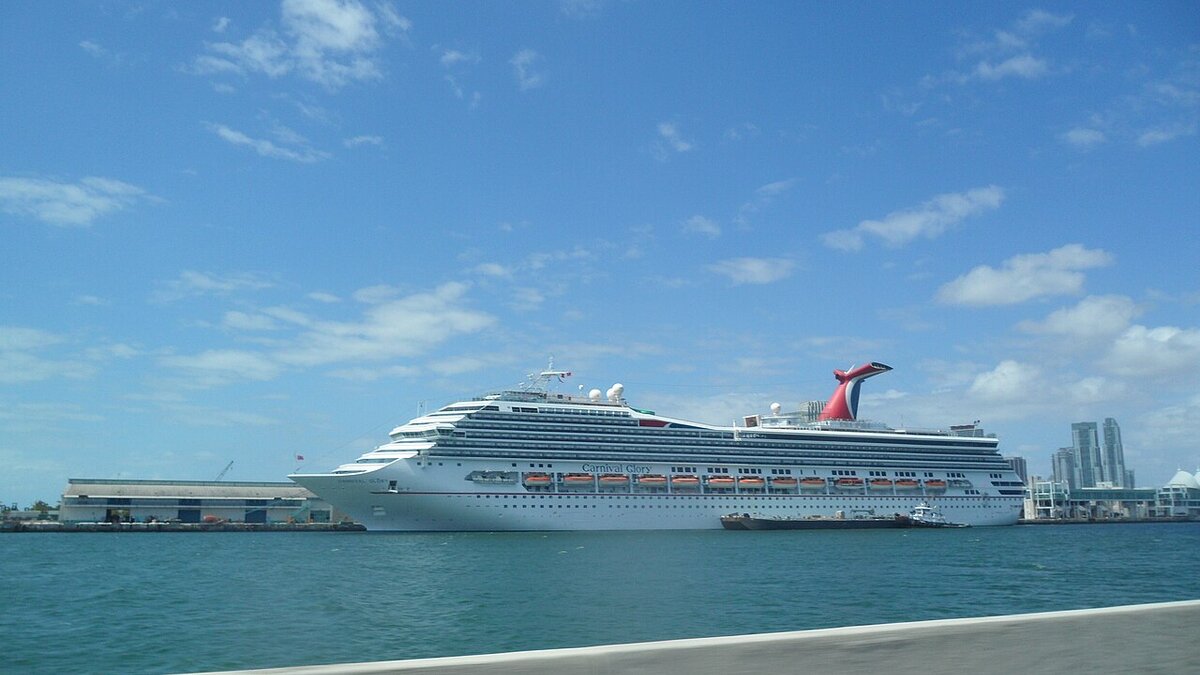
Cover image: The cruise ship Carnival Glory docked at PortMiami under a blue sky. — photo by EgorovaSvetlana, CC BY-SA 4.0, via Wikimedia Commons.
Strictly speaking, no — a US citizen does not need a passport for a closed-loop cruise, one that begins and ends at the same US port. Under the Western Hemisphere Travel Initiative (WHTI), US Customs and Border Protection lets closed-loop passengers re-enter the country with a government-issued photo ID plus proof of citizenship, such as an original or certified birth certificate, a Consular Report of Birth Abroad or a naturalisation certificate. That covers most round-trip sailings to the Bahamas, Mexico, the Caribbean, Bermuda and Canada.
In practice, the answer is closer to yes. The exemption disappears the moment an itinerary starts or ends in a different country, some islands demand a passport regardless of the rule, and anyone forced to fly home mid-cruise — a missed ship, a medical evacuation — cannot board an international flight without a passport book. That is why Carnival, Norwegian Cruise Line and Holland America all strongly recommend a passport even when one is not legally required. Here is how to know which side of the line your sailing falls on.
What counts as a closed-loop cruise?
A closed-loop cruise departs from and returns to the same US port. Miami to Miami via Cozumel qualifies. Seattle to Seattle via Alaska qualifies, even with a stop in Victoria, British Columbia. New York round trips to Bermuda or to Canada/New England qualify too.
What does not qualify: any one-way itinerary, and any cruise that starts or ends outside the United States. A Vancouver-to-Seward Alaska sailing, a one-way Panama Canal transit, or a Mediterranean cruise you fly to are all outside the exemption — a valid passport book is required, no exceptions.
If you are booking your first sailing, our first-time cruise guide walks through documents, check-in and embarkation-day logistics in more detail.
Which cruises can you take without a passport?
For adult US citizens on closed-loop itineraries, CBP accepts a driver's licence or other government photo ID together with proof of citizenship. A passport card or Enhanced Driver's Licence also works. Children under 16 need only proof of citizenship — a birth certificate is enough, with no photo ID required.
| Cruise type | Minimum documents (US citizens) | Recommended |
|---|---|---|
| Closed-loop Bahamas, Mexico, most Caribbean | Photo ID + birth certificate (or passport card/EDL) | Passport book |
| Alaska round trip from Seattle | Photo ID + birth certificate | Passport book |
| Bermuda or Canada/New England round trip | Photo ID + birth certificate | Passport book |
| Itineraries calling at Martinique or Guadeloupe | Passport book (line requirement, any departure port) | Passport book |
| One-way Alaska via Canada, one-way Panama Canal | Passport book | Passport book |
| Europe, Asia, or any cruise you fly abroad to join | Passport book (plus any visas) | Passport book |
When is a passport mandatory even on a closed-loop cruise?
Some destinations override the WHTI exemption. The clearest example is the French West Indies: Carnival requires passports for all voyages visiting Martinique and Guadeloupe, regardless of departure port, and other lines apply the same rule to French Caribbean calls. Individual countries on your route may also set their own entry conditions — CBP itself warns that the ports your ship visits can still demand a passport, so check your cruise line's documentation page for the specific itinerary before assuming a birth certificate will do.
Validity matters too. Holland America, like most lines, advises a passport valid for at least six months beyond the end of your trip, because several countries impose that buffer at entry even where the US does not.
Passport book vs passport card: which do cruisers need?
The passport card (US$65 for a first-time adult applicant, against US$165 for a book) is WHTI-compliant for land and sea entry to the US from Canada, Mexico, Bermuda and the Caribbean — so it works fine at cruise terminals on closed-loop routes.
Its fatal flaw: the card is not valid for international air travel. Miss the ship in Nassau or leave the cruise early for a medical emergency, and a card holder cannot legally board a flight back to the US. Only the passport book covers that scenario, which is the core argument for carrying one. It is also the scenario where travel insurance earns its premium — evacuation and trip-interruption cover gets you home, but the airline still needs to see a passport book.
Why cruise lines say bring one anyway
Carnival's documentation policy strongly recommends that all passengers travel with a valid passport, citing exactly these risks: guests who unexpectedly need to fly to or from the US mid-cruise face significant delays and complications without one. Norwegian and Holland America give the same advice. A passport also speeds up debarkation-day immigration processing and removes any doubt at foreign ports.
- Booking flexibility: a passport lets you switch to one-way or fly-cruise itineraries later.
- Emergencies: it is the only document that gets you on a flight home from abroad.
- Port entry: it satisfies every destination on any itinerary, exemption or not.
Budget for it the way you budget for the rest of the trip — alongside line items like the 2026 gratuity increases, a ten-year passport book is a modest per-voyage cost for the insurance it provides.
Frequently asked questions
Can I cruise with just a birth certificate?
Yes, if you are a US citizen on a closed-loop cruise. CBP accepts an original, photocopy or certified copy of your birth certificate together with a government-issued photo ID. It will not work on one-way itineraries, cruises departing foreign ports, or itineraries calling at Martinique or Guadeloupe.
Do children need a passport for a cruise?
Not on closed-loop sailings. US and Canadian citizen children aged 16 and under can board with proof of citizenship alone, such as a birth certificate — no photo ID needed. On any other itinerary, children need a passport book just like adults.
Is a passport card enough for a cruise?
A passport card works for sea re-entry to the US on closed-loop WHTI routes (Canada, Mexico, Bermuda, the Caribbean). But it is not valid for international air travel, so it cannot get you home if you miss the ship or must fly back mid-cruise. The passport book covers both.
How much passport validity do I need for a cruise?
Cruise lines generally advise a passport valid for at least six months beyond the completion of your travel. Some countries only require validity covering your stay, but others enforce the six-month buffer, so the six-month standard is the safe planning assumption for any international itinerary.
Sources
- US Customs and Border Protection — Western Hemisphere Travel Initiative
- Department of Homeland Security — Western Hemisphere Travel Initiative
- Carnival Cruise Line — Places to Cruise Without a Passport
- Holland America Line — Do I need a passport?
- Cruise Critic — US passport card vs book: what you need to know