Italian tap water is safe and strictly regulated, yet locals still order bottled at the table. Here is where to fill up for free, what the law says in restaurants, and the few exceptions worth knowing.
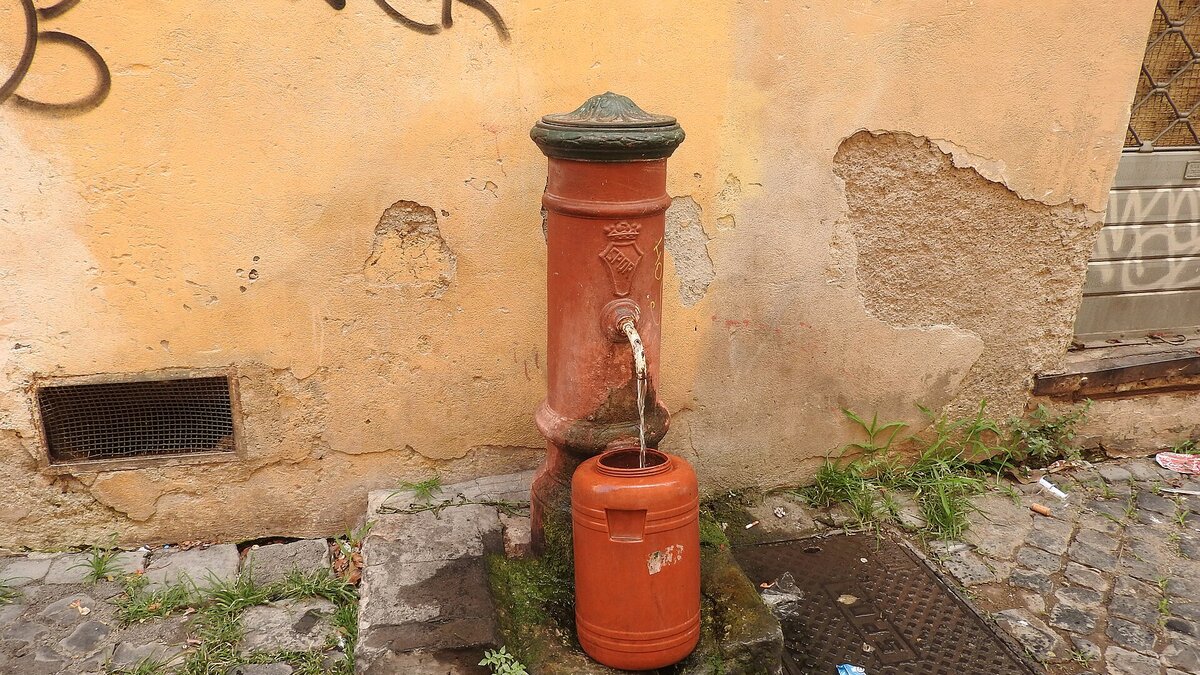
Cover image: Nasone cast-iron drinking fountain running with water in Trastevere, Rome — photo by Sotamies, CC BY-SA 4.0, via Wikimedia Commons.
Can you drink tap water in Italy? Yes — tap water is safe to drink across Italy, and it is among the most tightly monitored in Europe. Italian supply is governed by the EU Drinking Water Directive (EU) 2020/2184, transposed into national law by Legislative Decree 18/2023, which requires risk-based safety plans along the whole supply chain and routine microbiological and chemical testing. In Rome alone, utility ACEA runs hundreds of thousands of quality checks on the network every year.
So why does every Italian restaurant table carry a bottle of naturale or frizzante? Habit, taste and margin — not safety. Bottled water typically costs EUR 2–4 per bottle in restaurants, which means a family drinking tap from a refillable bottle during the day can easily save EUR 10 or more daily. The only real caveats are fountains marked acqua non potabile (not drinkable) and supply disruption on the islands in drought summers — both covered below.
Why do Italians drink bottled water at restaurants?
Italy is one of the world's biggest consumers of bottled mineral water per head, and ordering a bottle with a meal is a cultural ritual as much as a commercial one. Diners choose still or sparkling; the mark-up is a reliable earner for the restaurant; and many Italians simply prefer the taste of a favourite mineral brand over hard municipal water.
None of this reflects on safety. The water in the kitchen tap is the same regulated supply used to make your espresso and cook your pasta. If you are budgeting for meals out, the bottled-water line item sits alongside the coperto cover charge — see our guide to tipping in Italy for how those table charges actually work.
Can you ask for tap water in an Italian restaurant?
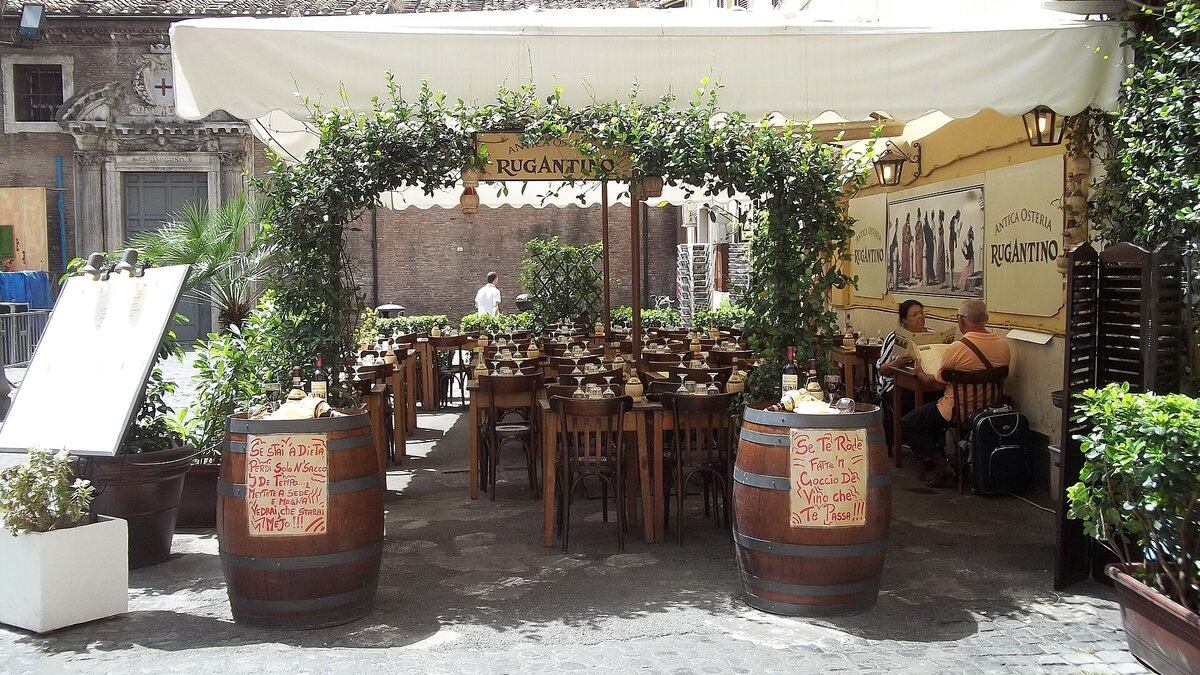
You can ask — the phrase is "acqua del rubinetto" — but you have no legal right to receive it. In May 2026, Italy's Court of Cassation ruled that hotels and restaurants are under no legal obligation to serve tap water, ending a case brought by a guest at a five-star Dolomites hotel that would only sell her mineral water at EUR 7 a bottle. Many casual places will bring a jug without fuss, particularly outside tourist zones; others will politely refuse or charge for it. Unlike in the UK or Spain's Catalonia, free tap water at the table is a courtesy in Italy, not a rule.
Are Rome's nasoni fountains safe to drink from?
Yes. Rome's cast-iron street fountains — nicknamed nasoni ("big noses") for their curved spouts — have dispensed free, continuously running drinking water since 1874. There are around 2,500 nasoni, and more than 3,000 free drinking fountains in total across Rome, according to ACEA, which supplies them with the same aqueduct-fed water piped to Roman homes. The constant flow keeps it cold even in August.
The local trick: block the bottom of the spout with a finger and water jets up through a small hole on top, turning the nasone into a drinking fountain — no cup needed. Refilling a bottle is even easier, and Rome's historic centre alone has more than 200 of them.
Which Italian cities have free drinking fountains?
Milan runs more than 500 green cast-iron fountains known as vedovelle ("little widows"), also called green dragons for their brass dragon-head spouts. Venice keeps public fountains flowing on squares throughout the historic centre and islands — a genuine money-saver in a city where a small bottle of water can cost several euros near St Mark's. Florence, Naples and most other cities also maintain free public water points.
| City / region | Tap safe? | Free public fountains | Note |
|---|---|---|---|
| Rome | Yes | ~2,500 nasoni; 3,000+ fountains in all | Cold aqueduct water; finger-over-spout trick |
| Milan | Yes | 500+ vedovelle | Green "dragon" fountains run continuously |
| Venice | Yes | Fountains on most campi | Big savings vs. tourist-zone bottle prices |
| Florence | Yes | Public water points citywide | Some dispense chilled still and sparkling |
| Naples | Yes | Fewer street fountains | Tap supply fully regulated like the north |
| Sicily | Yes, where supplied | Varies by town | Drought rationing has hit supply since 2024 |
| Sardinia | Yes, where supplied | Varies by town | Check locally in drought summers |
When should you be careful?
A few genuine exceptions. Any fountain or tap marked acqua non potabile — common on some rural, garden and coastal fountains — is not for drinking; no sign generally means it is fine. In very old buildings, plumbing rather than the municipal supply can occasionally affect quality, so run the tap briefly if a rental has sat empty. Much of central and southern Italy has hard, mineral-rich water: the limescale changes the taste, not the safety.
The islands are the real watch item. Sicily declared a drought emergency in 2024, with rationing affecting more than a million people and some towns cutting supply overnight; scientists at World Weather Attribution found climate change roughly halved the return time of such droughts in Sicily and Sardinia. Water where it flows remains potable — the issue is availability, and hotels in affected areas will advise. It is one of several practical changes tracked in our round-up of Europe's tourist rules, fees and bans.
One packing note: carry your refillable bottle empty through airport security, then fill it airside or at the first fountain — the 100ml liquid rule still applies at most UK airports and across the EU.
Frequently asked questions
Is tap water safe to drink in Rome?
Yes. Rome's tap water is aqueduct-fed, supplied by utility ACEA and tested continuously under EU and Italian law. The city's roughly 2,500 nasoni street fountains dispense the same water free of charge, 24 hours a day, and the constant flow keeps it cold. Block the spout with a finger and the water jets up through a top hole for easy drinking.
Is it rude to ask for tap water in Italy?
It is not rude, but it is unusual, and a 2026 Court of Cassation ruling confirmed restaurants and hotels have no legal duty to provide it. Ask for "acqua del rubinetto"; many casual trattorie will oblige, while smarter places may refuse or only sell bottled water at EUR 2–4 or more. Expect the default question to be still or sparkling.
What does "acqua non potabile" mean?
It means the water is not drinkable. You will see the sign on some rural, garden, coastal and decorative fountains, and occasionally on taps in campsites or beach facilities. Do not drink from anything carrying it. Fountains without the sign — including Rome's nasoni and Milan's vedovelle — carry the same regulated supply as household taps and are safe.
Should tourists drink tap water in Sicily and Sardinia?
The water itself is regulated and potable wherever it flows, but both islands have faced severe drought since 2024, with rationing and scheduled cut-offs in parts of Sicily affecting over a million residents. In summer, check with your hotel about supply hours, keep a filled bottle handy, and expect some towns to restrict usage rather than quality.
Sources
- ACEA — The Nasoni drinking fountains of Rome
- Kiwa — Drinking Water Directive transposed in Italy (Legislative Decree 18/2023)
- CNN — Hotel's refusal to serve guest tap water is lawful, top Italian court rules
- The Local Italy — Should you order tap water in Italy's restaurants?
- Euronews — Sicily's population fed up as water rationing starts to bite
- World Weather Attribution — Climate change key driver of drought in Sicily and Sardinia