Late March to early April for cherry blossoms or mid-November to early December for autumn colour, with month-by-month weather, crowds, prices and festivals.
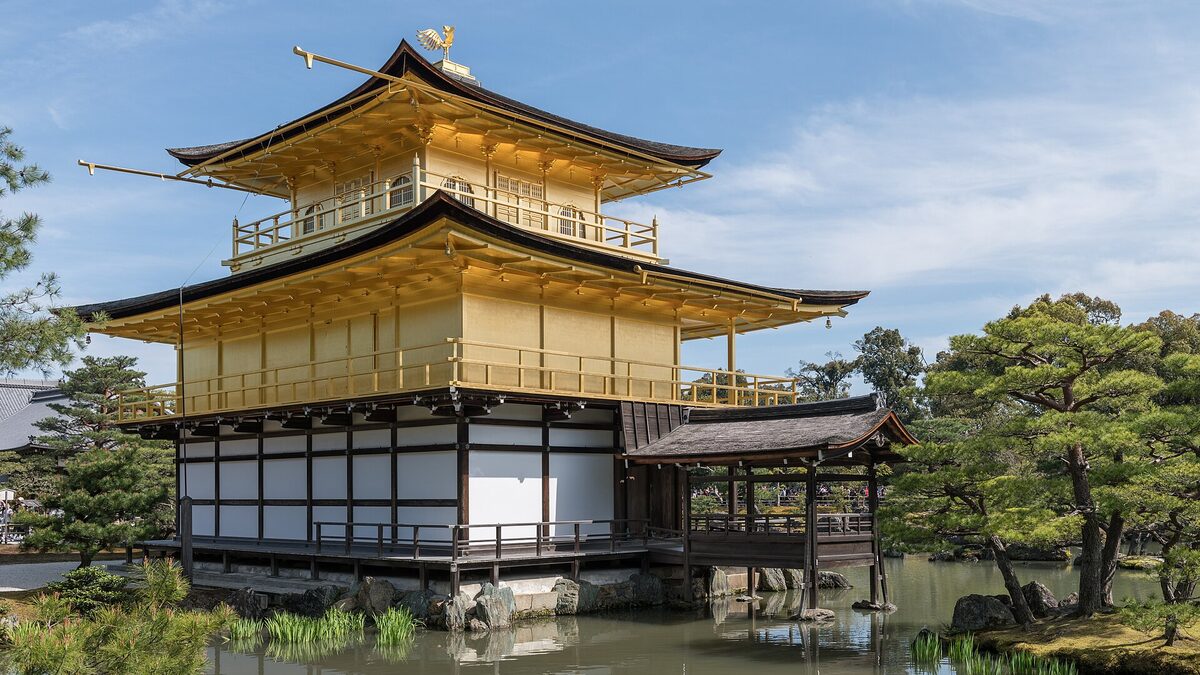
Cover image: The Golden Pavilion, Kinkaku-ji, reflected in its pond in Kyoto — photo by DXR, CC BY-SA 4.0, via Wikimedia Commons.
The best time to visit Kyoto is late March to early April for cherry blossoms, or mid-November to early December for autumn colour. These two windows combine the city's most spectacular scenery with comfortable daytime temperatures, highs around 14-20°C in spring and 12-17°C in November. They are also the busiest and priciest weeks of the year, so travellers who value lower prices and thinner crowds should look at late autumn's edges or even winter instead.
Kyoto is Japan's most visited city and the pressure shows: Japan set fresh inbound records through 2026, and Kyoto absorbs a large share of first-time visitors. Timing your trip well matters more here than in almost any other Japanese city. This guide breaks the year down month by month, using 1991-2020 climate normals, so you can match your dates to blossoms, foliage, festivals or bargains.
When do cherry blossoms bloom in Kyoto?
Sakura season is the headline act. Blossoms typically open in late March and last until around mid-April, with full bloom most often falling in the first week of April. The Philosopher's Path, Maruyama Park and the Kamo riverbanks are the classic viewing spots, and evening illuminations run at major temples during the peak.
The trade-off is real. This is Kyoto's most expensive fortnight: hotels book out months ahead and room rates can double. If blossoms are the goal, reserve accommodation as early as possible and consider staying in Osaka, 30 minutes away by train, where prices stay saner. Travellers weighing the overall cost of a Japan trip should also budget for the daily spending money Japan demands in peak season, when every popular restaurant has a queue. For the wider picture on what a trip costs, see how much spending money Japan takes.
When is autumn foliage season in Kyoto?
The koyo season runs from mid-October into December, peaking in the second half of November. Maples at Eikando, Tofukuji and Arashiyama turn brilliant red and orange, and temples extend their opening hours for floodlit evening viewing. Daytime highs average 17.3°C in November with only 73.9 mm of rain, making it arguably the most pleasant month of the year.
Early December is the insider pick. The peak-weekend crowds thin out, foliage lingers at higher-elevation temples, hotel rates ease, and winter illuminations begin. If your dates are flexible, the first week of December offers perhaps 80% of the beauty at 60% of the hassle.
Kyoto month by month: weather, crowds and prices
| Month | Avg high / rain | What is happening | Verdict |
|---|---|---|---|
| January | 9.1°C / 53 mm | Quiet after New Year; occasional snow; clear winter light | Great for bargains |
| February | 10.0°C / 65 mm | Setsubun festivals; plum blossoms late month; low crowds | Great for bargains |
| March | 14.1°C / 106 mm | Sakura opens late month; prices climb steeply | Go late in the month |
| April | 20.1°C / 117 mm | Full bloom early April; Golden Week crowds from 29 Apr | Best, if you book early |
| May | 25.1°C / 151 mm | Fresh green maples; Aoi Matsuri on 15 May; Golden Week ends early month | Good after Golden Week |
| June | 28.1°C / 200 mm | Rainy season (tsuyu) begins; hydrangeas; lowest hotel rates of summer | Good for deals |
| July | 32.0°C / 224 mm | Gion Matsuri, Japan's most famous festival, fills the month; hot and humid | Go for the festival only |
| August | 33.7°C / 154 mm | Hottest month; Obon holiday crowds mid-month; evening riverbed dining | Avoid unless necessary |
| September | 29.2°C / 179 mm | Typhoon risk; lingering heat; crowds ease late month | Fair; watch forecasts |
| October | 23.4°C / 143 mm | Comfortable; Jidai Matsuri on 22 Oct; foliage starts at elevation | Very good |
| November | 17.3°C / 74 mm | Peak koyo mid-month onward; illuminations; high prices | Best overall |
| December | 11.6°C / 57 mm | Foliage ends; illuminations; temples close 29-31 Dec; New Year surge | Good early month |
Two practical notes cut across the table. First, Kyoto levies an accommodation tax on top of room rates, and Japan's visitor taxes have been rising, so check what your hotel adds at checkout; our guide to Japan's tourist taxes keeps the current figures. Second, Japan's record visitor numbers mean the stations-and-shrine crush of 2026 is unlikely to ease, as Japan's inbound record run shows, so shoulder months buy you space as well as savings.
When is the cheapest time to visit Kyoto?
Mid-January to February and June are consistently the cheapest months. Winter (outside the New Year period) brings the year's lowest hotel rates and near-empty temples, with average highs of 9-10°C and the highest chance of a picturesque dusting of snow. June is the other value window: the rainy season keeps visitors away, and while rainfall approaches 200 mm, it usually falls in intense bursts rather than all-day washouts.
What about festivals and events?
If festivals decide your dates, three stand out. Gion Matsuri runs through July and is the most famous festival in Japan, with massive float processions. Aoi Matsuri (15 May) is the elegant Heian-period parade between the Kamo shrines. Jidai Matsuri (22 October) is the costume procession marking Kyoto's birthday as a capital. Book ahead for each.
Visa planning belongs early in the process for many nationalities, so confirm whether you need a visa for Japan before you start booking flights around a festival.
Frequently asked questions
Is April or November better for Kyoto?
Both are superb and the choice is aesthetic: April offers cherry blossoms with mild 20°C days but the year's highest prices, while November offers autumn colour with crisper air, lower rainfall and slightly thinner crowds. First-time visitors chasing the classic postcard should pick April; photographers and walkers often prefer November.
How many days do you need in Kyoto?
Three full days covers the essentials: eastern temples (Kiyomizu, Higashiyama) on day one, Arashiyama and the Golden Pavilion on day two, and Fushimi Inari plus central Kyoto on day three. Add a fourth day for Nara or Uji, or to revisit a favourite district without rushing.
Is Kyoto worth visiting in winter?
Yes, particularly January and February. Temples are quiet, hotel rates are at their lowest, the air is clear, and occasional snow transforms the Golden Pavilion and Kinkakuji gardens. Daytime highs of 9-10°C only demand a warm coat, and winter illuminations add evening interest.
Should I stay in Kyoto or Osaka?
Stay in Kyoto for atmosphere, especially in spring and autumn when early mornings at major temples beat the day-trip crowds from Osaka. Stay in Osaka if Kyoto hotels are full or over budget, since the train between the cities takes about 30 minutes and Osaka's own food scene rewards evenings.