AirAsia Group's third-quarter net loss fell 54% from the second quarter to RM381.3m as fares rose on 26% less capacity; its refinancing is still open.
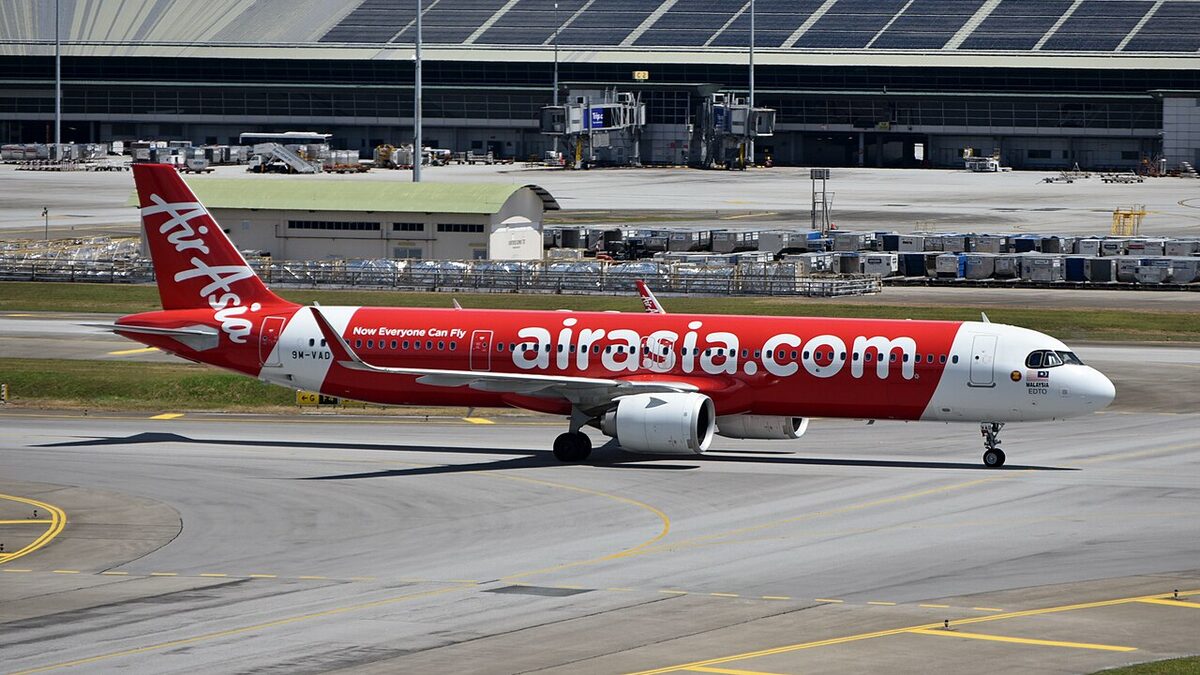
Cover image: An AirAsia Airbus A321neo (9M-VAD) at Kuala Lumpur in 2025 (file photo) — photo by Bahnfrend, CC BY-SA 4.0, via Wikimedia Commons.
AirAsia Group's Q3 2026 results show fares up sharply on a network cut by a quarter, and the group still in the red. Its net loss after tax, including minority interests, narrowed 54 per cent from the second quarter to RM381.3 million for July to September, the group said on 23 November. Revenue fell 11 per cent year on year to RM4.66 billion as capacity, in available seat kilometres (ASK), was cut 26 per cent.
Skift reported a loss attributable to shareholders of RM175 million, about a third of the second quarter's RM527.16 million in the Bursa filing reported by The Edge (see our 20 November report on its debt talks with Malaysia Airports). For agents and DMCs selling Southeast Asia, that means higher fares, fewer international routes and an unfinished refinancing.
What do AirAsia's Q3 2026 results show on fares and fuel?
Fares drove most of the gain, Skift said. Revenue per ASK rose 20 per cent year on year to 22.50 sen and the average fare rose to RM305 from RM251, which the company called a 23 per cent increase (by our calculation, about 21.5 per cent). The load factor held at 80 per cent.
Jet fuel averaged US$152 a barrel, against US$183 in the second quarter. AirAsia says fares, fuel surcharges, capacity cuts and cost controls recovered about 75 per cent of the extra fuel bill. EBITDA rose 42 per cent on the quarter to RM629.4 million.
Excluding a RM141.9 million forex loss, the net loss would have been RM239.4 million, the group said.
"Our third quarter performance suggests that the worst is behind us," said chief executive Bo Lingam.
AirAsia Group Berhad, formerly AirAsia X Berhad, acquired Capital A's aviation business in January, and Reuters said that accounting is why AirAsia gave no year-earlier comparisons; the release has year-on-year changes for revenue, capacity, fares and EBITDA, but not the loss.
| AirAsia Group (consolidated) | Q3 2026 | vs Q3 2025 | vs Q2 2026 |
|---|---|---|---|
| Revenue | RM4.66bn | Down 11% | Down 8.4% |
| Average fare | RM305 | From RM251 | Not disclosed |
| EBITDA | RM629.4m | Down 43% | Up 42% |
| Net loss incl. minorities | RM381.3m | Not disclosed | From RM830.5m |
| Loss to shareholders | RM175m | Not disclosed | From RM527.16m |
Sources: AirAsia release; Reuters; Skift; The Edge.
Which AirAsia markets made money, and which routes were cut?
Short-haul Malaysia and Cambodia stayed profitable, according to the release, with Malaysia helped by Chinese demand on core East Malaysia routes. Indonesia and the Philippines lost less than in the second quarter.
Thailand, missing from the release's market rundown, had a weak quarter, Skift said. Asia Aviation, Thai AirAsia's listed parent, lost THB2.37 billion in the quarter as Thai AirAsia cut seats 26 per cent and raised its average fare 24 per cent, The Nation reported on 13 November.
Group-wide, 76 routes were suspended in the quarter, mostly fuel-heavy flights to India, China and Australia, and about 31 per cent of the 234-aircraft main fleet was out of service at the end of September, mostly for scheduled maintenance, Skift reported.
When will AirAsia's refinancing close?
The results release gives no date; it says only that AirAsia is "progressing liquidity-enhancing exercises and constructive restructuring discussions with key creditors" heading into 2027.
Skift reported on 24 November that the refinancing is now due to conclude in the fourth quarter or early 2027, with up to US$1 billion of debt financing in the works. As recently as the previous week, AirAsia had expected it by December or January, Skift said. Skift put shareholders' equity at RM362 million. Co-founder Tony Fernandes said in September that AirAsia had not sought a government bailout.
Teh Mun Hui, previously Group CFO of Capital A, becomes AirAsia Group's CFO on 1 December 2026, the airline said on 26 November.
What changes for travel sellers in the fourth quarter?
More seats for the peak, but not everywhere. Capacity is rising quarter on quarter on "core domestic corridors and high-density international trunk routes", alongside seasonal route resumptions. "Unprofitable routes remain suspended," Lingam said.
Base fares stay firm, AirAsia says. It expects fourth-quarter load factors to climb towards peak levels and "drive double-digit RASK improvement", though fuel costs should run higher than in the third quarter.
The fleet shrinks first: eight older aircraft have been returned this year against a full-year target of 25, while 500 aircraft sit on order. Skift said the third-quarter presentation called 2026 and 2027 a "reset" and 2028 the "rebuild".
Frequently asked questions
How much did AirAsia lose in the third quarter of 2026?
AirAsia Group's net loss after tax, including minority interests, was RM381.3 million in the quarter to 30 September 2026, down 54 per cent from RM830.5 million in the prior quarter. Skift put the loss attributable to shareholders at RM175 million.
Why are AirAsia fares higher in 2026?
AirAsia cut capacity 26 per cent year on year and priced up to cover jet fuel, which averaged US$152 a barrel in the quarter. Its average fare rose to RM305 from RM251 a year earlier, and planes stayed 80 per cent full, the results release said.
When will AirAsia finish its refinancing?
AirAsia's results release gives no date. Skift reported on 24 November that the refinancing is now due to conclude in the fourth quarter or early 2027; as recently as the previous week AirAsia expected it by December or January.
Will AirAsia restore suspended routes for the year-end peak?
Only some. The group is adding capacity on core domestic and busy international trunk routes and resuming seasonal routes, but unprofitable routes stay suspended. Skift reported that 76 routes were suspended in the third quarter, mostly international flights to India, China and Australia.
Sources
- AirAsia Newsroom, Group financial results third quarter 2026
- AirAsia Newsroom, Teh Mun Hui appointed Group CFO
- Reuters via The Economic Times, AirAsia posts narrower third-quarter loss
- Skift, AirAsia's Q3 shows why Fernandes pushed the comeback to 2028
- The Edge Malaysia, AirAsia Group posts RM527m 2Q net loss
- The Nation Thailand, AirAsia parent posts THB3.85bn nine-month loss