Japan will fold a "Kyushu Support Discount" — public subsidies for lodging and group tours — into a Kumamoto earthquake aid package due by 28 August, after quake-related cancellations topped 320,000 hotel bookings across the island.
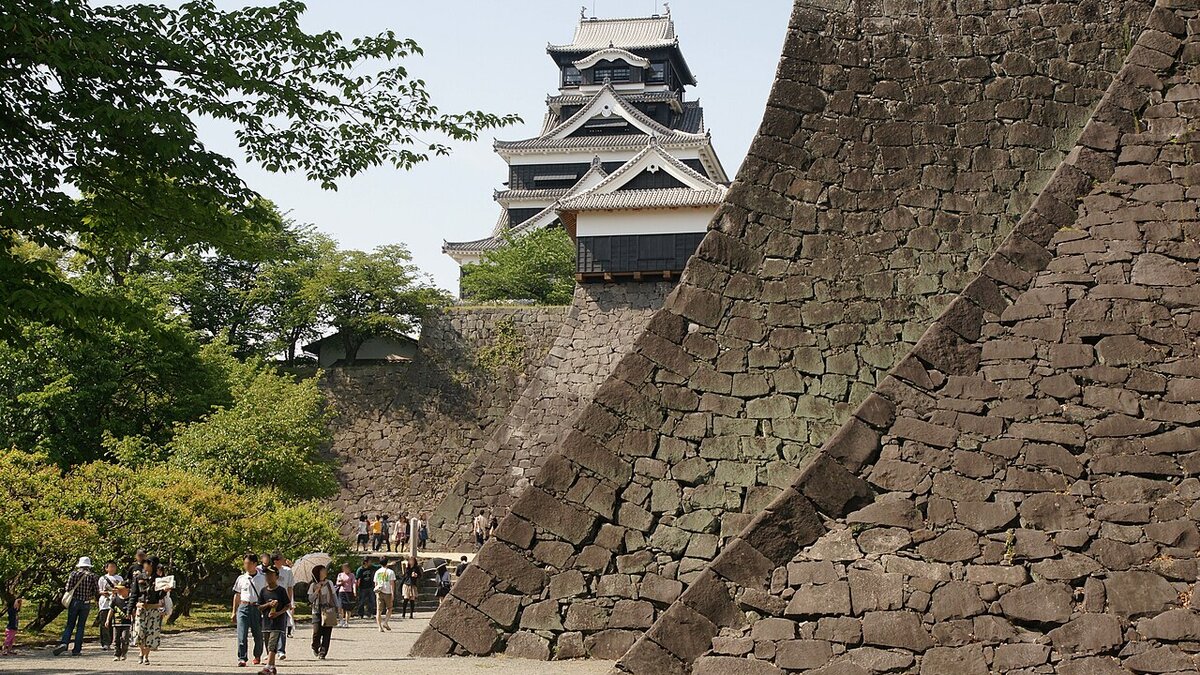
Cover image: Visitors at Kumamoto Castle as Japan prepares a Kyushu travel discount — photo by 663highland, CC BY 2.5, via Wikimedia Commons.
The Japanese government is preparing a subsidised travel programme — dubbed the "Kyushu Support Discount" — as part of an aid package for earthquake-hit Kumamoto that Chief Cabinet Secretary Minoru Kihara has said will be compiled by the end of August 2026, with Fukuoka Now, citing KBC News and the Nishinippon Shimbun, reporting the package is scheduled for 28 August. The Kyushu travel discount would use public funds to cover part of lodging and group-tour costs for travellers visiting Kumamoto and other Kyushu prefectures, in a bid to reverse a wave of cancellations triggered by the magnitude-7.1 earthquake that struck Kumamoto on 28 July, which killed at least 39 people and left more than 6,000 residents still in evacuation centres two weeks later, according to The Japan Times.
The commercial damage is now quantified. Accommodation providers in Kumamoto prefecture logged 146,470 cancelled guest bookings worth about ¥2.06 billion between the quake and 6 August, the prefectural government estimates, within total tourism-sector losses of roughly ¥6 billion (about $38 million) once ¥4.04 billion in damage to hotel buildings and equipment is included, The Japan Times and Jiji Press reported. A further 174,000 bookings were cancelled across the six other Kyushu-region prefectures, Japan Today reported — most of them in places the quake barely touched.
What will the Kyushu Support Discount cover?
According to the reports, the programme would subsidise hotel stays and group-tour costs in Kumamoto and other Kyushu prefectures. Beyond that, the honest answer is that the details are not yet fixed. The Ministry of Land, Infrastructure, Transport and Tourism is to determine:
- Eligible areas — whether all seven Kyushu prefectures are included, or a narrower zone;
- Discount rates and caps — no percentages or yen ceilings have been announced;
- Start date and duration — the launch date will be finalised only after officials weigh requests from the region.
Kumamoto's mayor, Kazufumi Onishi, has submitted an 11-item request to the central government covering reconstruction assistance, infrastructure restoration, disaster-waste disposal and business support, Nippon.com reported. Until the package is adopted, the Kyushu Support Discount remains a proposal, not a bookable product — travellers cannot yet apply for it, and any specific rates circulating online are speculation.
How badly has the quake hit Kyushu tourism?
The cancellation data shows a classic case of what Japanese officials call fuhyo higai — reputational damage. About 60% of Kumamoto's cancellations came from the Aso and Amakusa areas, which suffered relatively little physical damage, while industry bodies in Oita and Nagasaki told Jiji Press that guests pulled out over "vague concerns" about Kyushu generally.
| Prefecture | Cancelled bookings | As of |
|---|---|---|
| Kumamoto | 146,470 (¥2.06bn) | 6 Aug |
| Fukuoka | ~28,000 | 17 Aug |
| Nagasaki | 14,259 | 7 Aug |
| Miyazaki | 11,357 | 10 Aug |
| Oita | 7,810 | 12 Aug |
| Saga | 1,820 | 18 Aug |
The slump lands in an otherwise buoyant market. Japan logged a record 3.43 million foreign visitors in July 2026, according to the Japan National Tourism Organization, and the country remains on course for another record inbound year — which is precisely why Tokyo wants to stop one region's confidence problem hardening into a lost season.
What is the programme modelled on?
Japan has run disaster-recovery travel subsidies twice before, and both worked as templates:
- The 2016 Kyushu fukko-wari (reconstruction discount), launched after the April 2016 Kumamoto earthquakes, allocated ¥18 billion across Kyushu's prefectures and is credited with lifting overnight stays back above pre-quake levels by the end of that year.
- The 2024 Hokuriku Support Discount, launched after the Noto Peninsula earthquake, covered up to 50% of accommodation and package costs — capped at ¥20,000 for one night and ¥30,000 for two or more — across Ishikawa, Toyama, Fukui and Niigata from 16 March 2024, with a budget of ¥9.44 billion. Notably, it was open to foreign visitors, not just Japanese residents.
If the Kyushu version follows the Hokuriku playbook, expect bookings through participating hotels and online travel agencies, and budget caps that exhaust quickly. None of that is confirmed for 2026.
Is it safe to visit Kyushu right now?
Largely, yes — and local operators are asking travellers to come. According to japan-guide.com's disaster update, Kumamoto City escaped major damage and is functioning close to normally, with most attractions including Kumamoto Castle and Suizenji Garden reopened. Aso and Kurokawa Onsen escaped significant damage and most lodgings are operating normally, as are the Amakusa islands. Fukuoka, Nagasaki, Kagoshima, Oita and Beppu are operating as usual.
The main disruptions sit south of Kumamoto City, near the epicentral zone around Uki and Yatsushiro:
- The Kyushu Shinkansen between Kumamoto and Shin-Minamata is suspended and unlikely to reopen before September;
- The JR Kagoshima Line between Uki and Yatsushiro and part of the Hisatsu Orange Railway are also suspended;
- The Kyushu Expressway fully reopened on 14 August, and flights between Fukuoka and Kagoshima have been increased to bridge the rail gap.
Visitors should be respectful of an ongoing relief effort — thousands of people remain displaced — but the tourism industry's own message is that staying away compounds the damage. Short-notice trips are straightforward for most nationalities under Japan's visa-waiver rules, and given the earthquake context it is worth checking how travel insurance handles natural-disaster disruption before booking.
What should travellers do now?
Watch for the aid package around 28 August, then for the Japan Tourism Agency and prefectural tourism bureaus to publish scheme mechanics — in 2024 that gap ran several weeks. Anyone planning an autumn Kyushu trip may benefit from booking refundable rates now and rebooking once the discount channel opens; the Hokuriku scheme's budget ran out in under six weeks.
Frequently asked questions
Is it safe to travel to Kyushu now?
Mostly yes. Kumamoto City, Aso, Kurokawa Onsen and Amakusa are operating close to normally, and Fukuoka, Nagasaki, Kagoshima, Oita and Beppu were largely unaffected, according to japan-guide.com. The disrupted zone is south of Kumamoto City around Uki and Yatsushiro, where a section of the Kyushu Shinkansen remains suspended. Travellers should stay flexible on rail routings and be considerate of ongoing relief work.
When will the Kyushu travel discount start?
No start date has been announced. The Kyushu Support Discount is expected to be included in the government's Kumamoto aid package due by the end of August 2026 — reportedly on 28 August — after which the transport and tourism ministry will set eligible areas, discount rates and duration. Based on the 2024 Hokuriku precedent, bookings could open several weeks after the package is adopted.
Will foreign tourists be able to use the discount?
That has not been confirmed. The precedent is encouraging: the 2024 Hokuriku Support Discount had no residency restriction and was explicitly open to foreign visitors, who booked it through participating hotels and online travel agencies. Until the Japan Tourism Agency publishes the Kyushu scheme's rules, overseas travellers should treat eligibility, booking channels and discount rates as to be confirmed.
How much could the discount be worth?
Unknown — no rates have been set. The closest model, the 2024 Hokuriku Support Discount, covered up to 50% of accommodation and package costs, capped at ¥20,000 per person for one night and ¥30,000 for two or more nights, on a ¥9.44 billion budget. The 2016 Kyushu fukko-wari allocated ¥18 billion. Any figures quoted for the 2026 scheme before the official announcement are speculative.
Sources
- Fukuoka Now — Kyushu Travel Discount Planned After Quake
- Nippon.com — Japan Govt to Craft Kumamoto Aid Package by End-Aug.
- Japan Today — Southwestern Japan hotels see 174,000 cancellations after Kumamoto quake
- Nippon.com/Jiji — Quake-Hit Kumamoto's Tourism Sector Suffers 6-B.-Yen Blow
- The Japan Times — Over 6,000 still living in evacuation centers two weeks after Kumamoto quake
- japan-guide.com — Travel alerts: 2026 Kumamoto earthquake update