A typical traveller spends about $129 a day in South Korea, or roughly $1,800 for two weeks excluding flights. Full budget breakdown with tiers, totals and money-saving tips.
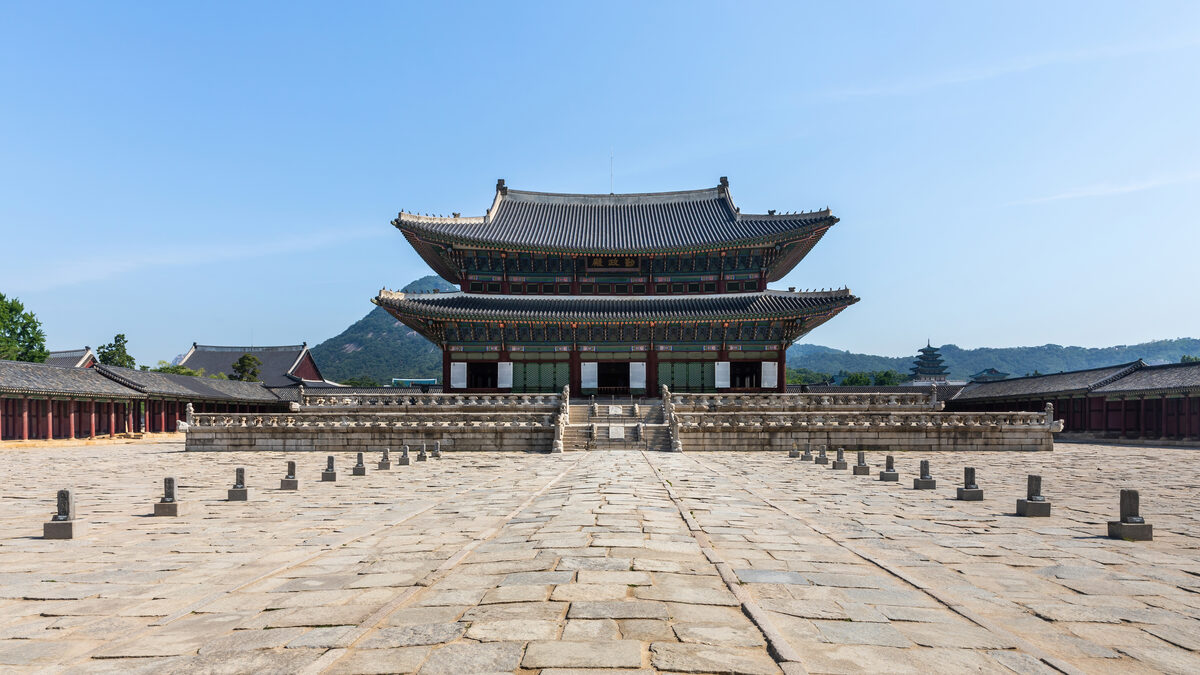
Cover image: Geunjeongjeon throne hall at Gyeongbokgung Palace, Seoul — photo by Basile Morin, CC BY-SA 4.0, via Wikimedia Commons.
A typical traveller spends about $129 (around ₩173,000) per day on the ground in South Korea, according to thousands of reported trip budgets collected by Budget Your Trip. That puts a two-week trip at roughly $1,800 per person, excluding international flights. Budget travellers average $49 a day, mid-range travellers $125, and luxury trips run about $318 a day.
Those averages make South Korea one of the better-value developed destinations in East Asia: cheaper day-to-day than Japan, with world-class transit, inexpensive food and free or cheap sightseeing doing most of the heavy lifting. Flights are the wildcard and are not included in any of the figures below. If you are still sorting entry formalities, read our South Korea visa guide first, since most visitors need a K-ETA approval (KRW 10,000, about $7-8) before boarding.
How much money do you need per day in South Korea?
Daily spending breaks down into three well-documented tiers. All figures below are per person, from Budget Your Trip's traveller-reported averages:
| Travel style | Per day | What it looks like |
|---|---|---|
| Budget | $49 (about ₩68,000) | Hostels and guesthouses, subway everywhere, convenience-store breakfasts, street food and casual restaurants |
| Mid-range | $125 (about ₩173,000) | Business hotels, mix of trains and taxis, sit-down restaurant meals, paid attractions most days |
| Luxury | $318 (about ₩441,000) | High-end hotels, private transfers, fine dining, guided tours |
The single biggest line item is accommodation, averaging about $50 a night across all traveller types, followed by food at roughly $47 a day and local transport at about $16 a day. A single metro ride costs just ₩1,350 and even a short taxi ride is around ₩7,000, which is why transport barely dents most budgets. For a regional sense of how Korea compares, see how much a Japan trip costs.
South Korea trip cost for 1 week and 2 weeks
Stretch the daily averages across a full trip and the totals land here (on-the-ground spending only, per person):
| Trip length | Budget | Typical | Mid-range |
|---|---|---|---|
| 1 week | about $350 | about $900 | about $875 |
| 2 weeks | about $700 | about $1,800 | about $1,750 |
| 1 month | - | about $3,860 | - |
The two-week typical figure of roughly $1,803 per person and the one-month figure of about $3,863 per person come straight from reported averages; the one-week numbers are the daily rates multiplied out. Travelling as a pair trims the per-person cost because rooms and taxis split two ways. Note that organised tour packages average around $379 per person per day equivalent when bundled, so independent travel usually wins on price.
Where the money goes: food, hotels and transport
Food is the pleasant surprise. Past travellers report spending around $45-47 a day on food, and that buys a lot in Korea: kimchi jjigae sets, bibimbap, Korean barbecue and market stalls are filling and cheap by developed-country standards. Convenience stores sell shockingly good breakfasts for a few dollars.
Hotels span every tier. Seoul and Busan have deep hostel scenes for budget travellers, business hotels in the $60-100 range for the middle, and genuine luxury at the top. The $50 average room price reflects how competitive the mid-market is.
Transport is nearly free by global standards. The subway systems in Seoul and Busan are fast, clean and cheap, intercity trains are reasonably priced and comfortable, and even taxis undercut most Western cities. Budget about $16 a day and you will rarely think about it.
One spending trap to know about: Korea's tourist complaint numbers hit a record recently, mostly around shopping and service disputes, so keep receipts for big purchases. Our roundup of record tourist complaints in South Korea explains what to watch for.
How to cut your Korea trip cost
Travel outside cherry-blossom season and the October autumn peak, when hotel rates spike. Stay near a subway station rather than in Myeongdong or Gangnam proper. Eat where office workers eat at lunch. Use the subway instead of taxis. And load a transit card on arrival instead of buying single-journey tickets. None of this requires suffering: Korea's free attractions, from palace grounds to hiking trails to night markets, are genuinely among its best experiences.
Frequently asked questions
Is South Korea expensive to visit?
No. At about $129 a day for a typical trip, South Korea costs less day-to-day than Japan or Western Europe. Budget travellers manage on $49 a day, and the main reason totals climb is accommodation and shopping, not food or transport.
How much does a 2-week trip to South Korea cost?
Around $1,800 per person for on-the-ground spending at typical levels, or about $700 travelling on a tight budget. International flights are extra and are the biggest single variable in the total.
How much is food per day in South Korea?
Travellers report spending about $45-47 a day on food on average. Casual restaurant meals, street food and convenience-store breakfasts keep costs low without eating badly.
Do I need a K-ETA for South Korea and what does it cost?
Most visa-free visitors need a Korea Electronic Travel Authorization, applied for on the official K-ETA portal. The fee is KRW 10,000 (about $7-8) and decisions generally come within 72 hours. Apply before booking non-refundable travel.