A 7-day Japan trip from India costs ₹1.1–2.5 lakh per person: flights, the new ¥15,000 visa fee, JR Pass, hotels and food broken down with a full budget table.
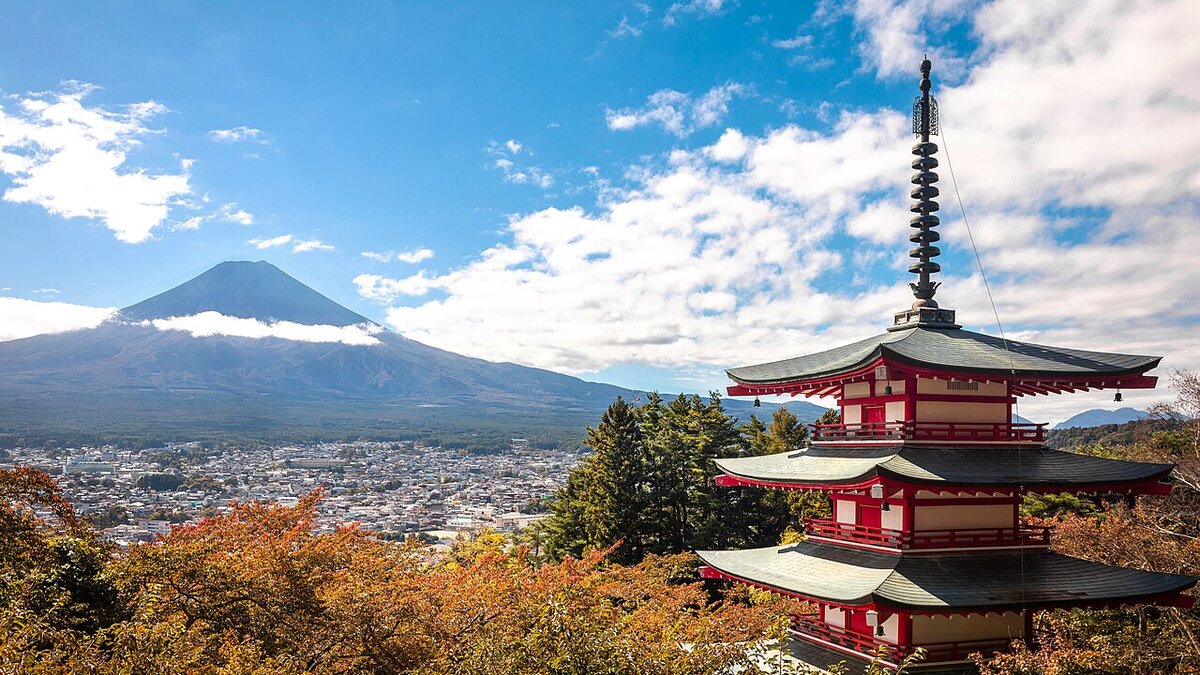
Cover image: Mount Fuji rising behind the Chureito Pagoda in autumn colours, Japan — photo by This Photo was taken by Supanut Arunoprayote. Feel free to use any of my images, but please mention me as the author and, CC BY 4.0, via Wikimedia Commons.
A week in Japan typically costs an Indian traveller between ₹1.1 lakh (tight budget) and ₹2.5 lakh (comfortable mid-range) per person, including return flights, the new ¥15,000 visa fee, a rail pass, hotels, food and sightseeing. Flights are the biggest variable: book a one-stop return for ₹32,000–48,000, or pay ₹45,000–65,000 for a nonstop from Delhi. On the ground, Japan rewards planners. A 7-day Japan Rail Pass (¥50,000), business hotels and convenience-store breakfasts keep daily spending near ₹8,000–10,000, while peak autumn foliage season (November) pushes hotels and fares 20–30% higher. All rupee conversions below use roughly ¥1 = ₹0.59 (September 2026; recheck the rate before you book).
How much do flights from India to Japan cost?
Return fares from Delhi or Mumbai to Tokyo (Narita or Haneda) move in three bands. One-stop options via Kuala Lumpur, Bangkok or Seoul usually price at ₹32,000–48,000 return when booked 2–3 months ahead. Nonstop flights on Air India, ANA and JAL typically cost ₹45,000–65,000 return. Last-minute or autumn-peak bookings can cross ₹75,000.
Two tricks cut this bill. First, compare Haneda and Narita separately; Haneda sits 30 minutes from central Tokyo and saves a ¥3,000 airport transfer. Second, flying into Osaka and out of Tokyo (open-jaw) avoids backtracking and often prices the same as a Tokyo return. Travellers watching baggage rules should read our guide on carrying power banks on flights from India, since Japan's long sectors make backup power essential.
Japan visa fee for Indians in 2026
Since 1 July 2026, a single-entry tourist visa costs ¥15,000 (about ₹8,800), five times the old ¥3,000 fee, and multiple-entry visas cost ¥30,000. Indians apply through VFS centres with the standard documents (passport, photos, bank statements, ITRs, flight and hotel bookings). Add roughly ₹650 in VFS service charges on top. Factor the fee in early: for a budget trip it is nearly a tenth of total on-ground spending.
Is the Japan Rail Pass worth it?
The nationwide 7-day ordinary JR Pass costs ¥50,000 (about ₹29,500) and covers most Shinkansen, JR local trains and some buses. It pays off if you do at least one long leg, such as Tokyo–Kyoto return (about ¥28,000) plus day trips to Nara or Hiroshima. Note that passes bought through travel agencies get pricier from 1 October 2026 (¥53,000 for 7 days), so buy on the official site if you travel later in the year.
Staying in one region? Skip the national pass. The Tokyo Wide Pass (¥15,000 for 3 days) and Kansai-area passes cost far less and suit single-base trips. Our best-time-to-visit-Japan guide pairs well here, because pass value peaks when you move with the autumn colours or cherry blossoms.
Hotels, food and daily costs
Business hotels (Toyoko Inn, APA, Dormy Inn) charge ¥8,000–12,000 a night for a compact double, hostels ¥3,500–5,000 for a dorm bed, and mid-range hotels ¥15,000–25,000. Capsule hotels (¥4,000–6,000) are a fun one-night experience rather than a week-long base.
Food has a clear ladder. Convenience-store meals (onigiri, bento, sandwiches) run ¥500–800; ramen, gyudon and curry-rice shops ¥800–1,200; casual izakaya dinners with a drink ¥2,000–4,000. A realistic food budget is ¥3,000–5,000 a day. City transport adds ¥800–1,200 daily; load a Suica or Pasmo card on arrival. For the full money picture, see how much spending money Japan needs.
| 7-day trip component | Budget | Mid-range |
|---|---|---|
| Return flights (one-stop / nonstop) | ₹38,000 | ₹55,000 |
| Visa + VFS charges | ₹9,500 | ₹9,500 |
| Rail (JR Pass / regional passes) | ₹18,000 | ₹30,000 |
| Hotels (6 nights) | ₹28,000 | ₹55,000 |
| Food + local transport + sights | ₹30,000 | ₹55,000 |
| Total per person | ≈ ₹1.25 lakh | ≈ ₹2.05 lakh |
When is Japan cheapest for Indians?
Late January to March (outside cherry-blossom weeks) and June (rainy season) bring the lowest fares and hotel rates. Golden Week (late April–early May), Obon (mid-August) and November's foliage season are the priciest windows. If your dates are flexible, shifting an autumn trip from mid-November to early December can save ₹15,000–20,000 on flights and hotels combined.
Frequently asked questions
How much money do I need for a 7-day Japan trip from India?
Plan ₹1.1–1.3 lakh per person on a tight budget (one-stop flights, hostels or business hotels, JR Pass, convenience-store meals) or ₹1.8–2.2 lakh for mid-range comfort. Add 20–30% for November foliage or cherry-blossom season.
Is Japan expensive for Indians?
Japan costs roughly double a Southeast Asia trip but is comparable to Europe. Flights and the ¥15,000 visa fee are the fixed load; on the ground, business hotels and train passes make daily costs predictable at ₹8,000–12,000 a day.
Can I do Japan without the JR Pass?
Yes, if you stay in one region. Tokyo-only or Kansai-only trips are cheaper with city passes and regional tickets. The national JR Pass pays off only with intercity Shinkansen travel such as Tokyo–Kyoto–Hiroshima.
How much is the Japan visa fee for Indians now?
¥15,000 (about ₹8,800) for single entry since 1 July 2026, plus VFS service charges of roughly ₹650. Multiple-entry visas cost ¥30,000.