Who must register in the EU Entry/Exit System, what EES biometric checks record, how to check your remaining days, and where enforcement stands as of 29 November 2026.
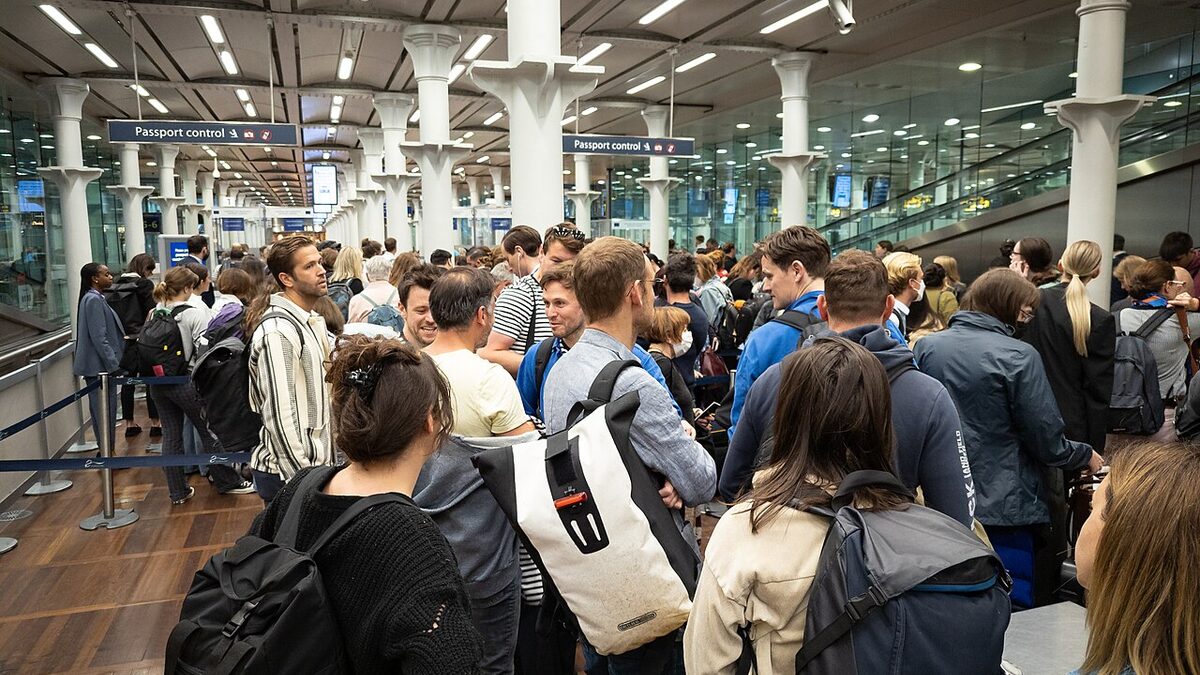
Cover image: Passengers queue at Eurostar departures in London St Pancras International (file photo) — photo by Tom Page, CC BY-SA 2.0, via Wikimedia Commons.
Unless an exemption applies, every non-EU national making a short visit to the 29 European countries that run the Entry/Exit System (EES) is registered at the first external border, with or without a Schengen visa. Officers record passport data, a facial image and, for visa-exempt travellers aged 12 and over, four fingerprints. Registration is free, needs no application before travel and replaces the passport stamp. What you need to do: carry the passport you travel on and allow time at the border.
EES has been fully operational since 10 April 2026. The legal option to pause biometric checks at congested crossings lapsed after 6 September 2026; on 27 November tourism groups were still asking the EU to restore it.
Last checked: 29 November 2026.
Who has to register in the EES, and who is exempt?
EES covers anyone who is not a national of an EU country, Iceland, Liechtenstein, Norway or Switzerland and who comes for up to 90 days in any 180-day period, counted as one period across all 29 countries. Cyprus and Ireland are outside the system and still stamp passports, the EU's official EES website says.
The exemptions in Article 2(3) of Regulation (EU) 2017/2226 are narrow. Common cases:
| Traveller | Registered in EES? | Biometrics stored | What to know |
|---|---|---|---|
| Visa-exempt visitor (for example US, UK, Canadian or Japanese nationals) | Yes | Face and four fingerprints | ETIAS will follow; no start date yet |
| Schengen visa holder (for example Indian or mainland Chinese passport holders) | Yes | Face only | Fingerprints already held in the Visa Information System |
| Child under 12 | Yes | Face only | Fingerprints are currently not scanned |
| Holder of a residence permit or long-stay (D) visa | No | None | Show the document at the border |
| Family member of an EU, EEA or Swiss citizen, with a residence card | No | None | Without the card: registered, with one-year retention if outside the citizen's own country |
| UK national under the Withdrawal Agreement | No, with the document | None | Without the residence document: registered, can ask for deletion |
| Professional lorry or coach driver | Yes | As for their nationality | Exempt only with a D visa, a residence permit or cross-border-worker treatment |
| Cruise passenger on a round trip from outside Schengen | Usually not on day calls | As for their nationality, if checked | Ports can still check; joining or leaving inside Schengen may trigger registration |
What does EES biometric registration collect, and how long is it kept?
Alongside the face and fingerprints, EES stores passport details, the date and place of each entry and exit, and any refusal of entry. A visa holder's fingerprints are not stored again, because the Visa Information System already holds them.
Refusing to give biometrics means being refused entry, the EU's EES website says.
Retention, according to the same site:
- Each entry, exit or refusal record: three years.
- The individual file: three years and one day after the last exit or refusal.
- No exit recorded: five years after the authorised stay ends.
Border, visa and immigration authorities can read the data, as can police and Europol for law-enforcement purposes. There is no fee, and the Port of Dover calls any request for payment "incorrect and/or fraudulent".
Where do EES biometric checks stand as of 29 November 2026?
A 180-day progressive start ran from 12 October 2025 to 9 April 2026 while countries phased in registrations. From 10 April 2026 EES applied at every external crossing and manual stamping ended.
Regulation (EU) 2025/1534 then left a safety valve. For 90 days after full operation, a country could suspend biometric capture at a crossing for up to six hours when waits became excessive, still logging passport data and notifying the Commission and eu-LISA, which runs the central system. With the automatic 60-day extension the regulation allowed when fewer than 80% of early files held biometrics, the option ran until 6 September 2026.
In mid-September trade outlets including Trans.info reported that Brussels would not act against countries still unable to run full checks, and that at least nine (Belgium, France, Germany, Greece, Italy, Malta, the Netherlands, Portugal and Switzerland) had asked for more flexibility. Trans.info said this did not amount to a formal extension, and no new legal act followed.
On 12 October ACI EUROPE and Airlines for Europe said waits routinely exceeded two hours and reached five at peak in the worst cases, and tabled a six-point plan to fix EES queues. On 27 November the Tourism Manifesto alliance of more than 80 organisations asked the EU to renew permission to suspend biometric collection, noting that "more rigorous enforcement" is expected from January 2027 after "an extended informal grace period".
What do I need to do at the border, including Dover and Eurostar?
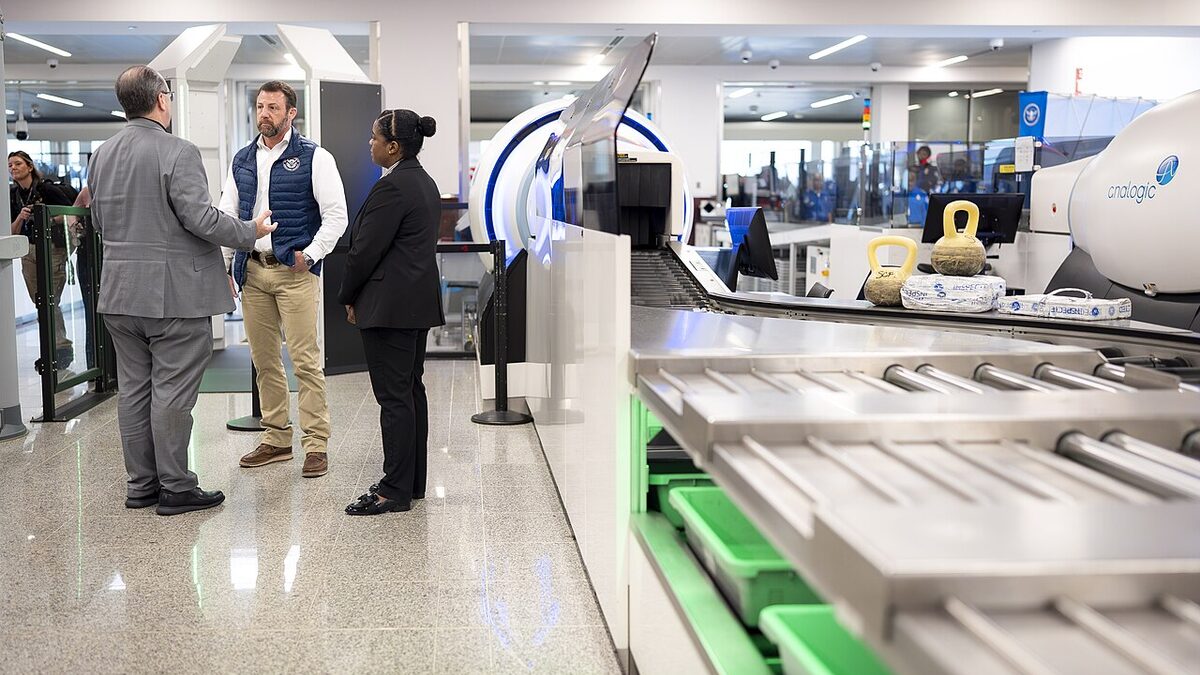
First-time travellers go to an officer or, where one exists, a self-service kiosk first. Kiosks need a biometric (chipped) passport, but non-biometric passports are still accepted at staffed desks. On later trips the officer only verifies the face or fingerprints against the stored record.
The EU's Travel to Europe app allows pre-registration within 72 hours of crossing. As of 29 November 2026 only Sweden (passport data, facial image and entry questionnaire) and Portugal (questionnaire only) accept it.
Travellers leaving the UK through the Port of Dover, Eurotunnel Le Shuttle at Folkestone or Eurostar at St Pancras International complete EES checks before departure, under juxtaposed controls. The UK government gave each operator £3.5 million for kiosks and infrastructure.
Dover's coach procedure page, last updated in October 2025, has passengers register at kiosks in its Western Docks and reboard a sealed coach. But its main EES page, last updated on 6 August 2026 and unchanged on 29 November, says the full process for tourist traffic "has not yet been implemented" and sends tourist traffic to the Eastern Docks.
On exit, travellers may be asked for a fingerprint or photo as the departure is recorded.
How do I check my EES status and remaining days?
To check your EES status, use the "Check how long you can stay" tool on the EU's official EES website. Enter the passport type and number, the three-letter issuing-country code, the destination and your dates; it returns "OK" or "not OK" and the days left. Border officers must also tell you on request.
The tool does not count any visit that began before 10 April 2026. A 180-day window ending on 29 November 2026 starts on 3 June, so only long stays that began before 10 April and ran into June or July need manual arithmetic.
Overstayers go on an automatic list. Penalties are set nationally and range from fines and removal to detention; entry bans under EU return rules should not in principle exceed five years. Proof of unforeseeable circumstances, such as hospitalisation, can get a record corrected.
eu-LISA's report for January to March 2026, covering only crossings then using EES, counted 4,353 refusals of entry to travellers who had reached their maximum stay, and 11,885 extensions of stay, 6,565 of them for US nationals.
How does EES relate to ETIAS and the Schengen visa, and what should the trade tell clients?
EES is a border record, not a permission to travel.
Visa-required travellers still need a visa (see our Schengen visa guide). ETIAS, the €20 authorisation for visa-exempt visitors to 30 European countries, is not running: the official ETIAS website says no applications are being collected and the start date will be announced several months ahead. Our ETIAS launch timeline explains why it now points to 2027.
Carriers confirm through the EES web service that visa holders have entries left; their parallel duty to check passport stamps ended in early October 2026. What agents, tour operators and DMCs should tell clients:
- Registration is free and happens at the border. Sites charging for EES are not official.
- With waits of two to five hours reported at peak, avoid tight self-transfers and separate tickets.
- Every non-exempt passenger, children included, is registered; confirm Dover's current coach arrangements with the port before departure.
- Clients adding London should check the separate UK ETA rules.
Frequently asked questions
What do I need to do for the EU Entry/Exit System before I travel?
Nothing. There is no application and no fee: registration happens at the first Schengen external border, or before departure at Dover, Folkestone and St Pancras. Travellers entering Sweden, or Portugal for the questionnaire only, can use the Travel to Europe app within 72 hours of crossing. Carry the passport you travel on and allow extra time.
Do children give fingerprints for EES biometric registration?
Not if they are under 12. Children of that age are still registered in EES and have a facial image taken, but their fingerprints are currently not scanned. eu-LISA recorded 978,940 fingerprint exemptions in the first quarter of 2026, mainly children under 12 and people for whom fingerprinting is physically impossible.
How can I check my EES status and the days I have left?
Use the “Check how long you can stay” tool on the EU’s official EES website, entering your passport details, destination and dates. It returns OK or not OK and the days you have left. If the result looks wrong, contact the authorities of the country where you last entered or left the Schengen area.
Can border guards still skip EES biometric checks when queues build?
Not under EU law at present. The option to suspend biometric registration for up to six hours ceased to apply after 6 September 2026. Some countries were reported in September to be easing checks informally, but no new legal act followed, and on 27 November the tourism industry was still asking the EU to restore it.
Sources
- European Commission, official EES and ETIAS website
- EUR-Lex, Regulation (EU) 2025/1534 on the EES progressive start
- eu-LISA, EES Quarterly Report for Q1 2026
- GOV.UK, EU Entry/Exit System guidance
- Port of Dover, EU Entry/Exit System
- ACI EUROPE, No end to Schengen EES disruption (12 October 2026)
- Tourism Manifesto via EuropaWire, call for renewed EES flexibility (27 November 2026)
- Trans.info, EU gives nine countries more time to implement EES checks (15 September 2026)