June to August is Kuala Lumpur's driest window; December to February is the festive runner-up. Month-by-month rainfall data, fare timing and festivals, tuned for travellers flying from India.
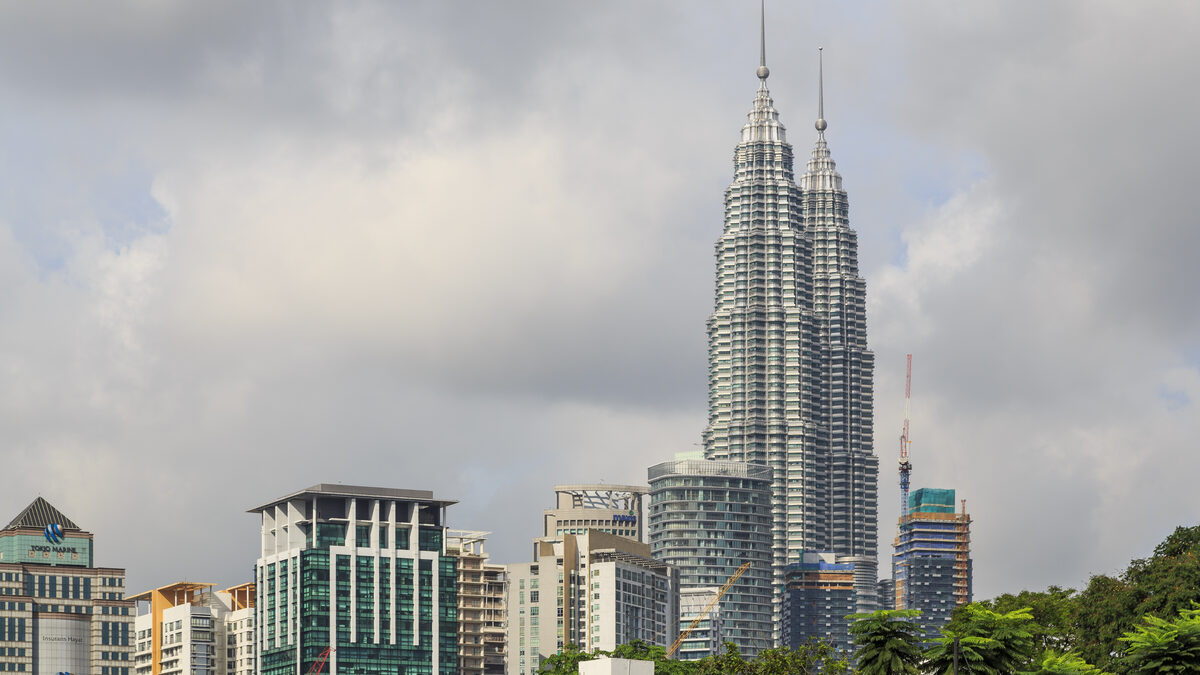
Cover image: Petronas Twin Towers rising over the Kuala Lumpur skyline — photo by Cccefalon, CC BY-SA 3.0, via Wikimedia Commons.
The best time to visit Kuala Lumpur from India is June to August, when rainfall drops to its lowest levels of the year. The Malaysian capital has no true dry season, but June averages just 145.8 mm of rain against November's 355.8 mm, so a mid-year trip roughly halves your odds of a washed-out afternoon. December to February is the runner-up window: marginally wetter, but packed with festivals, sale-season shopping and pleasant 32-degree days.
Temperatures barely move all year (highs of 32 to 33.7°C), so rain, crowds and prices decide everything. Indians currently get 30 days visa-free in Malaysia until 31 December 2026, and nonstop flights link Kuala Lumpur with Delhi, Mumbai, Chennai and other Indian cities, so timing is the one variable you control.
Kuala Lumpur weather month by month
Long-term climate normals for Subang airport (1991-2020) tell a clear story: two wet peaks, in April and October-November, separated by a relatively drier mid-year stretch.
| Month | Avg rainfall | Verdict for sightseeing |
|---|---|---|
| January | 226.7 mm | Good; festive season spillover |
| February | 192.8 mm | Good; Thaipusam at Batu Caves |
| March | 270.4 mm | Fair; showers build up |
| April | 301.5 mm | Poor; first wet peak |
| May | 229.9 mm | Fair; easing off |
| June | 145.8 mm | Best; driest month |
| July | 165.2 mm | Best; second driest |
| August | 174.3 mm | Very good |
| September | 220.3 mm | Fair; rain returns |
| October | 283.8 mm | Poor; second wet peak builds |
| November | 355.8 mm | Worst; wettest month |
| December | 280.6 mm | Fair; wet but festive |
The practical takeaway: even in June, expect a sharp late-afternoon downpour every few days. KL rain arrives in intense tropical bursts and clears fast, so plan towers and Batu Caves for the morning and malls for 4 pm.
When should Indians actually book?
For the driest trip, fly June or July. This coincides with India's summer school holidays, so family fares from Delhi and Mumbai run higher than in the shoulder months, but you buy the best weather of the year. The cheapest gateway fares into Southeast Asia tend to appear in the shoulder months around these peaks, so compare a late-May or early-August departure before locking in.
For the best value-with-decency balance, pick February or early March. Rain is moderate, the Thaipusam crowds have thinned, and fares dip after the year-end peak. Diwali-break travellers should note the trade-off honestly: late October and November are KL's wettest weeks, so a Deepavali trip means accepting daily downpours in exchange for festival atmosphere.
Festivals worth timing a trip around
- Thaipusam (January or February): hundreds of thousands of devotees converge on Batu Caves. Spectacular, but book hotels early and expect road closures around the caves.
- Chinese New Year (January or February): Petaling Street and the malls dress up; the sales that follow are among the year's deepest.
- Ramadan bazaars and Hari Raya: the night markets in Kampung Baru during the fasting month are a food highlight, with the celebrations that follow.
- Deepavali (October or November): Little India in Brickfields lights up. Pair it with realistic rain expectations.
- December sales and Christmas: Pavilion and Suria KLCC go all out, and the city does a convincing tropical Christmas.
Check the newest attractions in Kuala Lumpur before you go, since the skyline adds something new almost every year.
Months to avoid
November first, April second. November's 355.8 mm makes it the statistical worst bet, and April's 301.5 mm comes with the year's highest humidity. Neither month is a write-off (mornings are often fine), but if dry sightseeing is the priority, neither belongs on a shortlist.
Frequently asked questions
What is the cheapest month to visit Kuala Lumpur from India?
Shoulder months such as March, May and September usually show the lowest ex-India fares, since they sit between the mid-year dry season and the year-end holidays. Watch for airline sales rather than fixating on one month, and compare fares into KL against nearby gateways before booking.
Does it rain every day in Kuala Lumpur?
Not every day, but most days see at least a brief shower. Even in the driest month, June, the city averages 145.8 mm. The pattern is short, heavy afternoon storms rather than all-day drizzle, so mornings are reliably usable year-round.
How many days are enough for Kuala Lumpur?
Three full days cover the Petronas Towers, Batu Caves, the Islamic Arts Museum, Bukit Bintang and a food-street evening. Add a fourth day for Genting Highlands or Putrajaya, or pair KL with Langkawi or Penang for a week-long trip.
Is Kuala Lumpur humid?
Yes, consistently. Average highs sit between 32 and 33.7°C all year with high humidity, and April and May feel the stickiest. Light clothing, water and air-conditioned midday breaks are non-negotiable in any month.